Cyclic Peptides in Drug Discovery 2026: Structures, Oral Bioavailability and Clinical Landscape
Linda
Explore cyclic peptide drug discovery in 2026, from cyclization chemistry and oral bioavailability to AI design, target opportunities, and the clinical pipeline.
Cyclic peptides occupy a distinctive space between conventional small molecules and biologics. Their ring-constrained architectures can reduce conformational flexibility, improve proteolytic stability, and create broader binding surfaces for targets that may be too shallow or extended for many small molecules. At the same time, cyclic peptides remain smaller and often more synthetically tractable than antibodies or proteins.
The opportunity is substantial, but the modality is not simple. Cyclization can improve binding and stability without solving permeability. A high-affinity macrocycle may still fail because it cannot cross an epithelial barrier, enter a cell, reach the CNS, survive first-pass metabolism, or achieve sufficient free exposure at the target. The most successful development programs therefore treat topology, chemistry, delivery, pharmacokinetics and target biology as one integrated optimization problem.
What this report covers: cyclic peptide architecture, cyclization chemistry, chemical modification, therapeutic targets, oral delivery barriers, bioavailability strategies, AI-assisted design, representative clinical programs, pipeline lessons and the development priorities most likely to shape the next generation of cyclic peptide therapeutics.
Why Cyclic Peptides Matter in Drug Discovery
Cyclic peptides are useful because they combine characteristics that are rarely found together in one modality. They can present a larger molecular surface than a conventional small molecule, allowing them to engage broad or relatively flat protein interfaces, yet remain far smaller than an antibody. Ring constraint can also preorganize side chains into a binding-competent geometry and reduce the entropic penalty of target recognition. This is especially relevant for protein–protein interactions (PPIs).
A linear peptide may reproduce a natural recognition sequence but remain too flexible, unstable or protease-sensitive to become a useful drug. Cyclization can convert that sequence into a more persistent and selective ligand. The same principle can apply to extracellular receptors, pathogen-surface proteins and selected intracellular targets.
Figure 1. Cyclic peptides can combine broader target engagement than many small molecules with greater design flexibility than biologics, while still facing important delivery and exposure constraints.
The strongest use cases
- Protein–protein interactions
- Accessible extracellular targets
- Tumor-targeting ligands
- Peptide–drug conjugates
- Selected intracellular targets
- Local gastrointestinal pharmacology
Several examples illustrate both the promise and the limitations. UNP-6457 showed that a relatively neutral nonapeptide macrocycle could achieve strong biochemical inhibition of the MDM2–p53 interaction. A separate PD-L1 macrocycle, pAC65, showed nanomolar disruption of checkpoint binding and a high-resolution structural basis for recognition. RAS-directed cyclic peptide programs have pushed the modality toward intracellular oncology and oral-development goals. But these examples also show why affinity is not enough. Biochemical potency does not automatically establish intracellular access, oral bioavailability, tumor penetration, species-compatible pharmacology or clinical efficacy.
Cyclic peptides expand the set of molecular surfaces that can be addressed; they do not remove the ordinary requirements of drug development. Key principle: cyclicity is a design variable, not a guarantee of drug-like behavior. The useful question is not “Is the molecule cyclic?” but “Does the selected topology, chemistry and route produce sufficient exposure and target engagement for the intended biology?”
Research and Development Trends
The field is moving away from simple proof-of-concept cyclization and toward integrated developability engineering. Modern programs increasingly optimize binding, topology, permeability, proteolytic stability, chemical liabilities and delivery in parallel.
mRNA display and encoded-library discovery
mRNA display remains one of the major discovery engines for macrocyclic peptides because genotype–phenotype linkage can support iterative selection from extremely large libraries. Genetic-code reprogramming expands this further by introducing N-methyl residues, D-amino acids, unusual side chains and alternative cyclization chemistries directly into the selection space. The limitation is equally important: a display campaign can identify exceptional binders that remain too polar, too large or too unstable for systemic use. This has encouraged a shift toward designing libraries around developability constraints from the beginning rather than treating permeability and pharmacokinetics as late-stage rescue problems.
Oral exposure is becoming a medicinal-chemistry objective
Programs such as LUNA18 illustrate a broader change in strategy. Instead of selecting a hit solely for affinity and then trying to formulate it later, medicinal chemistry can actively reduce exposed polarity, control hydrogen bonding, stabilize favorable conformations and remove display-linkage liabilities during hit-to-lead optimization. Amide-to-thioamide substitution, N-methylation, noncanonical residues and chameleonic conformational design are increasingly treated as part of one optimization framework: potency + permeability + stability + PK + manufacturability.
Clinical development is broadening
The clinical base historically centered on receptor ligands, peptide hormones, natural-product-derived macrocycles and local intestinal peptides. Newer programs increasingly use cyclic and bicyclic peptides as targeting components for cytotoxic payloads, radioligands and immune agonists. Oncology is particularly active, with programs targeting Nectin-4 and EphA2 and formats that combine tumor binding with CD137/4-1BB agonism. At the same time, the public field should not be reduced to one headline trial count. Databases classify disulfide-constrained peptides, depsipeptides, lipopeptides, peptide mimetics and non-peptide macrocycles inconsistently. A rigorous market or pipeline analysis therefore needs explicit inclusion criteria rather than an inflated total.
Cyclic Peptide Types and Structural Architecture
“Cyclic peptide” is an umbrella term. A two-residue ring, a large head-to-tail macrocycle, a disulfide-constrained hormone and a bicyclic tumor-targeting ligand can all appear in the same broad category while behaving very differently in synthesis, stability, permeability and pharmacology.
| Type | Typical structural feature | Rigidity | Drug-discovery relevance | Main limitation |
|---|---|---|---|---|
| Cyclic dipeptides | Small two-residue backbone ring | High local constraint | Compact pharmacophores and medicinal-chemistry building blocks | Very limited contact surface |
| Cyclic tripeptides | Three-residue covalent ring | High | Defined receptor or enzyme recognition motifs | Ring strain and limited interface coverage |
| Cyclic tetrapeptides | Four-residue constrained ring | High to moderate | Compact binding surfaces and permeability-oriented designs | Synthesis, strain and limited surface area |
| Cyclic pentapeptides | Five-residue ring with more conformational freedom | Moderate to high | Compact pharmacophores and peptide mimetics | May still expose too much polarity |
| Macrocyclic peptides | Larger ring formed through backbone or side-chain closure | Variable | PPIs, difficult targets, intracellular leads and oral-design programs | Size, polarity, permeability and PK |
| Bicyclic peptides | Two linked rings or two constraints | Usually high | High-affinity targeting ligands and conjugates | Synthetic complexity and risk of excessive rigidity |
| Polycyclic peptides | Three or more interconnected rings | Very high | Natural-product-like recognition and complex PPIs | Scale-up, purification, formulation and permeability |
Classification matters
Macrocycles, stapled peptides, lariat-like structures, cystine-knot peptides, cyclodepsipeptides and lipopeptides should not be treated as interchangeable. Disulfide-constrained products such as octreotide or linaclotide are clinically relevant to the broader cyclic-peptide landscape, but their redox chemistry and topology differ from nonreducible head-to-tail or thioether macrocycles. The same caution applies to natural products. Cyclodepsipeptides can contain ester linkages, unusual amino acids, heterocycles or lipid substituents. These architectures can create powerful pharmacology but also introduce distinct hydrolytic, metabolic and manufacturing liabilities.
Rigidity versus adaptability
More rigidity is not always better. Constraint can reduce the entropic cost of binding and protect against proteolysis, but an overly rigid ring may prevent induced fit, create ring strain or expose an unfavorable pattern of polar groups. Conversely, a somewhat more flexible macrocycle may be able to adopt a water-soluble conformation in one environment and a membrane-compatible conformation in another. The real design goal is a controlled conformational ensemble: rigid enough to preserve the pharmacophore, but adaptable enough to support permeability, target recognition and favorable PK.
Cyclization Strategies
Cyclization is both a synthetic operation and a pharmacological decision. The closure chemistry determines ring size, conformational populations, protease accessibility, internal hydrogen bonding and how readily the peptide can adapt to the target.
Figure 2. Noah AI compares head-to-tail, terminal-to-side-chain, side-to-side, disulfide and other cyclization strategies across structural logic, permeability, stability and typical drug-design use.
| Strategy | Main advantage | Main limitation | Typical use |
|---|---|---|---|
| Head-to-tail | Removes terminal groups and creates a compact continuous ring | Requires compatible sequence geometry and can alter binding orientation | Macrocycles, enzyme inhibitors, PPIs, orally oriented designs |
| Head-to-side | Flexible attachment point while preserving part of the sequence as a tail | Remaining tail can reintroduce flexibility and protease sensitivity | Epitope positioning and tailored ring sizes |
| Side-to-tail | Preserves an N-terminal pharmacophore | Sequence-specific chemistry and geometry constraints | Display-hit optimization |
| Side-to-side | Precise control over tether position and local conformation | Crosslink can distort the active sequence | Staples, PPIs and bicyclic libraries |
| Disulfide-based | Accessible and compatible with many biological systems | Redox lability and possible scrambling | Receptor ligands, peptide hormones and local oral peptides |
| Thioether-based | Nonreducible and chemically stable | Requires chemoselective formation and careful linker design | Display-derived macrocycles and intracellularly stable ligands |
| Mixed / polycyclic | Highly defined 3D surfaces and strong protease resistance | Manufacturing and analytical complexity | Natural-product-like ligands, conjugates and complex PPIs |
Amide and related covalent closures
Amide formation is one of the most straightforward nonreducible closure strategies and can be used for head-to-tail, side-chain-to-terminal or side-to-side cyclization. The linkage is chemically familiar and generally stable, but the site of closure becomes part of the pharmacophore. A synthetically efficient ring is not necessarily the best biological ring. Alternative linkages such as triazoles can provide additional control over tether length, rigidity and polarity. Their usefulness depends on compatibility with the sequence, the selection platform and the intended biological environment.
Disulfide versus thioether
Disulfide bridges are easy to install and clinically validated in many constrained peptides, but they are potentially reducible. Thioether closures provide a more redox-stable alternative and are especially attractive for encoded libraries and intracellular programs. Their geometry, however, remains context-dependent: changing the electrophile or tether can materially change binding affinity and the conformational ensemble.
Chemical and Bioconjugate Modifications
Cyclization establishes the framework, but clinical translation usually depends on additional chemical engineering. A modification may improve one property while worsening another, so the relevant question is always scaffold- and position-specific.
| Modification | Main property affected | Potential benefit | Potential liability | Oral-delivery relevance |
|---|---|---|---|---|
| N-methylation | Polarity, stability, conformation | Masks H-bond donors and can improve protease resistance | May disrupt binding or alter cis/trans amide behavior | Frequently useful, but not universally beneficial |
| D-amino acids | Protease resistance and shape | Can reduce enzymatic recognition | May create nonproductive conformers | Can support stability when geometry remains compatible |
| Lipidation | Half-life, protein binding, distribution | Can extend exposure and reduce renal clearance | May worsen solubility and increase nonspecific binding | More useful for persistence than for absorption itself |
| Glycosylation | Solubility and recognition | Can protect selected sites and alter distribution | Adds polarity and heterogeneity | Usually unfavorable for passive absorption |
| PEGylation | Half-life and hydrodynamic size | Can reduce clearance | May reduce tissue penetration and permeability | Generally unfavorable for passive oral transport |
| Peptidomimetic substitution | Protease resistance and lipophilicity | Can preserve pharmacophore while reducing peptide-like liabilities | Can complicate synthesis and classification | Useful when paired with solubility and conformation control |
Internal hydrogen bonding
One of the most important ideas in permeability-oriented macrocycle design is the ability to shield polar amide groups through intramolecular hydrogen bonding. A macrocycle can remain hydrated in water while adopting a different conformation in a membrane-like environment that hides some of its polar surface. This solvent-dependent behavior is often described as chameleonicity. That is why a single static 3D structure can be misleading. The relevant molecule is an ensemble that may behave differently in water, a membrane and the protein-bound state.
Lipidation and albumin binding
Lipidation is particularly useful when the goal is to extend systemic exposure after absorption. Zilucoplan is a useful example of a macrocycle in which medicinal chemistry addressed plasma stability, chemical liabilities, albumin binding and pharmacokinetics as part of the same optimization program. For oral development, however, lipidation is not equivalent to intestinal absorption; extra hydrophobicity can create its own solubility and formulation problems.
Conjugation expands the modality
A cyclic peptide can also function primarily as a targeting ligand. Radioligands, toxin conjugates, imaging agents and immune agonists use the peptide for selective recognition while the payload supplies the therapeutic action. This can be especially powerful in oncology because the peptide does not necessarily need to penetrate the tumor cell as a stand-alone drug.
Therapeutic Areas and Target Opportunities
Cyclic peptides are particularly attractive where target recognition requires a broad or shape-complementary surface. This includes PPIs, shallow binding interfaces, peptide-recognition grooves, extracellular receptors and selected intracellular proteins.
| Target / opportunity | Why cyclic peptides fit | Principal translational question |
|---|---|---|
| RAS | Macrocycles can engage functional Switch-region surfaces and interfere with RAS–RAF signaling | Can oral and intracellular exposure be sustained at a clinically useful level? |
| PD-1 / PD-L1 | Large PPI surface can be covered by a constrained ligand | Can the pharmacology translate across species and into clinically meaningful exposure? |
| MDM2 / p53 | Neutral lower-polarity macrocycles can reproduce the protein-binding epitope | Does biochemical potency translate into intracellular target engagement? |
| PCSK9 | Circulating target and accessible extracellular interface are favorable for a high-affinity macrocycle | Can systemic oral exposure be achieved reproducibly? |
| IL-23 receptor | Receptor-directed cyclic antagonists can engage a membrane-associated target complex | Is local, gut-restricted or systemic delivery the best product strategy? |
Oncology
Oncology offers some of the most ambitious opportunities because many intracellular oncogenic drivers and PPIs are difficult for conventional small molecules. RAS and MDM2/p53 programs show that macrocycles can recognize functional protein surfaces. But the gap between binding and clinical efficacy is especially large in oncology: tumor-cell penetration, free intracellular concentration, tumor distribution, resistance biology and the therapeutic window all matter. A second oncology model may be more immediately tractable: use the cyclic peptide as the delivery component. DOTATATE, bicyclic peptide–drug conjugates and immune-cell-engaging programs all fit this logic.
Immunology and inflammation
Extracellular mediators, complement proteins and receptor interfaces are a natural fit for cyclic peptides. In these settings, subcutaneous or local delivery can be strategically rational rather than a failure to achieve oral exposure.
Cardiovascular and metabolic disease
PCSK9 provides one of the strongest examples of a systemically active oral macrocycle. The success is significant because it demonstrates human target engagement and a downstream biomarker effect after oral dosing. It should not, however, be generalized to every macrocycle or every intracellular target.
Infectious disease
Macrocycles can engage pathogen-surface proteins, enzymes and membrane-related targets that may be difficult for conventional small molecules. The clinical record also provides caution: target novelty does not eliminate exposure, toxicity or disease-heterogeneity risk.
Neurological disease
CNS applications remain high-value and high-risk. Brain distribution, free drug in the CNS, intracellular access and target engagement must be separated from simple “brain-permeable” claims. Cyclization can help stability and conformation, but BBB transport remains an additional engineering problem.
Why Oral Delivery of Cyclic Peptides Is Difficult
Systemic oral delivery remains the central unresolved barrier for most cyclic and macrocyclic peptides. A molecule must survive the GI environment, remain sufficiently soluble, cross mucus, pass the intestinal epithelium, avoid efflux, survive presystemic metabolism and reach the circulation as intact active compound.
Figure 3. Oral cyclic peptides face sequential barriers from proteolysis and mucus entrapment to poor epithelial permeability, active efflux and first-pass metabolism.
Molecular size and polarity
The same larger contact surface that makes cyclic peptides useful for PPIs can make intestinal absorption difficult. Peptide bonds expose heteroatoms and create a high desolvation cost during membrane transit. Cyclization may help shield some of this polarity, but it does not remove the size penalty.
Hydrogen-bond burden
Backbone amide NH groups and carbonyls improve solubility and target recognition but also increase hydration. N-methylation and internal hydrogen bonding can reduce exposed polarity in selected scaffolds, yet a modification that helps permeability can also remove a binding-relevant interaction.
The solubility–permeability trade-off
Making a macrocycle more hydrophobic may improve membrane partitioning but worsen dissolution, aggregation and nonspecific binding. Making it more soluble may keep it too hydrated to cross the epithelium. Oral design therefore operates inside a narrow window rather than optimizing one property independently.
Proteolytic degradation
Macrocyclization can improve protease resistance but does not make a peptide metabolically inert. Luminal enzymes, brush-border peptidases and systemic proteases can still attack exposed bonds. Noncanonical residues, N-methylation, thioethers and related strategies can reduce this liability, but they must be evaluated position by position.
Mucus diffusion
A protected molecule can still fail before reaching epithelial cells because it becomes trapped in mucus. Charge, hydrophobicity and formulation chemistry influence diffusion, and strong epithelial association is not the same as productive translocation.
Intestinal epithelial permeability
The critical step is the appearance of intact active compound on the systemic side. Fluorescence, cellular uptake or tissue association can overstate successful delivery if the molecule is trapped intracellularly, degraded or released in an inactive form.
Efflux transporters
Even after entering epithelial cells, cyclic peptides may be pumped back into the intestinal lumen. A favorable passive-permeability assay therefore cannot establish resistance to P-glycoprotein, related efflux pathways or epithelial metabolism.
First-pass metabolism
Absorbed material can be degraded in enterocytes, portal blood or liver before reaching the circulation. Human PK should distinguish administered dose, absorbed material, intact parent drug and active metabolites rather than relying on a single apparent-absorption metric.
Food effects and PK variability
Gastric emptying, bile salts, formulation transit, pH and concomitant medications can materially change oral exposure. Successful products may therefore still require fasting windows or specific administration conditions. Five outcomes should be measured separately: luminal stability → epithelial association → intact translocation → systemic exposure → productive target engagement.
Strategies to Improve Oral Bioavailability
No single intervention consistently converts a cyclic peptide into a reliable systemic oral drug. The strongest strategy is usually integrated: engineer the molecule, protect or concentrate it with formulation, and use a route-override device when the epithelial barrier remains too limiting.
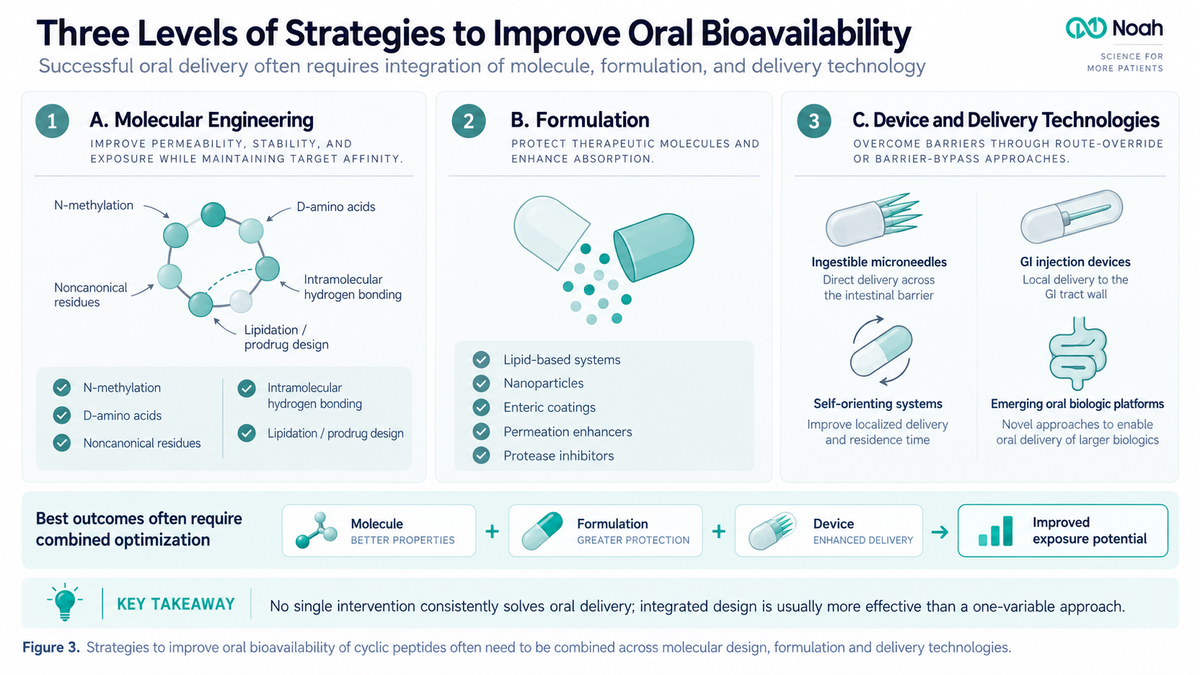
Figure 4. Oral bioavailability strategies can be organized into three levels: molecular engineering, formulation and delivery-device technologies.
A. Molecular engineering
N-methylation and stereochemical control
N-methylation can mask a hydrogen-bond donor, reduce protease recognition and favor lower-polarity conformations. D-amino acids, α-methyl residues, β-amino acids and other noncanonical building blocks provide additional control over proteolysis and ring geometry.
Chameleonicity and intramolecular hydrogen bonding
A successful macrocycle may not have one fixed “permeable” shape. It may remain more hydrated in water, then switch to a membrane-compatible conformation that hides polar groups. Ensemble-based design is therefore more informative than optimizing one static structure.
Thioamides, lipidation and prodrug concepts
Thioamide substitution can change hydrogen-bonding and lipophilicity and has improved permeability or exposure in selected macrocycles. Lipidation can extend systemic exposure through albumin binding. Prodrug strategies may temporarily mask polar groups, but no universal clinical solution exists for systemic oral macrocycles.
B. Formulation
Lipid systems, SEDDS, nanoparticles, enteric coatings, permeation enhancers and protease inhibitors all address different barriers. Their value is complementary rather than interchangeable. Enteric coating: protects against gastric conditions but does not solve epithelial transport. Permeation enhancers: may increase local transport but can introduce nonspecific absorption or safety concerns. Protease inhibitors: preserve intact peptide but do not solve mucus, efflux or first-pass metabolism. Lipid formulations: can improve dispersion but may add food effects and formulation variability.
C. Device and delivery technologies
When molecular and formulation strategies are insufficient, ingestible devices can physically bypass the epithelial barrier. Self-orienting gastric systems, luminal microneedles and peristalsis-actuated intestinal devices have demonstrated systemic delivery of peptide comparators in preclinical or ex vivo settings. These systems are better described as route override than conventional oral bioavailability. They introduce new questions around device reliability, chronic use, tissue injury, dose loading, combination-product manufacturing and human-factors validation. Best-case design logic: Molecule + formulation + device should be optimized as one system, not as three disconnected rescue steps.
AI and Computational Design of Cyclic Peptides
AI can help explore sequence and chemical spaces that are too large for exhaustive experimental testing, but its strongest role is triage inside a design–make–test–learn cycle. Cyclic peptides are unusually challenging to model because topology, stereochemistry, noncanonical residues, ring closure, intramolecular hydrogen bonding and solvent-dependent conformations all affect activity and exposure.
From sequence generation to library prioritization
Generative models can propose candidate sequences, but useful ranking must extend beyond predicted affinity. A macrocycle program should prioritize: target binding and selectivity; protease and plasma stability; permeability; solubility; synthetic feasibility; correct cyclization and stereochemistry; acceptable PK and toxicity.
Conformational sampling
Macrocycles should be treated as ensembles rather than single structures. A water-favored conformer, membrane-favored conformer and protein-bound conformer may all be different. Computational datasets such as CREMP illustrate why large conformational ensembles can be useful for machine learning and permeability prediction.
Noncanonical chemistry
N-methyl residues, D-amino acids, β-amino acids, constrained residues and electrophilic building blocks may not be represented reliably by models trained mostly on canonical peptides. Structure prediction therefore needs explicit treatment of ring topology and residue chemistry.
Multi-objective optimization
The practical AI problem is not “find the strongest binder.” It is to identify candidates that balance affinity + selectivity + permeability + stability + solubility + synthesis + PK. These objectives can conflict: greater hydrophobicity can improve membrane partitioning while worsening solubility, and greater rigidity can stabilize a binding pose while eliminating a membrane-compatible conformer. AI should not replace validation. Predicted macrocycles still require experimental confirmation of cyclization, stereochemistry, biochemical activity, permeability, cellular target engagement, metabolism, PK, safety and in vivo efficacy.
Clinical Landscape of Cyclic Peptide Therapeutics
The clinical landscape is established but heterogeneous. Mature products are concentrated in extracellular receptor pharmacology, local intestinal activity, natural-product-derived macrocycles, radioligand treatment and injectable constrained peptides. Newer development is moving toward bicyclic targeting ligands, peptide–drug conjugates and immune-cell-engaging formats.
Figure 5. Noah AI maps representative cyclic peptide therapeutics across company, scaffold type, target, indication, route and development status.
| Asset | Type | Target / indication | Route | Status | Why it matters |
|---|---|---|---|---|---|
| Octreotide | Disulfide-constrained octapeptide | Somatostatin receptors; acromegaly and neuroendocrine tumors | SC, IV, depot; selected oral use | Approved | Foundational proof that a constrained peptide can provide durable receptor pharmacology |
| Lanreotide | Disulfide-constrained cyclic octapeptide | SSTR2/SSTR5; acromegaly and GEP-NETs | Deep SC depot | Approved | Shows how depot formulation can turn a short peptide into a practical long-acting therapy |
| Pasireotide | Cyclic hexapeptide analogue | Multiple somatostatin receptor subtypes | SC and long-acting IM | Approved | Shows how subtype breadth can add both efficacy opportunity and metabolic toxicity |
| 177Lu-DOTATATE | Cyclic peptide radioligand conjugate | SSTR2-positive neuroendocrine tumors | IV | Approved | Strong clinical proof of cyclic peptides as tumor-homing ligands |
| Romidepsin | Bicyclic depsipeptide | HDAC1/HDAC2; T-cell lymphomas | IV | Approved | Validates intracellular macrocyclic pharmacology without requiring oral delivery |
| Linaclotide | Triple-disulfide constrained peptide | GC-C; IBS-C and chronic idiopathic constipation | Oral, locally active | Approved | Demonstrates that oral success can be achieved by avoiding systemic absorption |
| BT-8009 / zelenectide pevedotin | Bicyclic peptide–drug conjugate | Nectin-4; solid tumors | IV | Phase III | Represents the newer use of bicyclic peptides as tumor-targeting delivery ligands |
| BT-5528 | Bicyclic peptide toxin conjugate | EphA2; solid tumors | IV | Phase II | Extends the targeting-ligand model to another tumor-associated antigen |
| BT-7480 | Bicyclic immune-cell engager | Nectin-4 + CD137/4-1BB | IV | Phase II | Uses constrained peptides to localize immune activation |
| Rusfertide | Constrained hepcidin mimetic | Hepcidin pathway; polycythemia vera | SC | Approved in the U.S. in 2026 | Shows clinical translation of a constrained peptide against a soluble physiological pathway |
What approved products show
The mature clinical examples are concentrated where target accessibility and route match the physical properties of the peptide. Somatostatin analogues rely on injection or depot formulations. Linaclotide and plecanatide succeed orally because they act locally in the intestinal lumen and do not require reliable systemic absorption.
Conjugates are becoming a major development model
DOTATATE provides the clinically mature precedent: the peptide supplies receptor-selective localization and the payload supplies the therapeutic effect. Newer bicyclic conjugates extend this strategy to cytotoxins and immune agonists. This shifts the development problem. Linker stability, payload release, internalization, tumor heterogeneity, off-target uptake and systemic toxicity all become part of the final product.
Negative translation matters too
Programs such as murepavadin and cilengitide show that strong target rationale and a clear cyclic pharmacophore do not guarantee late-stage success. The modality should therefore be judged by both successful niches and failed attempts, not by approvals alone.
What the Current Clinical Pipeline Says About the Modality
Route and target accessibility remain decisive
The most mature examples share a common feature: the route is matched to the biology. Somatostatin receptors: constrained ligands with SC, IM or depot administration. Intestinal GC-C: oral peptides that act locally in the gut. SSTR2-positive tumors: peptide-directed radioligand delivery. Soluble extracellular targets: compatible with SC dosing and sustained systemic exposure. Ophthalmic targets: direct local administration can avoid systemic permeability challenges. This route–biology fit is more informative than cyclization itself. The modality performs best when the molecular architecture, target accessibility and delivery strategy reinforce one another.
Oncology is the leading frontier for newer bicyclic programs
BT-8009, BT-5528 and BT-7480 illustrate a pattern: the peptide is often most valuable as a targeting ligand. This may be a more mature path than asking an unconjugated macrocycle to behave simultaneously as a potent intracellular drug, an orally absorbed molecule and a broadly distributed systemic therapy.
Failure provides design information
Terminated or suspended programs reinforce the gap between biochemical potency, tissue exposure, target engagement, disease-model predictiveness and actual clinical benefit. A cyclic scaffold can fail because of biology, safety, route, therapeutic window or development strategy.
What remains unresolved
The largest unresolved area is broad systemic oral access to intracellular and CNS targets. The field now has important human proof that oral systemic macrocycles are possible in selected programs, but that is not yet a modality-wide capability.
Future Directions
Oral and intracellular access
Future programs should treat permeability, stability, solubility, efflux, first-pass metabolism and target engagement as one linked optimization problem. Human oral proof from selected macrocycles is encouraging, but intracellular oncology and CNS programs still require additional exposure engineering.
AI-guided design and chemical expansion
The next generation of AI tools should generate complete molecular hypotheses rather than sequences alone: ring topology, closure chemistry, stereochemistry, noncanonical residues, conformational ensembles, binding, permeability, stability and synthetic accessibility.
Expansion of the druggable proteome
New cyclization chemistry and encoded-library methods may expand the set of protein surfaces accessible to macrocycles. The most compelling opportunities remain broad PPIs, difficult extracellular interfaces and intracellular targets that cannot be handled cleanly by conventional small molecules.
Conjugates and multifunctional platforms
Peptide–drug conjugates, radioconjugates, immune-cell engagers, imaging agents and other multifunctional formats may provide the fastest route to broader clinical impact because the peptide can specialize in recognition while another component delivers the therapeutic effect.
Manufacturing and scale-up
Noncanonical residues, multiple rings, difficult closures and conjugated payloads increase risk in yield, purification, batch consistency and impurity characterization. Manufacturing considerations should therefore begin during library and hit design, not after a candidate is nominated.
Translational biomarkers
Clinical development needs a measurable chain from exposure to mechanism: Intact drug exposure → target engagement → pharmacodynamic biomarker → disease-relevant biological change → clinical endpoint. Species-specific pharmacology also needs early attention. A powerful human-target binder may still be difficult to test in conventional animal models if cross-species binding is weak.
Final Outlook
Cyclic peptides are neither a universal replacement for small molecules and biologics nor a niche limited to injectable peptide hormones. They are a versatile but highly scaffold-dependent modality. What has already been validated is substantial: selective receptor pharmacology, local intestinal action, radioligand targeting, long-acting injectable therapy, natural-product-like intracellular pharmacology and a growing set of bicyclic targeting platforms. Selected orally active macrocycles also show that systemic oral exposure is achievable. What remains difficult is equally important: predictable oral absorption, intracellular and CNS delivery, efflux, first-pass metabolism, scalable manufacturing of highly modified architectures and translation from biochemical potency to clinical benefit. The next generation of cyclic peptide therapeutics will likely be determined by integrated design: encoded libraries with noncanonical chemistry, ensemble-aware computation, experimentally validated AI, scaffold-specific permeability engineering, better formulation, selective use of delivery devices and conjugate architectures that solve exposure without sacrificing target specificity.
Try Noah AI for Free
Use Noah AI to search, compare, and analyze biomedical evidence with AI-powered research workflows.
Free credits are available, and no credit card is required to get started.
Related Research Guides
Best AI Tools for PubMed Literature Review (2026)
Best AI Tools for Turning Research Questions into Evidence Tables (2026)
Best AI Tools for Clinical Trial Results Analysis (2026)
How Noah AI Helps Life Science Teams Track Drug Pipelines, Clinical Trials, and Market Signals