Best AI Tools for Turning Research Questions into Evidence Tables (2026)
Linda
Compare the best AI tools for turning research questions into structured evidence tables, with a real Noah AI workflow from PubMed search to study comparison.
A good evidence table does more than summarize papers. It turns a research question into a structured comparison that makes study design, interventions, sample sizes, follow-up, endpoints, and findings easier to inspect side by side.
The difficulty is usually not creating the table itself. Researchers first need to find relevant studies, decide which fields matter, extract the same information consistently across papers, and keep the output traceable to the original sources.
AI research tools can reduce some of that manual work. The best options in 2026 differ in where they are strongest: some focus on systematic-review extraction, some on academic search, and others on biomedical research workflows that connect retrieval, synthesis, and cited outputs.
For this guide, we also tested a real Noah AI workflow using a cardiovascular-outcomes question about GLP-1 receptor agonists in adults with type 2 diabetes.
Quick Answer
Noah AI is a strong fit when a biomedical research question needs to move through PubMed retrieval and into a structured evidence table. Elicit is especially useful for systematic-review screening and custom data extraction. SciSpace is useful when researchers need to extract structured fields, tables, statistics, and citations from research PDFs. Consensus is useful for asking natural-language research questions, searching peer-reviewed literature, and generating evidence tables and structured study snapshots.
The best choice depends on whether your bottleneck is finding studies, extracting fields, comparing studies, or verifying sources.
Best AI Evidence Table Tools at a Glance
For a broader literature-review workflow, see How to Use Noah for Medical Literature Review.
1. Noah AI — Best for Biomedical Research Questions to Evidence Tables
Noah AI is most useful here when the starting point is a biomedical research question rather than a prepared set of papers. The workflow can move from question definition and literature retrieval into a structured evidence table that researchers can review study by study.
Step 1: Start with the research question
For the test, we entered a focused question asking which GLP-1 receptor agonists had demonstrated cardiovascular benefit in randomized controlled trials in adults with type 2 diabetes. The prompt also requested a structured evidence table with predefined comparison fields.
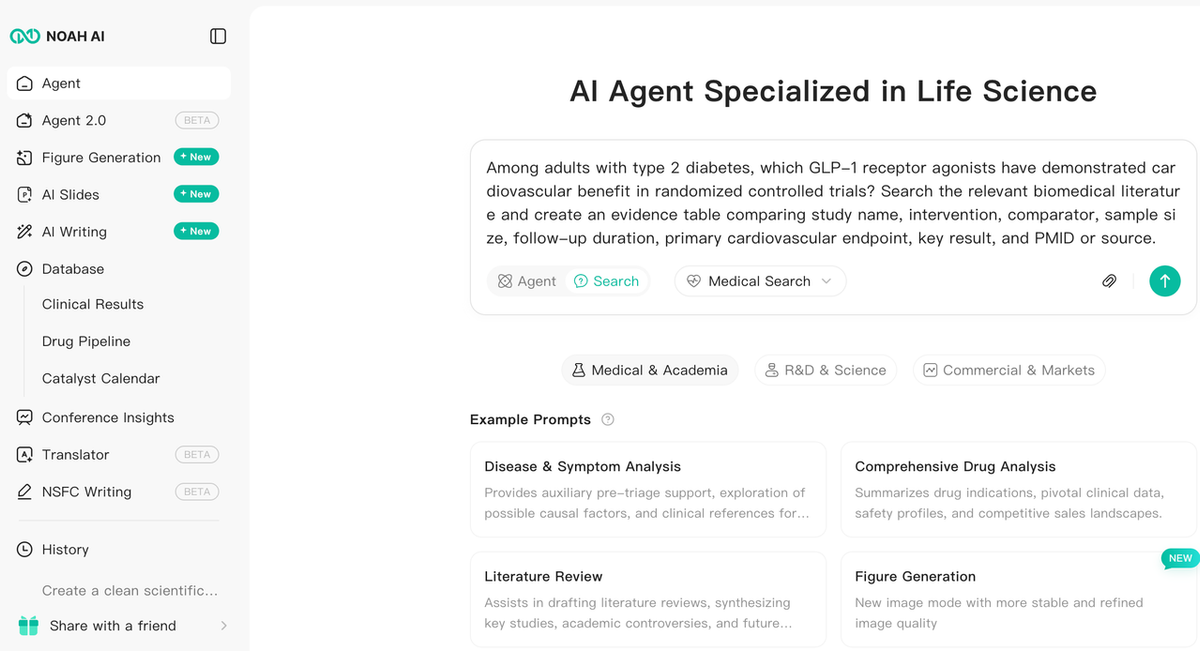
Figure 1. A focused biomedical research question entered in Noah AI, with the requested evidence-table fields defined in the prompt.
Step 2: Retrieve relevant biomedical literature
After submission, Noah displayed a Thinking and Information Retrieval workflow with PubMed Search, a search summary, and a PubMed search term focused on randomized cardiovascular-outcomes evidence. This is important because an evidence table should be built from identifiable studies rather than from an unsupported summary.
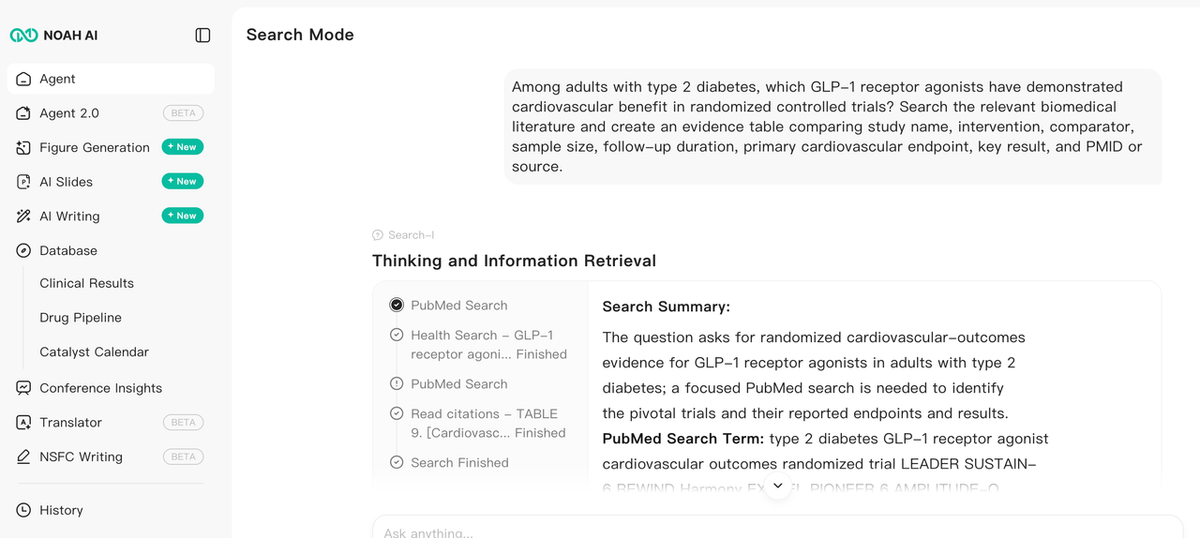
Figure 2. Noah AI shows PubMed Search and information retrieval before the structured evidence output.
If your workflow begins with paper discovery, see PubMed Search with AI for a dedicated search workflow.
Step 3: Turn the studies into a structured evidence table
The final table does more than place extracted fields into columns. It creates a consistent comparison structure across studies. In this example, a researcher can compare which patient populations were enrolled, how the intervention and comparator differed, how large each trial was, how long patients were followed, and which cardiovascular outcomes were measured.
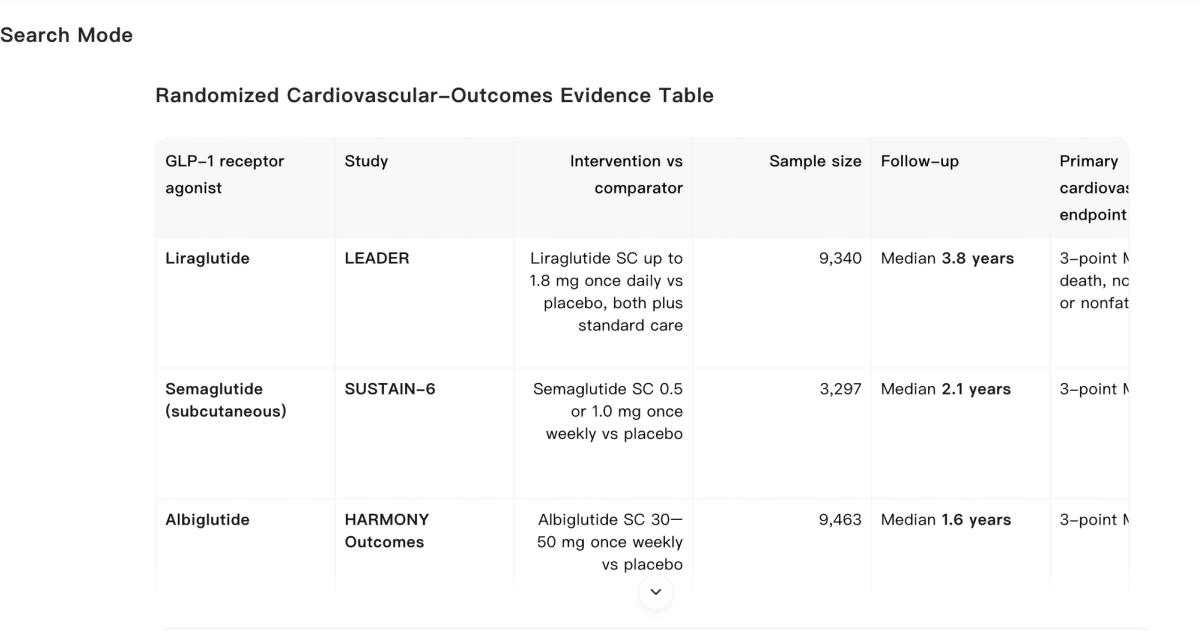
Figure 3. A Noah AI evidence table comparing randomized cardiovascular-outcomes studies across consistent study fields.
That matters because important differences between studies are often hidden in narrative summaries. A structured table makes it easier to see whether trials are truly comparable—or whether differences in population, study design, follow-up, or endpoint definition may change how their results should be interpreted. The evidence table therefore becomes a working layer between literature retrieval and deeper evidence interpretation, not just a formatted summary.
2. Elicit — Best for Systematic-Review Data Extraction
Elicit is a better fit when you already have a systematic-review workflow and need consistent extraction across many included papers. Its strength is structured screening and repeated data extraction across a defined paper set. Compared with Noah, Elicit is more process-oriented around systematic review methodology, while Noah is more direct when the workflow starts from a biomedical question and needs to end in a structured evidence table.
3. SciSpace — Best for Extracting Structured Data from Research PDFs
SciSpace is useful when the main bottleneck is extracting structured information from research PDFs. It is well suited to pulling fields such as methods, outcomes, statistics, and citations from existing documents. Compared with Noah, SciSpace is more document-extraction focused, while Noah is more useful when the task begins with a biomedical question and still requires evidence discovery before table generation.
4. Consensus — Best for Search-to-Evidence Tables Across Peer-Reviewed Research
Consensus is useful when you want to start with a natural-language research question and quickly map the peer-reviewed evidence. It is a good fit for fast evidence discovery and structured study comparison. Compared with Noah, Consensus is broader academic search and synthesis, while Noah is more specifically oriented toward biomedical research workflows and structured medical evidence outputs.
Which Tool Should You Choose?
Choose Noah AI if you want to start with a biomedical research question and move directly toward a structured evidence table.
Choose Elicit if you are running a systematic review and need repeated extraction across a defined paper set.
Choose SciSpace if you already have PDFs and your main problem is extracting consistent study-level fields.
Choose Consensus if you want fast academic evidence discovery and a structured overview before deeper review.
The main decision is not which tool has the longest feature list. It is where your workflow begins: with a research question, a systematic-review protocol, a set of PDFs, or a broad evidence-search task.
FAQ
Can AI create an evidence table from a research question?
Yes. Some research tools can search for relevant papers and organize extracted study information into a structured table. The researcher should still verify the included studies, extracted values, and source citations.
What should an evidence table include?
The columns depend on the question. Common fields include study name, population, intervention, comparator, sample size, follow-up, outcomes, key results, and source information.
Is an AI evidence table the same as a systematic review?
No. An evidence table can support a literature review or systematic review, but a systematic review also requires a defined protocol, reproducible search and screening methods, eligibility criteria, quality assessment, and transparent reporting.
Which tool is best for biomedical evidence tables?
No single tool is best for every workflow. Noah AI is well suited to biomedical question-to-evidence workflows; Elicit is strong for systematic-review extraction; SciSpace is useful for PDF-level structured extraction; and Consensus is useful for search-driven evidence mapping and tables.
Final Takeaway
Evidence tables are most useful when they reduce the gap between a research question and a set of studies that can actually be compared.
Noah AI’s main advantage in this workflow is that researchers can start with a biomedical research question and move directly toward a structured evidence table, rather than manually assembling the paper set and extraction structure first.