How to Map Biomarkers and Patient Segmentation with Noah AI
Linda
Learn how Noah AI helps medical, clinical development, and biopharma teams map biomarkers, patient subgroups, treatment eligibility, evidence context, and development gaps into a structured segmentation framework.
Biomarker evidence rarely lives in one place. A medical or clinical development team may need to review trial data, guidelines, regulatory sources, published literature, and translational evidence before it can answer a basic segmentation question: which biomarkers define meaningful patient groups, and what does the evidence say about each subgroup?
The challenge is not building a longer biomarker list. It is connecting each biomarker to a patient subgroup, understanding the relevant treatment context, tracing the supporting evidence, and identifying where the evidence is still incomplete.
A useful segmentation framework therefore connects biomarker status, patient subgroup, treatment relevance, supporting evidence, and unresolved questions in one reviewable structure.
What Should a Biomarker Segmentation Framework Answer?
| Question the team needs to answer | Useful output |
|---|---|
| Which biomarkers define relevant patient groups? | A biomarker-to-patient-subgroup map |
| How does each subgroup relate to treatment context? | Treatment-relevance context by subgroup |
| What evidence supports each subgroup? | Source-linked trial, guideline, regulatory, or literature context |
| Where is the evidence incomplete or uncertain? | Evidence gaps and development questions |
| What needs deeper review? | A prioritized list of issues for clinical, biomarker, or translational review |
The goal is not to automate a final clinical decision. The goal is to create a framework that makes the segmentation logic easier to inspect, challenge, and refine.
How the Workflow Works
The example below focuses on advanced or metastatic non-small cell lung cancer (NSCLC) and an immunotherapy-related evidence question. The requested framework includes PD-L1, EGFR, ALK, MSI-H/dMMR, and tumor mutational burden where supported, but the workflow is organized around segmentation questions rather than a generic biomarker summary.
Step 1: Define the Segmentation Question
The first step is to define what needs to be segmented. A broad request such as “analyze lung cancer biomarkers” does not specify the treatment context, the patient groups, or the evidence questions that matter.
A stronger research question specifies the disease setting, the biomarkers of interest, the patient-subgroup logic, the treatment context, the evidence needed, and the unresolved questions the team wants to surface.
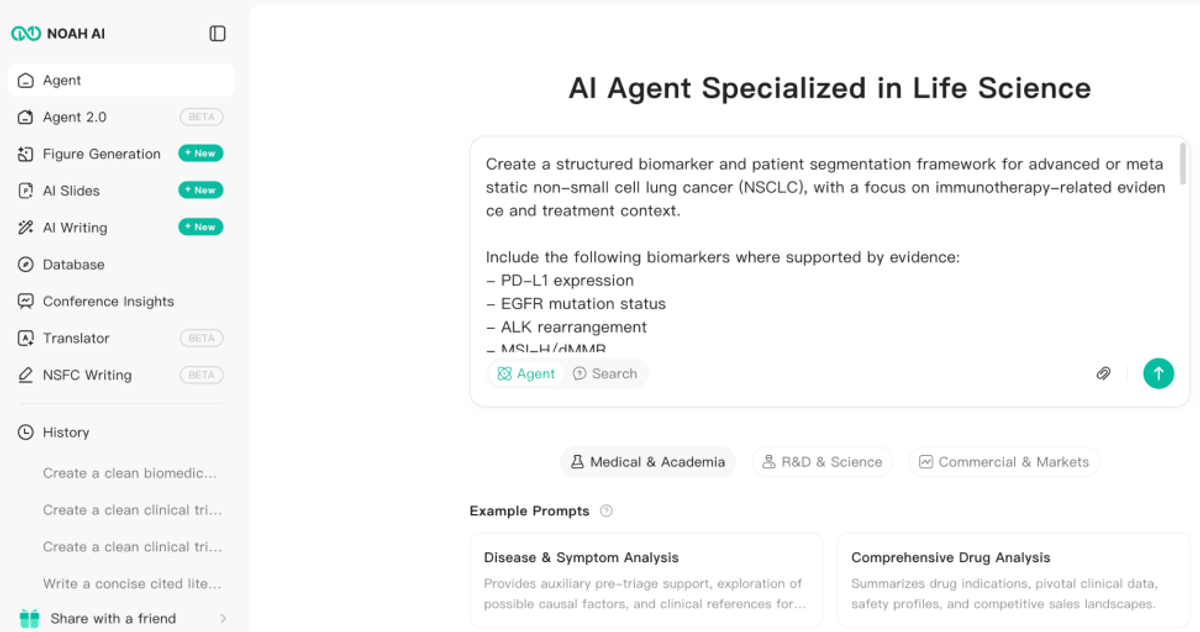
Figure 1. The segmentation question defines the NSCLC setting, biomarker scope, patient groups, treatment context, evidence needs, and unresolved questions before the analysis begins.
This keeps the analysis focused on the framework the team actually needs to review rather than producing a broad disease overview.
Step 2: Build the Biomarker → Patient Subgroup → Treatment Relevance Map
Once the scope is defined, the next task is to connect a biomarker state to the patient subgroup it defines and the treatment context that makes the subgroup relevant.
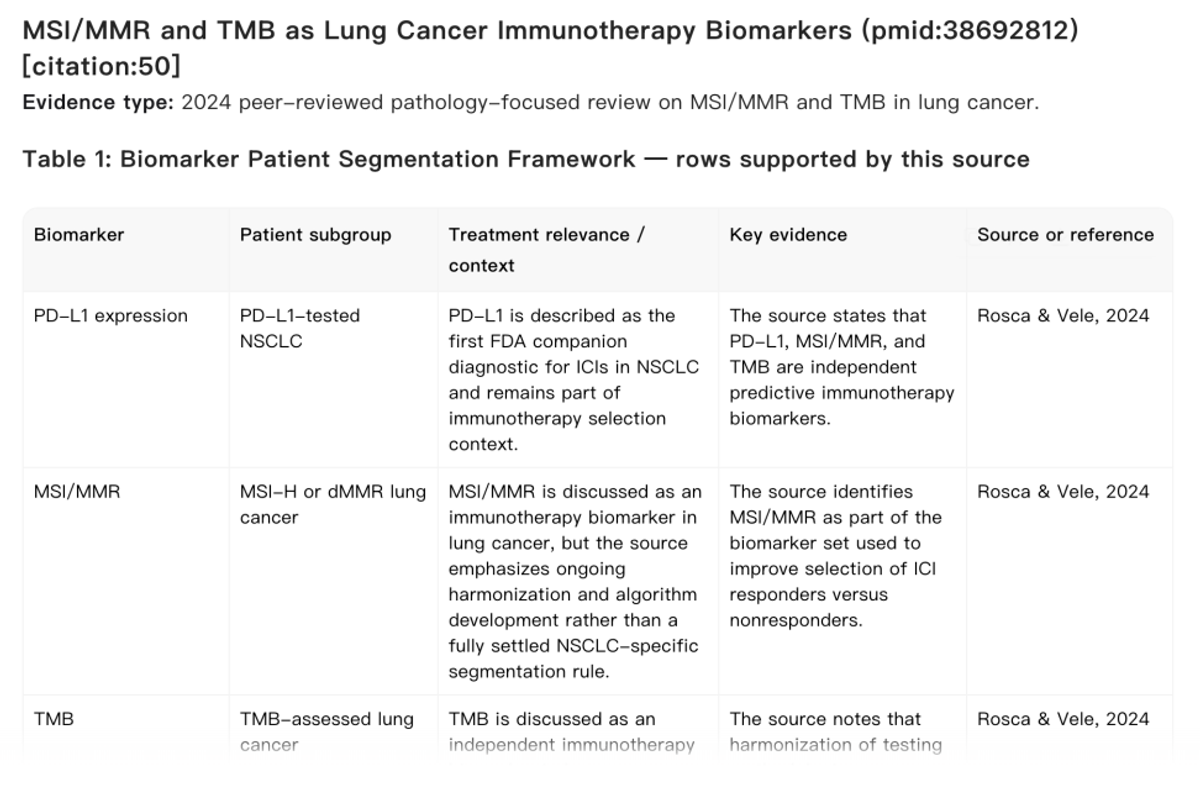
Figure 2. A structured segmentation table connects biomarker status with patient subgroups, treatment relevance, supporting evidence, and source references.
The visible output illustrates why a segmentation framework is more useful than a biomarker list. PD-L1 expression is mapped to a PD-L1-tested NSCLC subgroup and linked to an immunotherapy-selection context from the cited source. MSI/MMR is mapped to an MSI-H or dMMR lung-cancer subgroup, while the same row also preserves the source’s uncertainty around testing harmonization and NSCLC-specific implementation. TMB is handled as another biomarker-defined group rather than being collapsed into a single “NSCLC” population.
The practical structure is: biomarker status → patient subgroup → treatment relevance → supporting evidence → source. That makes it easier to see which evidence belongs to which population and which parts of the segmentation still require validation.
For teams that need to verify the underlying biomedical evidence in more depth, see PubMed Search with AI.
Step 3: Identify Evidence Gaps and Development Questions
A useful segmentation framework should not stop at what appears established. It should also make the weak points visible: inconsistent testing methods, limited subgroup evidence, unresolved implementation questions, and areas where the available literature does not support a definitive conclusion.
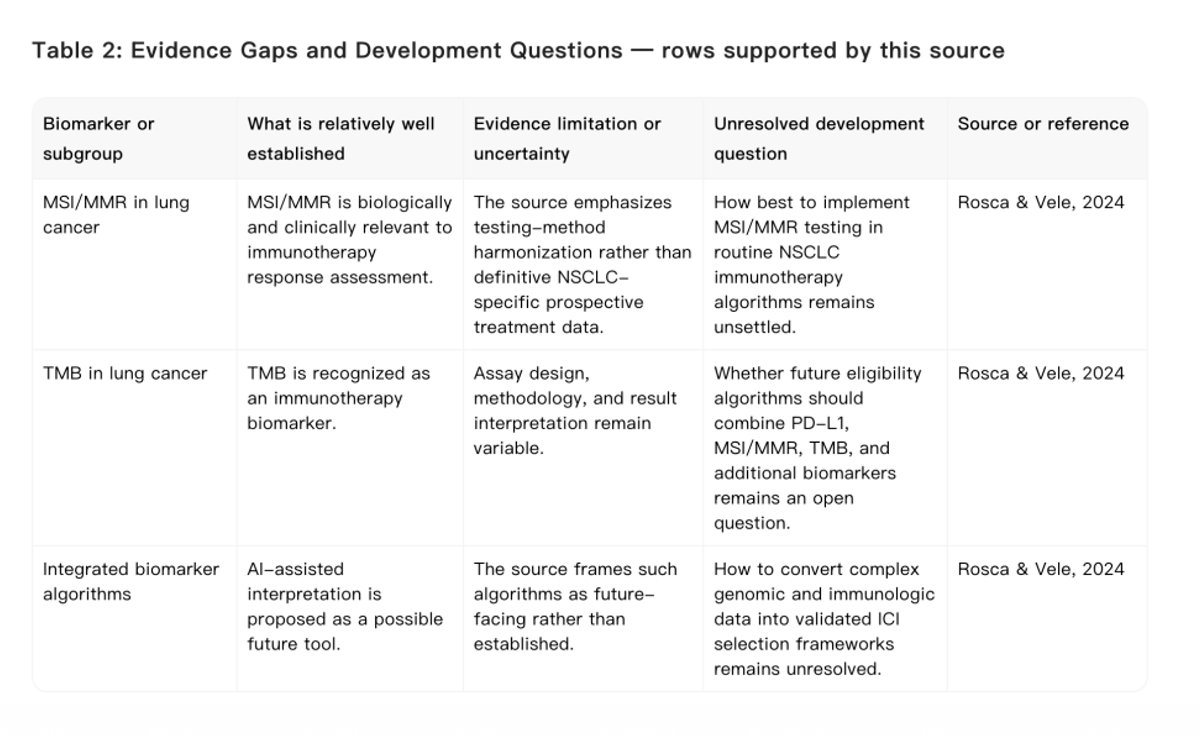
Figure 3. The evidence-gap table separates what is relatively well established from evidence limitations, uncertainty, and unresolved development questions.
In the displayed output, MSI/MMR is treated as biologically and clinically relevant to immunotherapy-response assessment, but the same row highlights uncertainty around testing-method harmonization and NSCLC-specific implementation. TMB is similarly presented with uncertainty around assay design, methodology, and interpretation. An integrated-biomarker row is framed as a future-facing area rather than as an established decision framework.
This is the right level of caution for a development workflow: the output structures the open questions without turning them into unsupported clinical or regulatory conclusions.
What a Useful Biomarker Segmentation Output Looks Like
Which biomarkers define patient groups?
The framework should show the molecular or clinical segmentation dimensions that matter for the research question.
What treatment context is associated with each group?
The output should explain why separating those patients matters for the evidence review without turning the framework into a treatment recommendation.
What evidence supports the subgroup?
Relevant trials, guidelines, regulatory sources, or literature should remain traceable to the subgroup being discussed.
What remains uncertain?
The framework should surface evidence limitations and unresolved questions instead of hiding them behind a single summary conclusion.
When Is This Workflow Most Useful?
This workflow is useful when medical, clinical development, translational, or biomarker teams need to bring together evidence that currently sits across multiple sources before an internal strategy discussion.
It can also support trial-planning discussions, biomarker strategy reviews, indication assessments, evidence synthesis, or competitive research where the team first needs a clear view of how the patient population should be segmented.
The value is not that AI replaces the experts making those decisions. The value is that the team starts with a structured evidence map instead of a fragmented collection of trial notes, papers, guidelines, and biomarker documents.
Final Takeaway
The difficult part of biomarker segmentation is not identifying more biomarkers. It is connecting biomarkers to patient groups, treatment relevance, supporting evidence, and the questions that remain unresolved.
A structured workflow can turn scattered evidence into a framework that teams can review, verify, and refine before deeper clinical or development analysis.
FAQ
What is biomarker and patient segmentation?
Biomarker and patient segmentation organizes patients into groups based on molecular markers, clinical characteristics, treatment history, or disease features that may change how evidence should be interpreted.
How can Noah AI support biomarker segmentation?
It can help structure the research question around biomarkers, patient groups, treatment relevance, supporting evidence, and unresolved questions, producing a framework that teams can review and refine.
Can Noah AI determine treatment eligibility?
The output can organize treatment-relevance evidence by biomarker-defined subgroup, but final treatment, clinical, regulatory, or development decisions require review of the original evidence and qualified expert judgment.
Can Noah AI identify evidence gaps?
It can help surface areas where available sources show limited, inconsistent, or incomplete evidence and organize those areas into questions for further review.