Similar Products to Scholarcy for Biomedical Paper Summarization (2026)
Linda
Compare Scholarcy-like tools for biomedical paper summarization, with a live Noah Agent summary of Harmony Outcomes (PMID 30291013).
The problem behind similar products to Scholarcy
People search for Scholarcy alternatives because they want a paper reduced to what matters before they spend 20 minutes on the PDF. In biomedical research that list is specific: citation, design, population, n, endpoint wording, the primary result, and what still has to be checked in the full text.
A generic chatbot summary is not that job. A flashcard library is close, but it is not the same as a life-science summary you can walk back to a PMID.
Quick answer
Noah Agent is the similar product in this comparison for biomedical paper summarization. The live test below summarized one paper — Harmony Outcomes, PMID 30291013 — into a numbered research brief.
Keep Scholarcy when you want flashcards, a reading library, and a browser extension. Keep Elicit or SciSpace when you want multi-paper screening tables. Keep a human read of the PDF before you cite the result.
What Scholarcy is still best at
Scholarcy is built as a reading layer: import a PDF or URL, get a flashcard, enhance the summary to a reading level, save it to a library, and jump around the paper. Official pages also describe browser extensions and reference-manager connections.
That is the right product if the daily job is “process many PDFs and keep the cards.” It is not a biomedical evidence workspace. The summary still has to be checked against the paper.
Quick comparison
| Product | Best for | Summary type |
|---|---|---|
| Noah Agent | One biomedical paper, structured fields | Cited research brief |
| Scholarcy | Reading many papers into cards | Flashcard + snapshot |
| Elicit | Screening across papers | Column-wise paper table |
| SciSpace / ChatPDF-style readers | Ask a PDF questions | Chat over one file |
| Generic chat models | A first-pass paragraph | Prose summary |
Noah Agent as a similar product for biomedical summaries
Noah AI lists Agent as an AI agent specialized in life science. Official product copy frames Agent as the step after medical search: retrieve trusted sources, then synthesize a checkable draft. That is the product for this title.
The live run asked for one paper only. The brief named Harmony Outcomes, PMID 30291013, DOI 10.1016/S0140-6736(18)32261-X, and required a numbered summary: citation, design, population, intervention, n, endpoint, primary result, secondary findings only if they were in this paper, limitations, and a full-text checklist. It told the agent not to invent numbers and not to treat the task as a class-wide GLP-1 review.
Why this is a Scholarcy-like job Noah can actually do
- The input can name one paper and one PMID, not a whole field.
- The output is structured like a methods extract, not a flashcard stack and not a narrative review.
- Material claims in this run carried a source marker and resolved to the Harmony Outcomes record.
- The draft told the reader what the abstract could not settle and what to verify in the full text.
Agent does not copy Scholarcy’s library or extension. It replaces the “paste the PDF into a general chat” path when the paper is biomedical and the summary has to stay attached to one trial.
What this live run returned
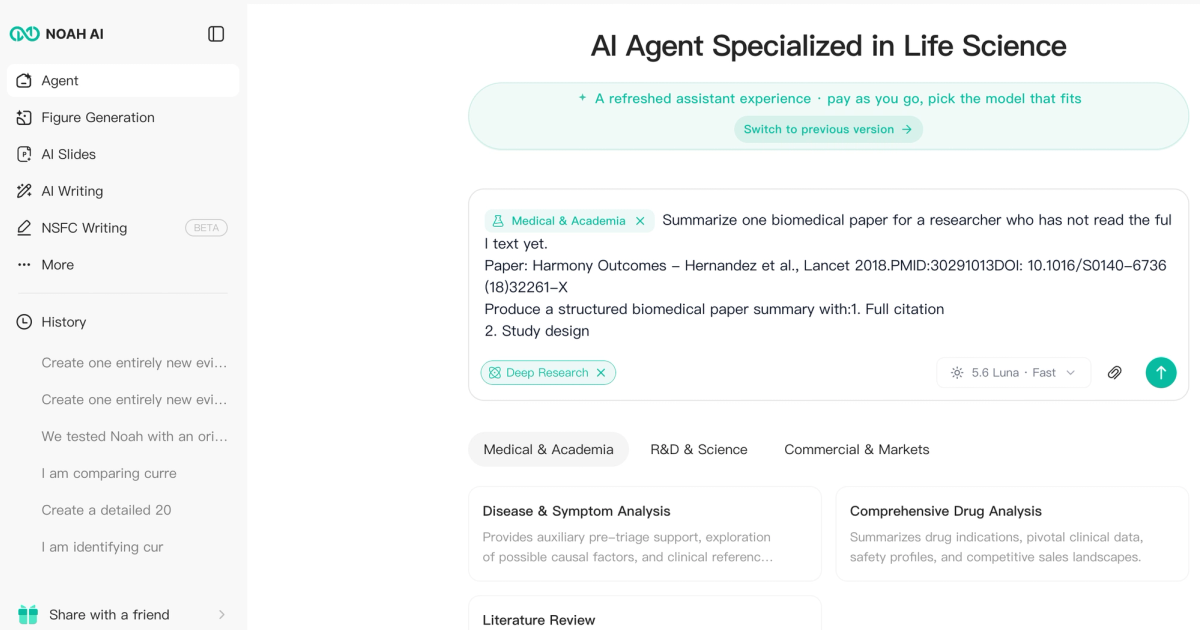
Figure 1. The live Agent prompt for one paper, not a class-wide review.
Agent is selected. The visible prompt names Harmony Outcomes, the PMID, and the structured fields.
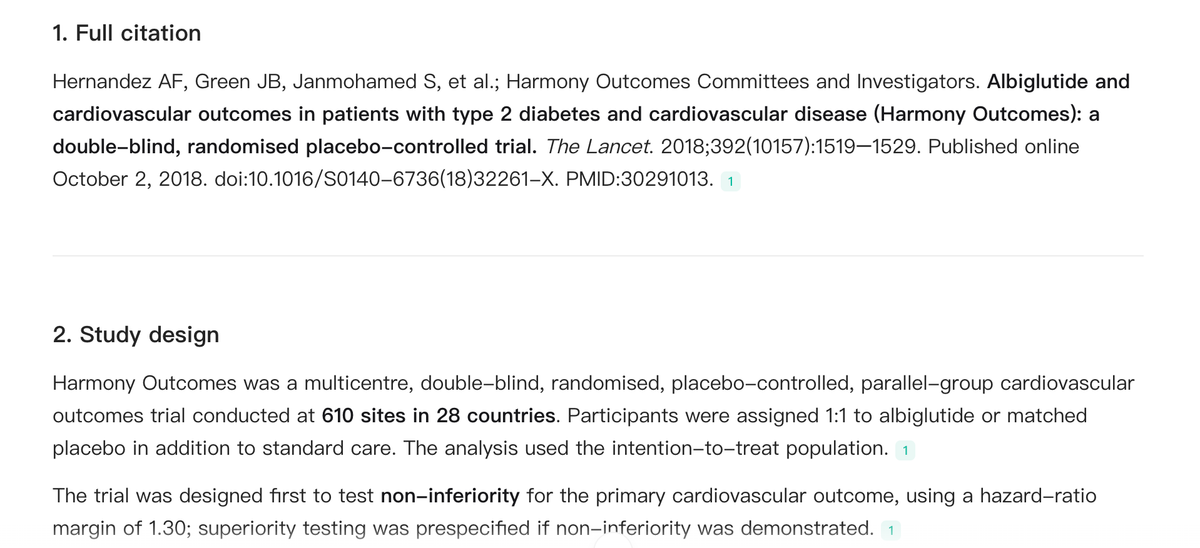
Figure 2. The same run: citation and study design as structured fields.
Section 1 gives the Lancet citation and PMID. Section 2 identifies a double-blind, randomised, placebo-controlled cardiovascular outcomes trial at 610 sites in 28 countries.
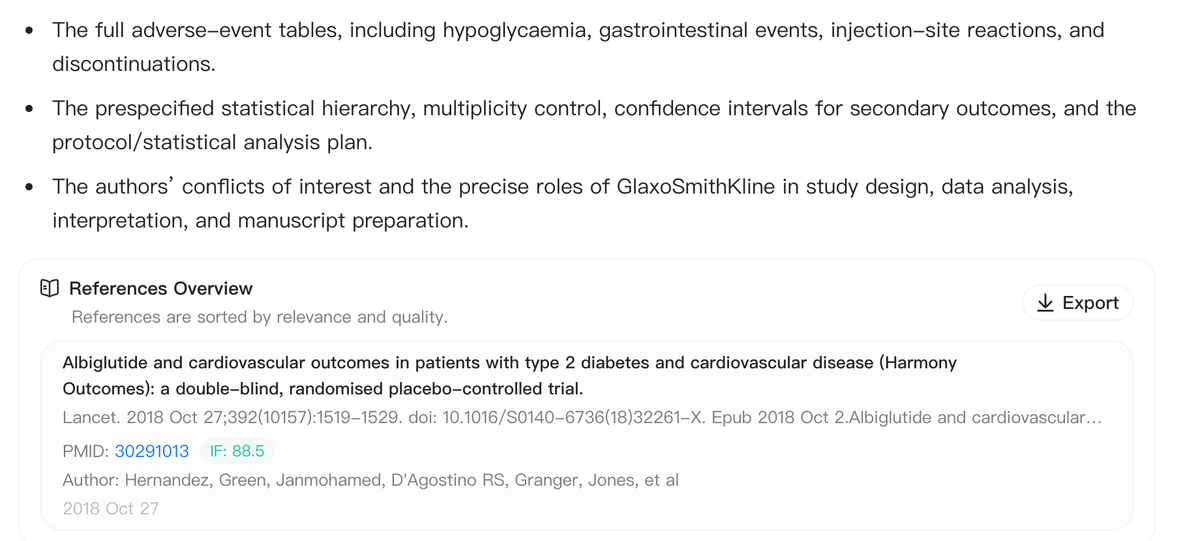
Figure 3. The same run ends on a source card the reader can open.
The card repeats the trial title, Lancet citation, DOI, and PMID 30291013. The bullets above it are items to verify in the full text, not extra invented papers.
From the same draft, the agent reported 9,463 randomised participants (4,731 albiglutide; 4,732 placebo), median follow-up 1.6 years, and a primary composite of cardiovascular death, myocardial infarction, or stroke. The primary result in that draft was 338/4,731 versus 428/4,732 events, HR 0.78 (95% CI 0.68–0.90). Those numbers are the kind of claim a reader should still confirm in the PDF. The screenshots show the structure and the source; they do not replace opening the paper.
What this case proves — and what it does not
- Shown here: Agent produced a numbered biomedical summary of one named paper, with a PMID on the page.
- Shown here: the draft separated study design from a full-text verification list.
- Not a product claim: Scholarcy flashcards, batch PDF libraries, Zotero sync, or a finished substitute for reading Harmony Outcomes.
If the result you need is a structured summary of one biomedical paper, open Noah Agent and give it the citation plus the PMID.
Other similar products
Elicit is the closer tool when the job is screening many papers into a table. SciSpace and other PDF chat readers are closer when you already have the file open and want to ask it questions. Generic chat models will write a paragraph; they will not, by default, keep one trial from becoming a class-wide story.
Stay on Scholarcy when the workflow is a personal paper library and flashcards you reopen later.
How to choose
- One biomedical paper, structured fields, source on the page: Noah Agent.
- Flashcards, a reading library, and a browser extension: Scholarcy.
- A table across many papers: Elicit.
- Chat with one uploaded PDF: SciSpace or a PDF reader.
- A number you will cite: the PDF, after the summary.
Try Noah AI for Free
Use Noah AI to search, compare, and analyze biomedical evidence with AI-powered research workflows.
Free credits are available, and no credit card is required to get started.
Final takeaway
For biomedical paper summarization, Noah Agent is the Scholarcy-like product this article ran. It replaces a generic chat summary with a single-paper brief tied to a PMID. Keep Scholarcy for flashcards and a library. Open the full text before the number leaves your notes.
FAQ
Is Noah Agent a Scholarcy alternative?
Yes — for biomedical paper summarization. Scholarcy still wins as a reading-library product. Agent is the similar tool when the same paper has to become a checkable research brief.
Can I skip the PDF after an AI summary?
No. This run still told the reader to verify eligibility, component endpoints, and the full statistical hierarchy in the paper.
Does this replace a systematic review?
No. The prompt asked for one paper. A class-wide review is a different task.