Noah AI vs Enago Read for Literature Review Research (2026)
Linda
Compare Noah AI and Enago Read for literature reviews, paper analysis, evidence tables, citations, and research workflows using a clinical trial example
Choosing an AI literature review tool depends on what you need to do after finding a paper. Do you want to read and annotate individual articles, or turn a research question into a cited synthesis across studies? This comparison examines Noah AI and Enago Read through those two workflows.
Evidence disclosure: Noah AI was tested with a chronic kidney disease (CKD) literature review prompt; its actual input, evidence table, and synthesis are shown below. Enago Read's capabilities are described from its official documentation. A PDF URL import was attempted in Enago Read but failed in this session, so no Enago paper-analysis output or controlled head-to-head performance test is presented.
Quick answer: which workflow fits your research?
Consider Enago Read when the immediate task is exploring related papers, understanding individual documents with summaries or Copilot, organizing reading lists, and recording notes or critiques. These are functions described on its official site.
Consider Noah AI when you need to start with a biomedical research question and produce a multi-study evidence table and narrative synthesis. In the documented Noah test below, the output included trial populations, endpoints, effect estimates, limitations, and linked references. That demonstrates this particular workflow, not superiority in accuracy or speed.
What is Enago Read?
Enago Read is an AI-assisted literature discovery, reading, and organization platform. Its published features include a section-wise Summarizer, Key Insights, Copilot for questions about a paper, literature recommendations, notes, tags, and a customizable critique template. These tools make it relevant for researchers who need to inspect and manage a collection of articles while reading.
Enago Read's official description does not, by itself, establish how well those functions perform for a specific clinical question. In our attempted session, a third-party PDF URL could not be extracted. We did not complete the alternative local-file upload, and we did not obtain a Copilot or summary response for the CKD trial. This should be treated as a test limitation, not proof of a general import defect.
What is Noah AI?
Noah AI is a life-science research assistant with search and agent-based research workflows. For biomedical literature review tasks, its published product information describes searching scientific sources, organizing research evidence, and producing cited reports. The example below uses a real Deep Research prompt, rather than a hypothetical interface.
Both platforms still require expert verification of source quality, methods, eligibility, and the conclusions drawn from each paper.
Real research example: SGLT2 inhibitors in chronic kidney disease
To show what a literature review output can look like, we asked Noah to examine two landmark placebo-controlled trials: DAPA-CKD and EMPA-KIDNEY. The prompt requested verified primary publications, study design and eligibility, sample sizes, intervention and comparator, endpoints, effect estimates, limitations, a structured table with references, and an evidence-aware narrative synthesis.
Step 1. Define the evidence question
The Noah prompt explicitly required separate reporting of original trial findings and interpretation. It also instructed the system not to rank two drugs by comparing hazard ratios across different trials.
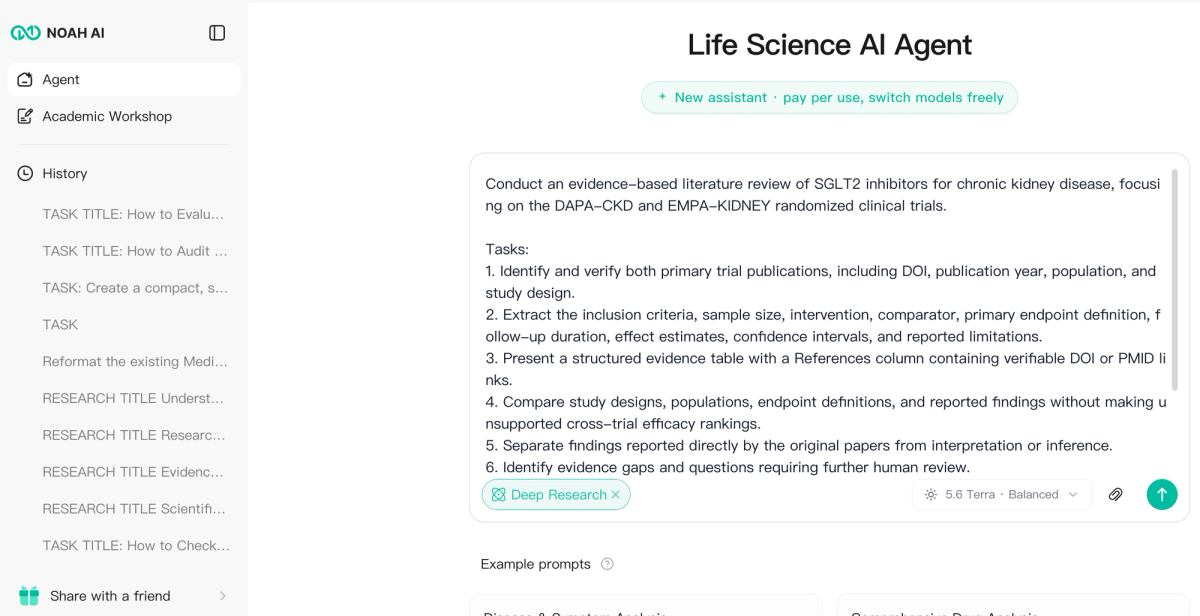
Figure 1. Actual Noah AI Deep Research input used for the CKD literature review example.
Step 2. Extract trial-level evidence and references
In the observed output, Noah organized the trials in a side-by-side table. It included eligibility criteria, sample sizes, treatment arms, primary endpoint definitions, follow-up, clinical outcomes, safety notes, study limitations, and a References row with DOI and PMID identifiers. This structure is useful for an initial evidence matrix that researchers can inspect against the original publications.
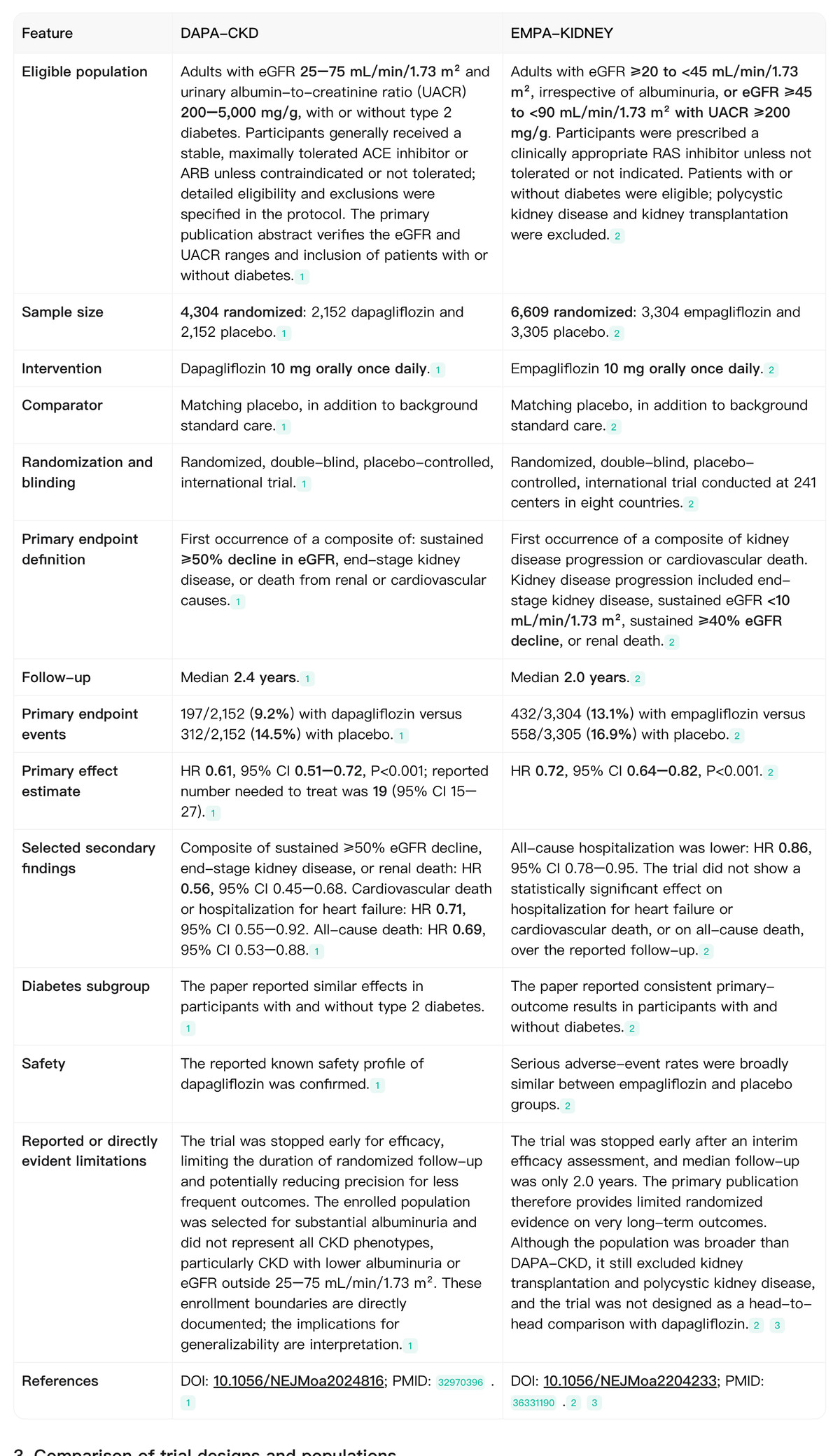
Figure 2. Actual Noah AI evidence table. Open the image to inspect the full References row and study details.
The trial publications report the following primary results:
| Trial | Participants | Primary outcome result vs placebo | Primary source |
|---|---|---|---|
| DAPA-CKD | 4,304 | HR 0.61 (95% CI 0.51–0.72); median follow-up 2.4 years | PMID: 32970396 |
| EMPA-KIDNEY | 6,609 | HR 0.72 (95% CI 0.64–0.82); median follow-up 2.0 years | PMID: 36331190 |
Critical caveat: These hazard ratios describe outcomes defined differently in different patient populations. DAPA-CKD used a composite involving sustained ≥50% eGFR decline, end-stage kidney disease, or renal/cardiovascular death; EMPA-KIDNEY used a composite of kidney disease progression or cardiovascular death, with different kidney-progression criteria. Therefore, comparing 0.61 with 0.72 does not establish that one medication is more effective than the other.
Step 3. Synthesize results without overstating the evidence
The Noah narrative acknowledged that both trials support kidney protection in their respective CKD populations, while noting differences in baseline eligibility and endpoint definitions. It also identified unresolved questions, including long-term outcomes, uncommon CKD causes, transplant recipients, and direct comparative efficacy.
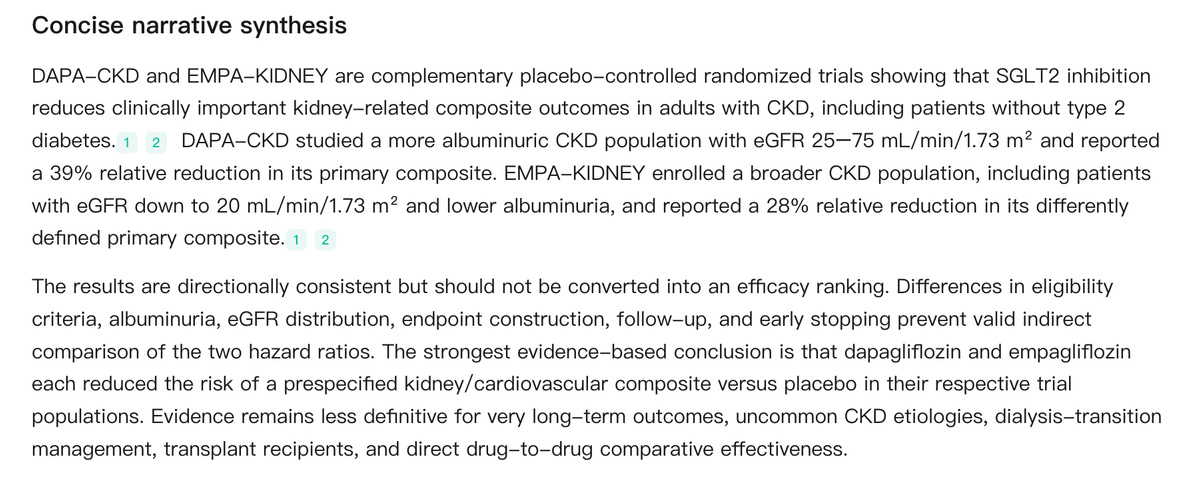
Figure 3. Actual Noah AI narrative synthesis, including limitations on cross-trial comparisons.
This is one documented example of Noah producing a structured review artifact. It does not establish that every claim was independently checked by a human, or that competing platforms could not produce similar output.
Noah AI vs Enago Read: feature and workflow comparison
| Research task | Noah AI | Enago Read |
|---|---|---|
| Starting point | Biomedical question or research prompt; demonstrated in the CKD test | Literature exploration and paper-centered reading; described in official product materials |
| Understanding one paper | Not separately benchmarked in this test | Summarizer, Key Insights and Copilot are documented features |
| Multi-study evidence table | Observed in the CKD test with trial-level References | Not evaluated in this attempted test; no comparative claim |
| Critical reading and organization | Not evaluated in the screenshots | Notes, tags, literature organization and critique templates are documented |
| Research synthesis | Observed narrative discussion of findings, differences and evidence gaps | Not tested on the same CKD task |
| Verified accuracy or speed advantage | Not established: no matched head-to-head output audit or timing study was completed |
Which should you choose?
Choose Enago Read if your main task is close reading
Enago Read deserves consideration when you already have papers to read and want paper-level summaries, questions, annotations, literature suggestions, or a structured critique process. These are appropriate use cases based on its documentation; their performance was not assessed in our session.
Choose Noah AI if your main task is building an evidence synthesis
Noah AI is worth considering when your deliverable is a research question answered through a structured comparison of biomedical studies, with source identifiers and an explicit discussion of evidence gaps. The CKD example shows such an output in practice. Researchers should still check extracted numbers, statistical interpretation, and relevant source publications before using any AI-generated review in clinical or academic work.
Frequently asked questions
Can Enago Read summarize research papers?
Yes. Enago Read's official documentation describes a Summarizer and Key Insights feature for understanding papers. This article did not measure their output quality for the trial used here.
Can Noah AI create a literature review evidence table?
In the demonstrated CKD task, Noah generated a structured comparison table containing populations, outcomes, limitations, and DOI/PMID references. Results may vary with the prompt, evidence availability, and task scope.
Does the failed PDF URL import mean Enago Read cannot handle PDFs?
No. The observed failure concerned one URL-based import attempt. Enago Read offers other import options, including device upload; those were not completed for this comparison.
Is Noah AI more accurate than Enago Read?
There is insufficient evidence to say so. A defensible claim would require equivalent papers, prompts, evaluation criteria, human source checking, and repeated runs on both platforms.
Can AI-generated literature reviews be used without checking the original studies?
No. Always confirm the studies, sample sizes, outcomes, confidence intervals, and citations in the primary publications. For clinical comparisons, check whether patient populations and endpoints are comparable before interpreting differences.
Final verdict
Noah AI and Enago Read address overlapping but different steps in literature review work. Enago Read emphasizes exploring, reading, and organizing papers according to its official materials. Noah AI demonstrated a question-to-evidence-table-to-synthesis workflow in our CKD example. The appropriate choice depends on the research task, not an unsupported claim that one system is universally better.
Build a cited literature review with Noah AI
Start with a biomedical research question, organize study evidence, and review a source-linked synthesis. Verify all clinical conclusions against the original papers.
Research assistance only; not a substitute for expert appraisal or medical judgment.