Noah AI vs Avidnote for Literature Review Research and Writing (2026)
Linda
Compare Noah AI and Avidnote for literature review research and academic writing in 2026, with real PDF analysis, clinical evidence tables, and AI synthesis examples.
Both Noah AI and Avidnote can assist researchers working with academic papers. However, they emphasize different parts of the process. Avidnote combines PDF reading, research notes, document-based chat, and writing tools in one workspace. Noah AI focuses on life-science research workflows such as identifying studies, structuring clinical evidence, and generating source-aware literature syntheses.
Which one is more useful for a literature review? This comparison examines practical workflows using published clinical research on tirzepatide for obstructive sleep apnea (OSA). We tested Avidnote's PDF-reading and chat interface and used Noah AI Deep Research to generate an evidence table and a literature-review synthesis. We did not conduct an equivalent accuracy benchmark or complete a hands-on test of Avidnote's writing tool.
Start Exploring Noah AI for Free — the Basic plan currently lists 300 signup credits; actual credit use varies by task.
Noah AI vs Avidnote: At a Glance
| Research task | Noah AI | Avidnote |
|---|---|---|
| Primary focus | Life-science evidence research and synthesis | Research workspace for reading, notes, and writing |
| PDF reading and questions | Source investigation within a research task | PDF viewer and AI chat demonstrated in our test |
| Evidence tables | Structured clinical trial results demonstrated | Research extraction/analysis tools advertised; not benchmarked here |
| Literature review writing | Cited 250-word research synthesis demonstrated | AI writing and literature-review workflows advertised; not tested here |
| Best fit | Researchers organizing biomedical evidence | Researchers reading, annotating, and drafting in one place |
What Is Avidnote?
Avidnote is a research workspace designed to bring uploaded papers, notes, AI-assisted reading, and academic writing together. Its official website describes document-based questions with source citations, writing templates, literature-review drafting, and research project management. These are reported product capabilities, not outcomes established by our limited test.
Avidnote may suit a researcher who wants to keep a PDF open while asking questions, taking notes, and moving into a writing editor without changing tools.
Avidnote hands-on: reading the SURMOUNT-OSA papers
In our test, two related SURMOUNT-OSA papers were loaded into Avidnote. The interface displayed an academic PDF on the left and a document-chat answer on the right. The visible response summarized study population and trial context. This demonstrates the reading and AI Q&A workflow; the screenshot does not demonstrate a completed Avidnote-generated literature-review draft.
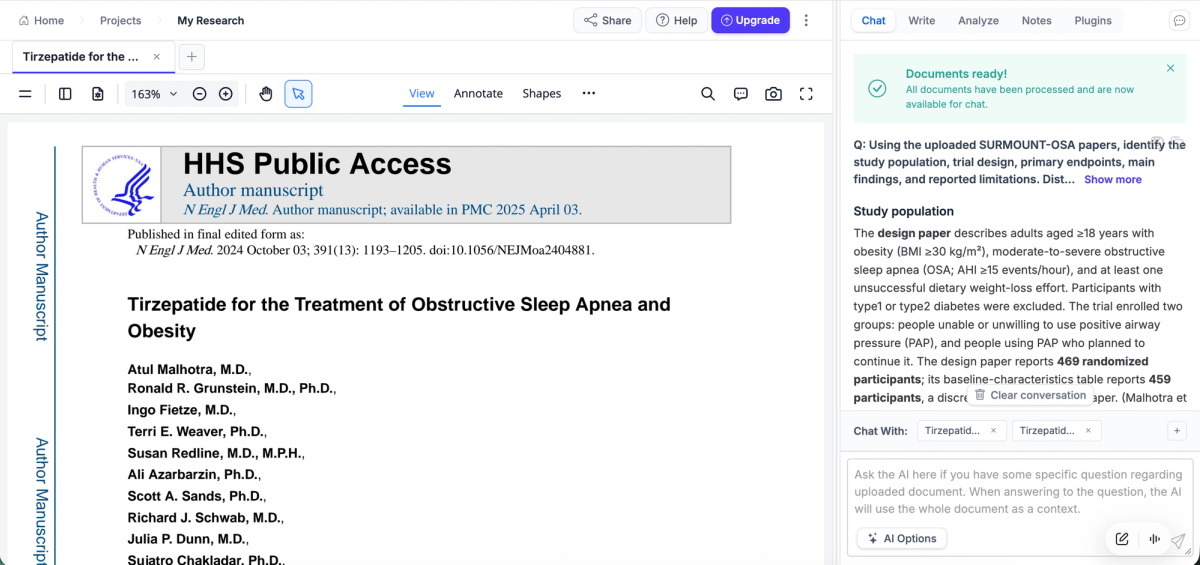
Avidnote test: a research PDF displayed alongside an AI answer. Only the reading/chat workflow was observed.
Where Avidnote helps: Close reading of uploaded papers, note-taking, and drafting in a unified workspace. For academic writing, the official product includes writing tools and templates; evaluate actual citation formatting and output quality with your own documents before relying on them.
What Is Noah AI?
Noah AI supports biomedical literature research, evidence organization, and research writing. Its literature-review offering describes topic scoping, searching scientific literature, synthesizing evidence by theme, and preparing citation-linked manuscripts.
For this comparison, we used the Noah Agent Deep Research workflow rather than claiming that every output was produced through a separate literature-review template. The task asked Noah to verify two papers from the same SURMOUNT-OSA program, extract clinical trial results, distinguish design from findings, and draft a short academic synthesis.
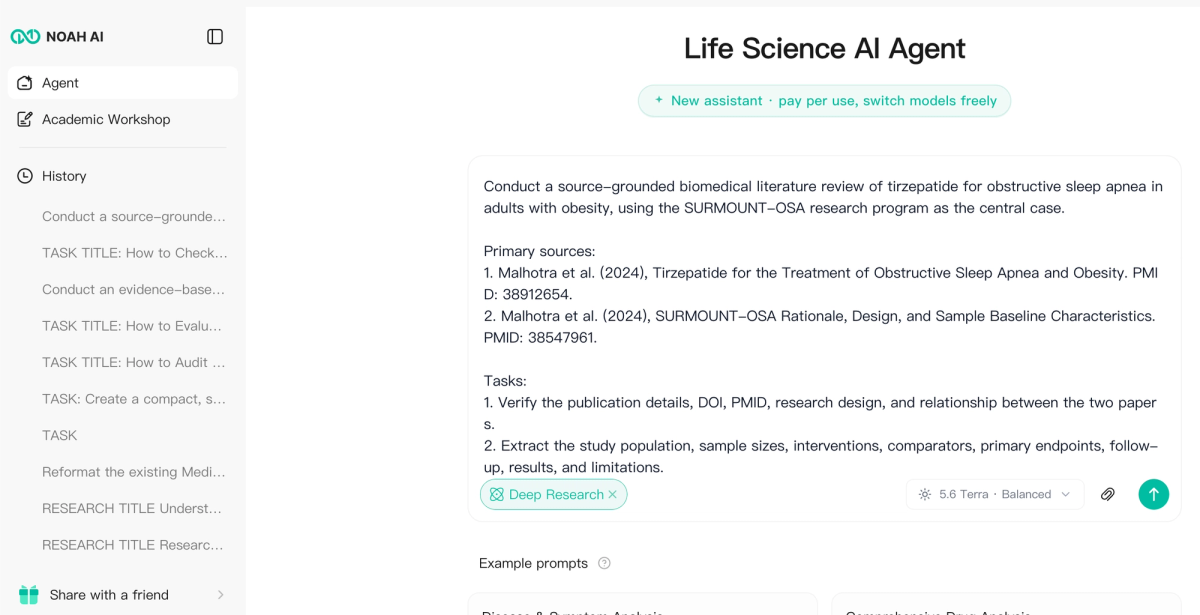
Noah Deep Research prompt specifying the two SURMOUNT-OSA publications and a source-grounded review task.
Real Literature Review Example: SURMOUNT-OSA
We selected the SURMOUNT-OSA research program, which studied tirzepatide in adults with obesity and moderate-to-severe OSA. The source set contained a design and baseline-characteristics paper (PMID 38547961) and a results paper (PMID 38912654). These are linked publications from one research program. The results paper reports two related randomized trials: trial 1 without baseline positive airway pressure (PAP), and trial 2 with PAP use at baseline. The design paper should not be counted as an additional efficacy trial.
Step 1: Extract the reported trial evidence
Noah generated a table of 52-week outcomes for trial 1 and trial 2, including changes in apnea–hypopnea index (AHI), treatment differences, confidence intervals, and secondary findings. The original results publication reported an estimated between-group difference in AHI change of −20.0 events/hour for trial 1 (95% CI −25.8 to −14.2) and −23.8 events/hour for trial 2 (95% CI −29.6 to −17.9).
The two trial populations differed in their baseline PAP status. Those numerical estimates are not a direct head-to-head comparison proving one population benefited more than the other.
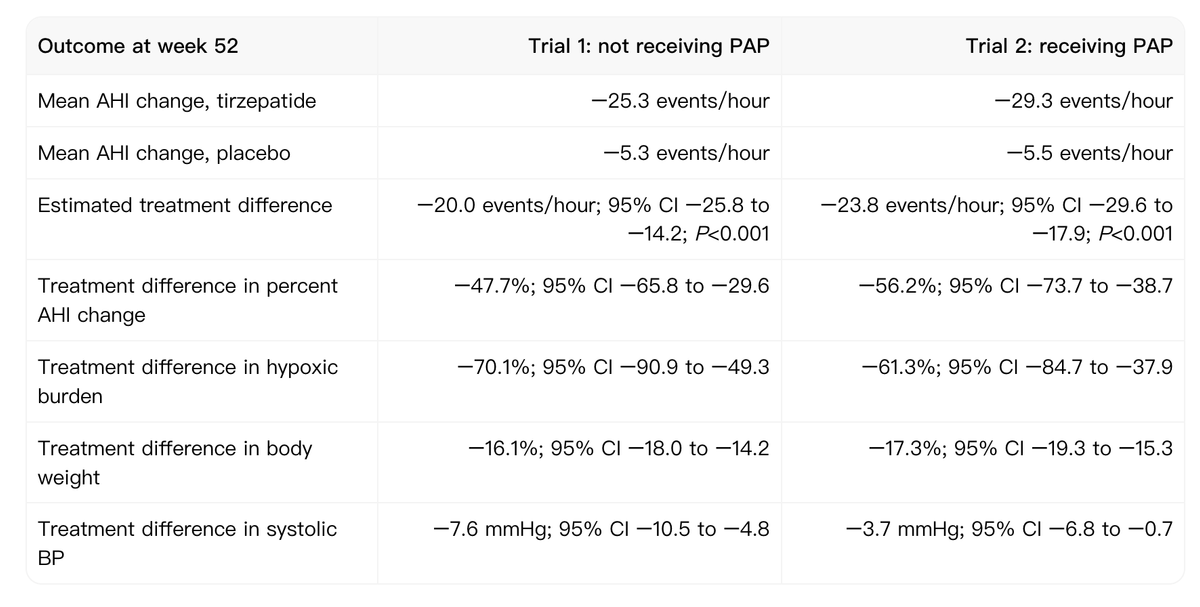
Noah output: the 52-week results table for the two SURMOUNT-OSA trial populations. Quantitative values should be checked against the original publication.
Step 2: Turn extracted data into academic prose
Noah then generated an approximately 250-word literature-review synthesis connecting the shared trial design with efficacy and safety results. It also identified interpretive limits, including the 52-week follow-up, selected eligibility criteria, and lack of direct evidence that tirzepatide can replace PAP or prevent long-term cardiovascular events.
In this example, the output was a source-supported narrative draft, not a completed systematic review, meta-analysis, or manuscript validated for submission. A researcher should still verify numerical data, assess study quality, and edit the language and citations.
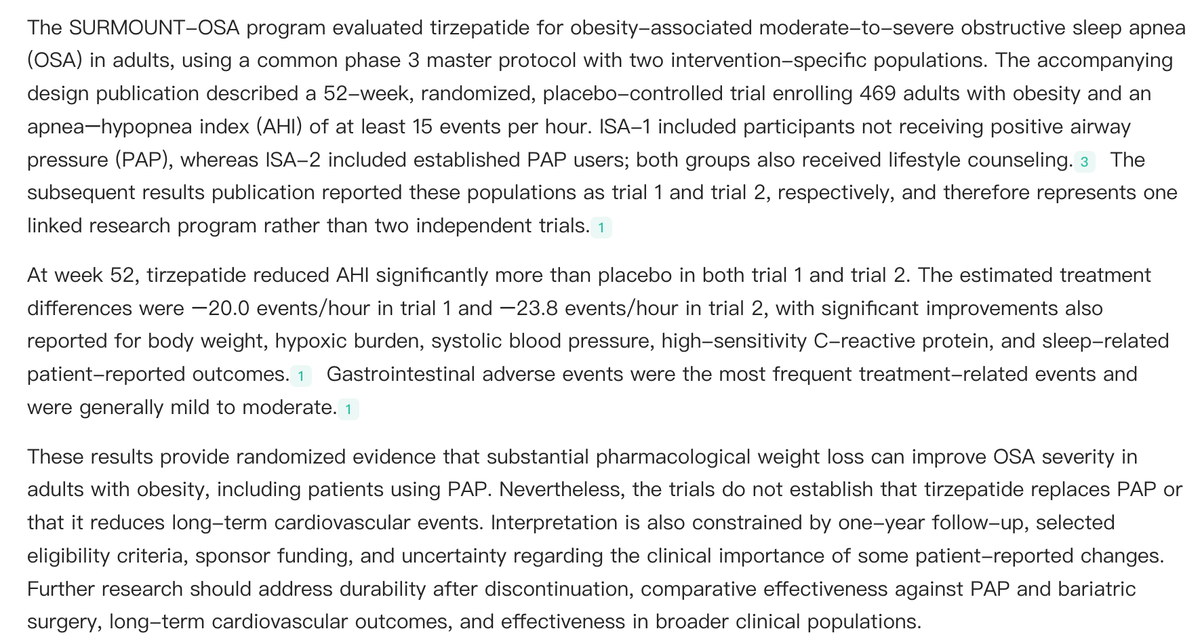
Noah output: a literature-review narrative integrating the trial design, outcomes, and evidence limitations.
Literature Review Research vs Writing: Which Workflow Fits?
Choose Avidnote when your day-to-day task starts with papers already in hand. Its workspace places reading, notes, document chat, and writing controls near the source material. This can be convenient for annotating PDFs and drafting around your own library.
Consider Noah AI when your task starts with a biomedical research question. The demonstrated Deep Research workflow produced a structured clinical evidence table followed by a research-oriented narrative. This is useful when the researcher needs to organize trial endpoints, link findings to papers, or make important study-design distinctions explicit.
These are workflow recommendations, not measured claims about citation accuracy, speed, or output quality. The Avidnote writing editor was not tested in the screenshots, and the prompts and outputs were not evaluated under a blinded, identical scoring protocol.
Limitations of This Comparison
Avidnote: We observed PDF loading and an AI chat response. We did not complete and independently evaluate a literature-review writing task using its Write tab, test all available templates, or audit the accuracy of every citation.
Noah AI: The example came from one Deep Research task focused on two publications linked to the same research program. It demonstrated evidence organization and narrative generation but does not establish completeness, universal accuracy, or superiority over other products.
Clinical evidence: The results apply to selected adults with obesity and moderate-to-severe OSA followed for 52 weeks. They do not establish that tirzepatide replaces PAP, and the trial 1 and trial 2 treatment effects should not be interpreted as a randomized comparison of PAP strategies.
FAQ
Can Avidnote write a literature review?
Avidnote advertises AI writing features, including literature-review drafting. Our screenshots establish PDF reading and chat use, but not the quality of a completed writing output.
Can Noah AI help organize clinical trial evidence?
In the demonstrated task, Noah prepared a 52-week results table and a cited narrative draft. As with any research assistant, extracted fields, denominators, effect estimates, and reference links require human verification.
Which tool is more accurate?
There is not enough controlled testing here to rank their accuracy. A fair accuracy study would require identical inputs, predefined scoring criteria, and manual verification of extracted statements and citations.
Are free plans available?
Both providers advertise free entry options. At the time of writing, Avidnote lists a free plan with usage limits, while Noah AI's Basic plan lists 300 signup credits. Allowances and task costs may change; check the official pricing pages before starting.
Final Thoughts: Noah AI or Avidnote?
Avidnote offers a convenient document-centered environment for reading, annotating, and writing about papers. Noah AI offers a life-science-focused route from a research question to structured evidence and a cited draft. The better choice depends on whether your primary challenge is working inside a document library or assembling and synthesizing biomedical evidence.
Start Your Next Literature Review with Noah AI
Move from a research question to organized evidence. Explore biomedical papers, review clinical study findings, identify research gaps, and build a citation-aware draft that you can verify and refine.
Start for free: Noah AI's Basic plan currently includes 200 signup credits and does not require payment to register. Credits are limited, and Deep Research usage may consume more credits depending on the task.
Start Exploring Noah AI for Free — Get 200 Signup Credits
No credit card required to start. Verify AI-generated research claims against original publications before scientific or clinical use.
Sources and Methodology
Product information: Avidnote official website; Avidnote pricing; Noah literature review; Noah pricing. Clinical evidence: Malhotra et al., NEJM results (2024); Malhotra et al., trial design (2024); NCT05412004. Comparison scope: Noah Deep Research results and Avidnote PDF chat screenshots, reviewed 10 November 2026. No numerical tool performance benchmark was conducted.