Emerging Immuno-Oncology Targets 2026: Beyond PD-1/PD-L1, Clinical Validation and Next-Wave Opportunities
Linda
Explore the 2026 immuno-oncology target landscape beyond PD-1/PD-L1, including validated targets, late-stage development programs, early clinical mechanisms, modality selection, tumor microenvironment biology, and a practical prioritization framework for research and strategy teams.
Checkpoint blockade transformed cancer treatment, but it did not solve the central problem of immuno-oncology. Many patients never respond, others develop acquired resistance, and several tumor contexts remain only partially sensitive to current PD-1/PD-L1-based approaches. That is why the next phase of immuno-oncology is no longer just about adding more combination regimens. It is about identifying which new targets have strong enough biological rationale, translational support, and clinical maturity to justify serious development.
In this guide, we map the 2026 immuno-oncology target landscape across validated, late-stage, early clinical, and emerging mechanisms. We also show how Noah can help structure this kind of target-level research workflow into clear comparison tables and decision frameworks.
Quick Answer
The post–PD-1/PD-L1 landscape is not defined by a single “next winner.” Instead, it is divided into four groups. First, some targets are already clinically validated beyond PD-1/PD-L1, such as CTLA-4, LAG-3, Nectin-4, and TROP-2. Second, late-stage targets like TIGIT, TIM-3, CD47, and B7-H3 remain strategically important, but their evidence is mixed and highly dependent on modality, trial design, and biomarker context. Third, early clinical targets such as TDO-2, Arginase-1/2, STING, HPK1/MAP4K1, and CDK1 continue to attract interest because they address immune suppression, innate signaling, or intracellular control points that PD-1 biology does not fully solve. Finally, a set of emerging mechanisms, including gasdermins, TBK1, ENO1, PKM2, and PCSK9, may shape the next wave of tumor-microenvironment reprogramming.
Why Immuno-Oncology Still Needs New Targets
The reason the field continues to expand beyond PD-1/PD-L1 is straightforward: immune resistance is multifactorial. Some tumors remain immunologically cold. Some fail to present antigens effectively. Some suppress T-cell function through metabolic pathways, myeloid programs, or stromal exclusion. Others create clinical bottlenecks around safety, biomarker selection, or limited durability. That means new target discovery is not just about finding another checkpoint. It is about finding mechanisms that can improve immune activation, reduce suppression, reshape the tumor microenvironment, or enable better modality fit.
The 2026 Immuno-Oncology Target Landscape
A useful way to understand the field is to segment targets by development maturity. That approach makes it easier to separate mechanisms with established clinical validation from those that remain promising but unsettled.
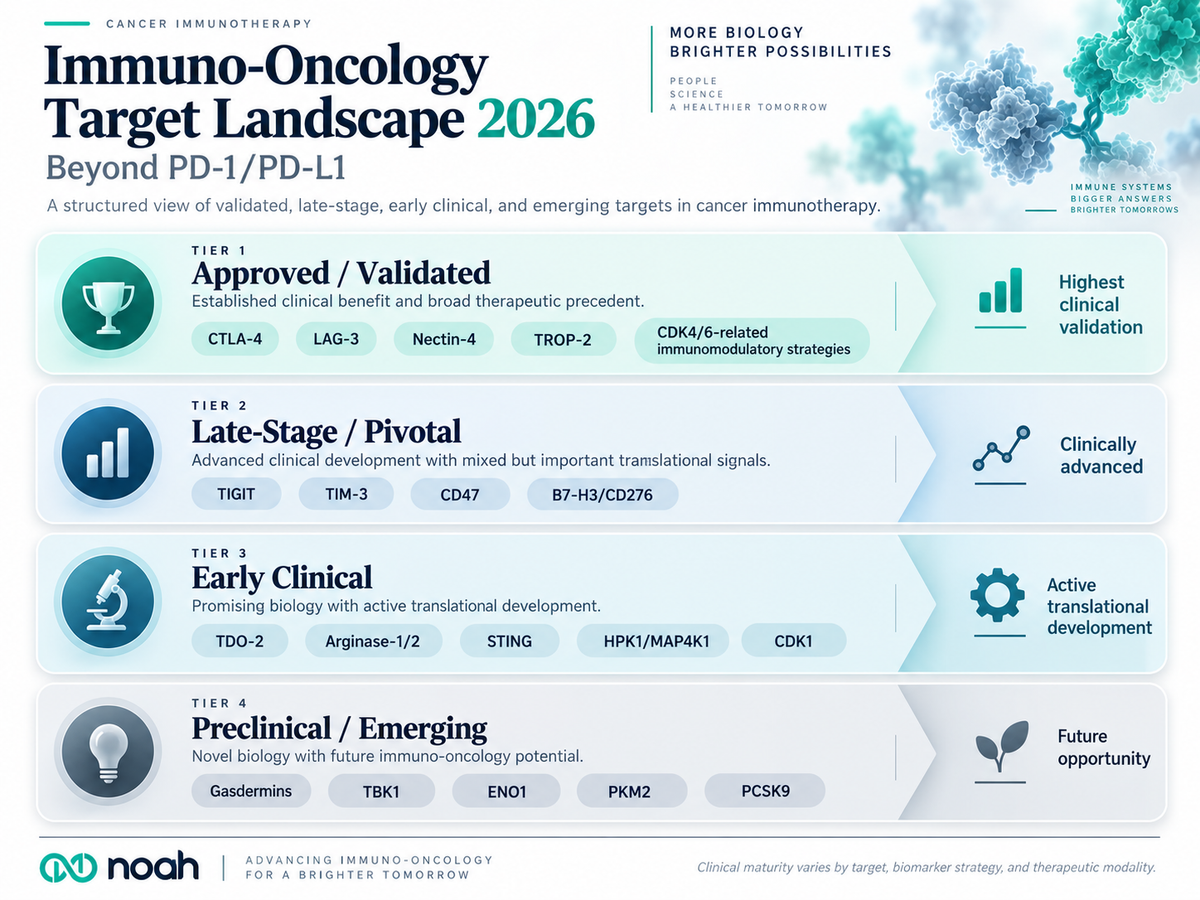
At the validated end of the spectrum, CTLA-4 and LAG-3 reinforce that checkpoint diversification can work, while Nectin-4 and TROP-2 show that immuno-oncology strategy increasingly overlaps with targeted cytotoxic platforms such as ADCs. CDK4/6-related immunomodulatory strategies add another layer, suggesting that some non-classical IO mechanisms may be most useful in combination settings rather than as standalone immune targets.
By contrast, the late-stage group remains more complex. These are not weak targets. But they are targets whose development has exposed the limits of first-generation assumptions. Some had strong early signals that did not translate cleanly into phase 3 benefit. Others are biologically attractive but operationally difficult because of safety, redundancy, or biomarker ambiguity.
Late-Stage Targets: Important, But Not Uniformly De-Risked
TIGIT, TIM-3, CD47, and B7-H3 all remain important to watch in 2026, but for very different reasons. TIGIT continues to matter because clinical setbacks did not fully invalidate its underlying biology; they raised deeper questions about Fc engineering, myeloid remodeling, and which tumor settings are most suitable. TIM-3 remains intriguing as an exhaustion-related checkpoint, though clinical validation is still limited. CD47 established powerful macrophage biology but also exposed major development challenges around hematologic toxicity and broad clinical transferability. B7-H3 is perhaps the most modality-diverse of the group, with growing interest across ADCs, bispecifics, radioconjugates, and cellular therapies.
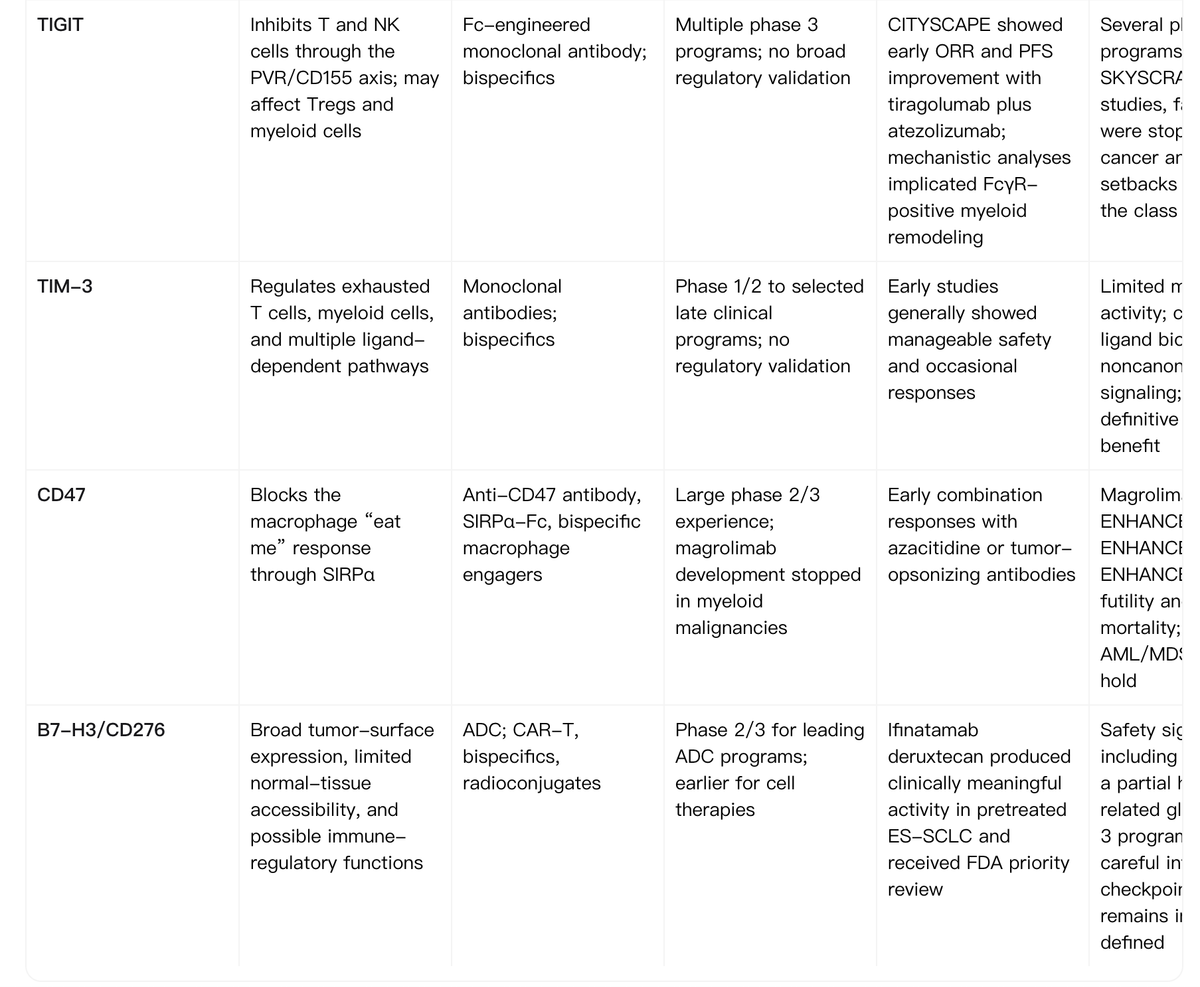
The value of this type of structured comparison is that it prevents a common mistake: treating all “hot” immuno-oncology targets as if they were on the same clinical footing. They are not. Some are biologically validated but operationally difficult. Some are clinically advanced but mechanistically unresolved. Some are best understood not as target failures, but as first-generation development failures.
Early Clinical Targets Shaping the Next Wave
The early clinical group is where much of the field’s next-wave experimentation is happening. These mechanisms often sit closer to metabolism, innate immunity, intracellular signaling, or myeloid biology than classical checkpoint blockade. That makes them appealing, but it also means they can be harder to validate and harder to translate into broadly successful programs.
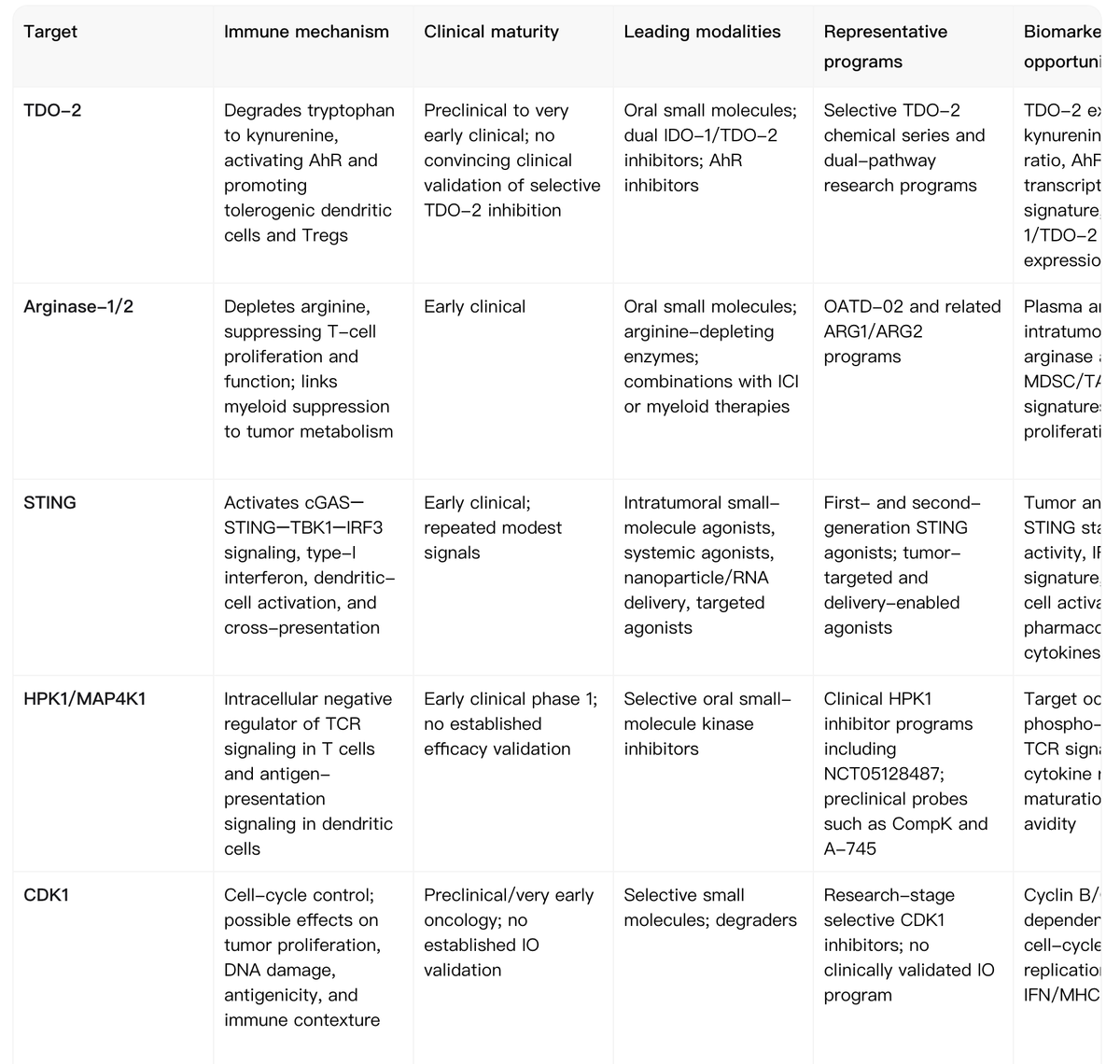
TDO-2 and Arginase-1/2 both matter because they attempt to relieve metabolic suppression within the tumor microenvironment. STING remains central to cold-to-hot tumor conversion efforts, but its fate depends heavily on delivery strategy and pharmacology. HPK1/MAP4K1 reflects sustained interest in intracellular brakes on T-cell signaling. CDK1 is less clinically mature in the immuno-oncology sense, but it represents a broader theme: targets that influence tumor proliferation, immunogenic stress, and immune context at the same time may offer differentiated future opportunities.
Target Biology Alone Is Not Enough: Modality Choice Matters
One of the biggest strategic lessons in immuno-oncology is that good biology does not automatically imply a universally good development path. The same target can behave very differently depending on whether it is pursued with an antibody, bispecific, ADC, small molecule, vaccine, RNA therapy, or a targeted protein degradation approach. In practice, target prioritization and modality prioritization need to happen together.
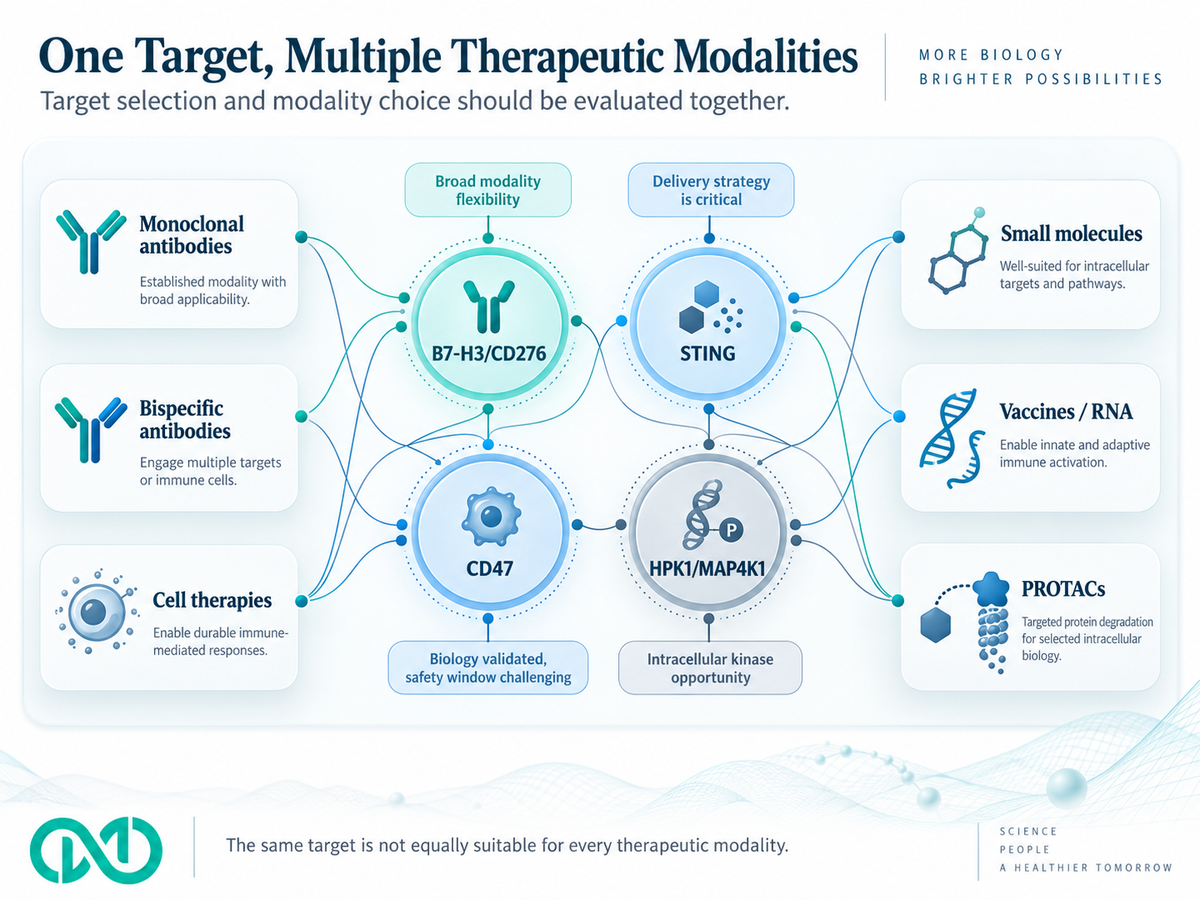
For example, B7-H3 supports several modality paths, while STING is unusually sensitive to delivery format. CD47 has compelling biology but a narrow safety window. HPK1 is inherently tied to intracellular pharmacology. The implication is simple: in immuno-oncology, the target is only half the strategy.
How Emerging Targets Reprogram the Tumor Microenvironment
Many of the most interesting targets in 2026 are best understood through the tumor microenvironment rather than through single-pathway charts. Some primarily enhance antigen presentation. Some restore nutrient availability for T cells. Some reduce suppressive metabolites. Some trigger inflammatory cell death. Some reshape macrophage or dendritic-cell behavior. These are not interchangeable effects, and they should not be interpreted as if they solve the same problem.
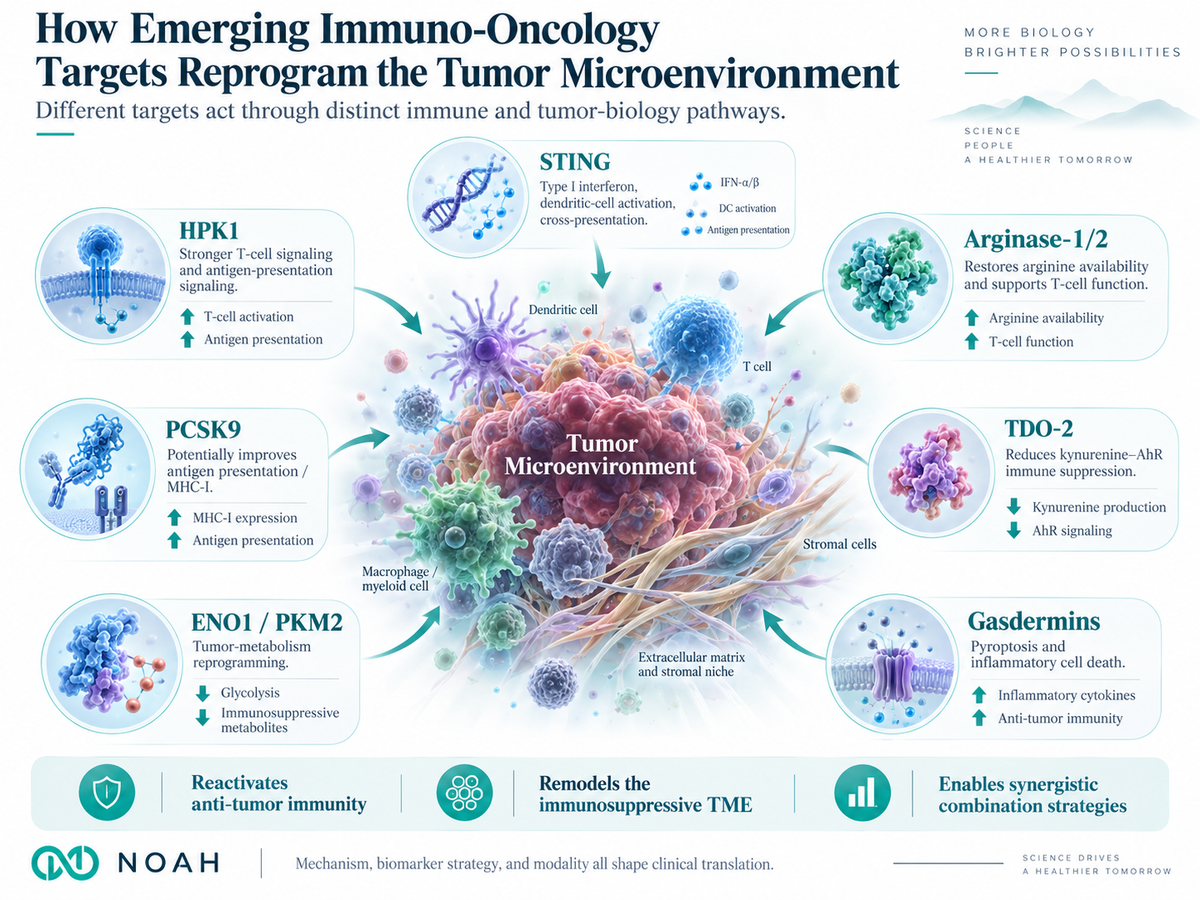
That distinction matters clinically. A target that reactivates anti-tumor immunity by relieving metabolic suppression may require completely different biomarkers, patient-selection rules, and combination logic than a target that works through innate activation or pyroptotic signaling. This is exactly why simplistic “best target” rankings are usually less useful than structured mechanism-based comparisons.
What Clinical Setbacks Actually Teach
Setbacks in immuno-oncology are often overinterpreted. A failed phase 3 program does not always mean a target is dead. It may mean the first-generation antibody format was suboptimal, the biomarker strategy was too broad, the combination partner was not ideal, or the biology was context-dependent. Conversely, an early signal does not mean a target is validated. A useful reading of the field has to distinguish among target failure, modality failure, biomarker failure, safety-window limitations, and pathway redundancy.
That is especially important in areas like TIGIT, TIM-3, CD47, STING, and metabolic immune regulation, where the translational question is often more important than the headline result.
A Practical Prioritization Framework for 2026
If a research or strategy team wants to compare immuno-oncology targets in a disciplined way, it needs more than mechanism enthusiasm. A useful framework includes biological validation, clinical evidence, tumor selectivity, biomarker feasibility, modality fit, combination logic, safety window, and resistance or redundancy risk. Evaluating these dimensions together creates a more realistic picture of whether a target is genuinely investable.
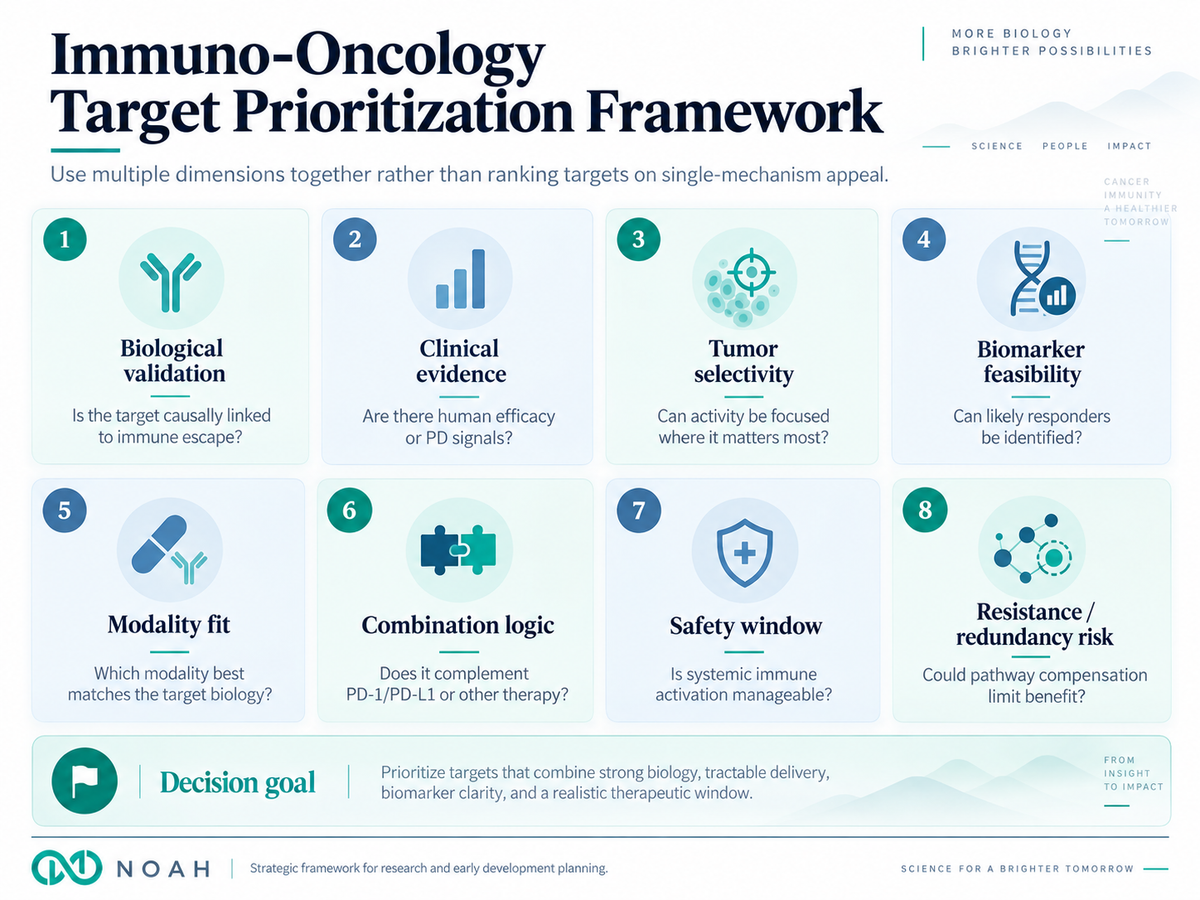
This kind of framework is also where Noah becomes practical. Rather than returning only long-form text, it can help convert broad target research into structured comparison matrices that are easier to use in portfolio discussions, internal strategy reviews, and target-selection workflows.
How Tools Differ by Workflow
Different tools support different parts of immuno-oncology research. Literature search and summarization tools may be enough for broad background reading. But target comparison, mechanism mapping, and decision-oriented research often require a workflow that can combine evidence gathering, structured analysis, and output organization. That is where a task-oriented research agent is usually more useful than a generic assistant.
The point is not that one tool is universally best. It is that some workflows require better organization of mechanistic, clinical, and translational evidence than others.
What Researchers Still Need to Verify
- Whether a given target’s clinical maturity reflects true mechanism validation or only limited program-level signal.
- Whether a biomarker is actionable enough for patient enrichment in real clinical settings.
- Whether safety findings are modality-specific or target-intrinsic.
- Whether combination hypotheses are mechanistically strong or merely conventional.
- Whether early clinical activity is durable and transferable across tumor settings.
Limitations
This article is a structured landscape review, not a substitute for full target due diligence. Clinical-stage classifications can evolve quickly. Mechanistic interpretations may differ across sponsors and publications. Some targets have stronger public evidence than others, and some emerging mechanisms remain at an early hypothesis-generating stage. The goal here is to organize the field clearly, not to claim that all listed targets are equally validated or equally investable.
FAQ
What is the biggest immuno-oncology trend beyond PD-1/PD-L1 in 2026?
The biggest trend is not one target. It is the move toward mechanism-aware prioritization, where developers evaluate target biology, modality choice, biomarker feasibility, and clinical maturity together.
Are TIGIT and CD47 still relevant in 2026?
Yes, but they should be viewed carefully. Both remain biologically important, yet each has development challenges that prevent simple bullish conclusions.
Why are early clinical targets like STING and HPK1 still important?
Because they address areas where PD-1/PD-L1 biology is incomplete, including innate activation, intracellular immune regulation, and tumor-microenvironment control.
Why is modality selection so important in immuno-oncology?
The same target can behave very differently across antibodies, bispecifics, ADCs, small molecules, vaccines, RNA approaches, or degraders. Target quality does not eliminate modality risk.
What kind of workflow is Noah most useful for here?
Noah is most useful when the task requires a structured target landscape, evidence comparison, translational interpretation, or prioritization framework rather than only a general literature summary.
Final Takeaway
The 2026 immuno-oncology landscape is no longer just a race to identify another checkpoint. It is a strategic problem of choosing the right target, the right modality, the right biomarker logic, and the right clinical context. Some targets are clinically validated. Some are late-stage but unresolved. Some are early and promising. And some may shape the next major shift in tumor-microenvironment engineering. The most useful research workflow is the one that turns this complexity into a clear decision structure.
Try Noah for structured life science research
If you need to compare clinical targets, evaluate translational evidence, or build research-ready strategy reports from complex biomedical questions, Noah can help structure the workflow.