Best AI Tools for Oncology Research Literature Reviews (2026)
Linda
Compare 6 AI tools for oncology literature reviews in 2026, covering cancer research, clinical evidence extraction, biomarkers, citations, and research gaps.
Oncology literature reviews require more than finding papers with a matching keyword. Researchers must distinguish randomized trials from observational biomarker studies, reconcile subsequent follow-up publications, check whether endpoints refer to recurrence or survival, and document where evidence remains uncertain. AI research tools can help at different stages, but they do not all serve the same purpose.
This guide compares six AI tools for oncology research literature reviews: Noah AI, Elicit, SciSpace, Scite, Consensus, and NotebookLM. To show a real workflow, we also tested Noah AI on a colorectal-cancer research question involving circulating tumor DNA (ctDNA), molecular residual disease (MRD), and adjuvant chemotherapy.
Testing disclosure: Only Noah AI was hands-on tested for the oncology case shown here. Other tools are characterized using their public feature documentation. The use-case labels below are editorial categories, not scores from a head-to-head accuracy or speed benchmark. The Noah output was checked against selected primary publications; the workflow is not a systematic review.
Explore Oncology Literature Research with Noah AI
Quick Comparison: 6 AI Tools for Oncology Literature Reviews
| Tool | Most relevant use case | What to verify yourself |
|---|---|---|
| Noah AI | Biomedical evidence mapping, research themes, cited synthesis | Original study design, treatment arms, endpoints, source access |
| Elicit | Finding papers, screening, and structured extraction | Eligibility decisions and underlying extraction quotes |
| SciSpace | Reading oncology PDFs and comparing research papers | Whether an answer reflects the full article or only accessible content |
| Scite | Examining citation context and supporting or contrasting statements | What each citing study actually investigated |
| Consensus | Exploring medical research questions and relevant evidence | Population, outcome definitions, guideline edition and date |
| NotebookLM | Question-answering and synthesis across collected source files | Source completeness, uploaded version, and missed evidence |
What Oncology Researchers Should Look for in an AI Literature Review Tool
For cancer research, an effective workflow should support distinct evidence types rather than treating all papers as interchangeable. Useful criteria include:
- Traceable citations: links to original publications with DOI, PMID, or trial identifiers.
- Study classification: randomized controlled trial, observational cohort, follow-up analysis, review, or registry record.
- Population specificity: cancer type and stage, biomarker status, prior treatments, and treatment setting.
- Endpoint precision: distinguishing recurrence-free survival (RFS), disease-free survival (DFS), overall survival (OS), response rate, and biomarker clearance.
- Critical interpretation: separating prognostic associations from evidence that a biomarker predicts treatment benefit.
- Explicit uncertainty: noting unavailable full texts, conflicting findings, immature follow-up, assay limitations, and unresolved clinical questions.
1. Noah AI — For Oncology Evidence Mapping and Synthesis
Best-fit task: moving from a focused oncology research question to a structured evidence overview and narrative synthesis.
Noah AI offers a life-science-oriented research workflow and a literature-review tool that organizes studies by themes, creates evidence tables, and links claims to sources. In our tested Deep Research example, it produced a compact oncology evidence table and a narrative evaluation of ctDNA-guided adjuvant therapy research.
That makes it relevant for researchers who want an initial map of trial designs, major findings, evidence gaps, and citations, while retaining responsibility for checking the originals.
Practical limitation: a generated review is not proof that the search was exhaustive, that all full texts were accessible, or that numerical extraction is error-free.
2. Elicit — For Paper Screening and Structured Extraction
Best-fit task: collecting eligible oncology studies and extracting comparable study fields.
Elicit provides research workflows for finding papers and extracting information. Its dedicated systematic-review workflow includes gathering, screening, extraction, and reporting; availability depends on the subscription plan. Its general research tasks are now organized through its Research Agent, rather than requiring the older standalone Find Papers/Extract Data interface.
For an oncology question, researchers could define screening criteria around stage, biomarker positivity, intervention, and endpoint, then inspect source quotes supporting extracted fields.
Practical limitation: AI screening and extraction still require human audit, especially when multiple publications arise from the same trial or endpoint definitions are ambiguous.
3. SciSpace — For Understanding and Comparing Oncology Papers
Best-fit task: reading clinical research articles and clarifying technical methods.
SciSpace's literature-review tools support paper discovery, paper-specific chat, and tabular analysis across multiple publications. Its reading-focused interface may be useful when assessing oncology methods, biomarker assays, subgroup analyses, or endpoint definitions.
Practical limitation: an explanation of a published paper is not a substitute for independently evaluating its statistical analysis, missing data, or clinical generalizability.
4. Scite — For Checking Citation Context
Best-fit task: investigating how subsequent studies cite and discuss an oncology finding.
Scite's Smart Citations display citation statements and classify them as supporting, contrasting, or mentioning. In a rapidly evolving area such as MRD-guided colorectal cancer care, this can help researchers locate follow-up discussion, criticism, replication attempts, and related analyses.
Practical limitation: citation labels are context aids, not independent judgments that an intervention is clinically effective or that a paper is methodologically sound.
5. Consensus — For Focused Medical Evidence Questions
Best-fit task: exploring focused clinical questions and relevant published literature.
Consensus provides evidence-oriented research search. Its documented Medical Mode focuses searches on medical journals and clinical guidelines. That is useful when framing questions such as whether postoperative ctDNA is prognostic for recurrence, or whether a ctDNA-guided treatment strategy has demonstrated clinical utility in a given stage.
Practical limitation: the formulation of the question matters. “Is ctDNA prognostic?” and “Does ctDNA identify who benefits from chemotherapy?” require different kinds of evidence.
6. NotebookLM — For Synthesizing a Collected Oncology Source Library
Best-fit task: asking questions across a researcher-selected set of PDFs, papers, and reference materials.
Google's NotebookLM can be used to collect source materials and produce responses grounded in those materials. This may be useful for organizing a study folder containing trial reports, protocols, abstracts, and meeting notes.
Practical limitation: a source-grounded answer is limited by the sources that were uploaded or selected. It should not be assumed to represent the latest oncology evidence beyond that library.
Real Oncology Research Example: ctDNA and Adjuvant Therapy
We tested Noah AI with the question: How does postoperative ctDNA evidence inform molecular residual disease assessment and adjuvant treatment decisions in colorectal cancer? The task drew on the DYNAMIC randomized trial and its five-year follow-up, the observational GALAXY/CIRCULATE-Japan cohort, DYNAMIC-III, and a 2026 CIRCULATE randomized study.
These sources form a useful test because they differ in design, cancer stage, and the type of claim they can support. Importantly, DYNAMIC 2022 and the 2025 five-year report represent the same randomized cohort, not two independent trials.
Step 1 — Start with a Focused Oncology Research Prompt
The Noah prompt requested verified publication identifiers, a compact evidence table, and careful interpretation of prognostic versus predictive biomarker claims. It also instructed the model not to equate DFS, RFS, and OS.
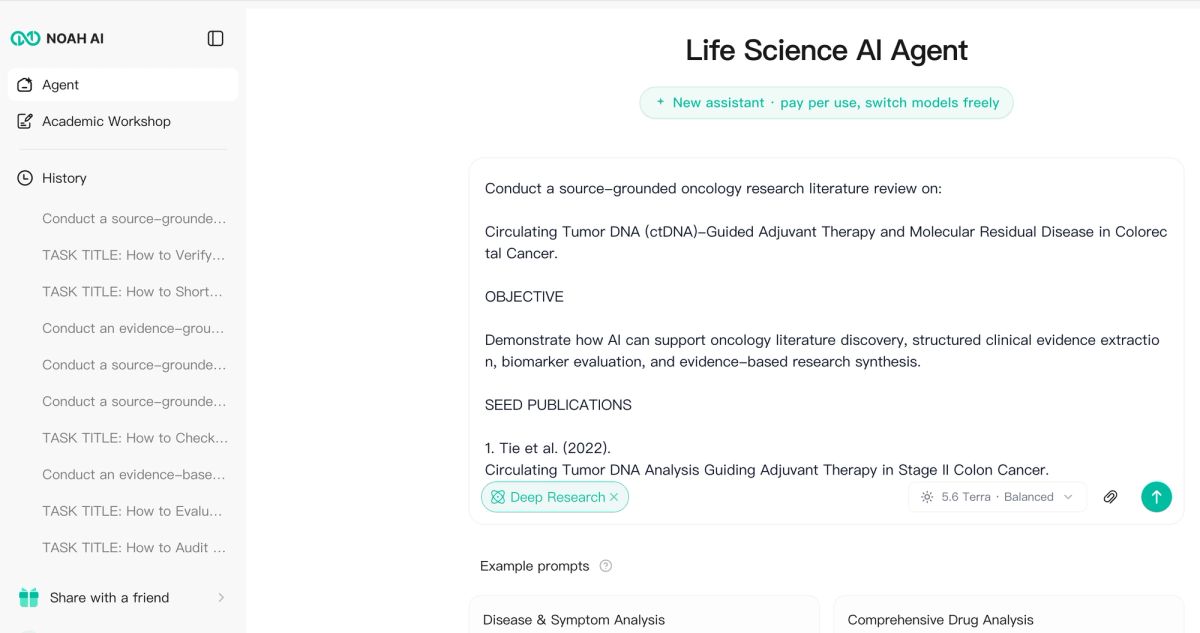
Figure 1. Actual Noah AI Deep Research input for the colorectal cancer ctDNA literature-review case.
Step 2 — Create a Compact Oncology Evidence Table
The generated table distinguished trial design, population, findings, limitations, and references. It brought together four research rows while grouping the original DYNAMIC trial with its later follow-up.
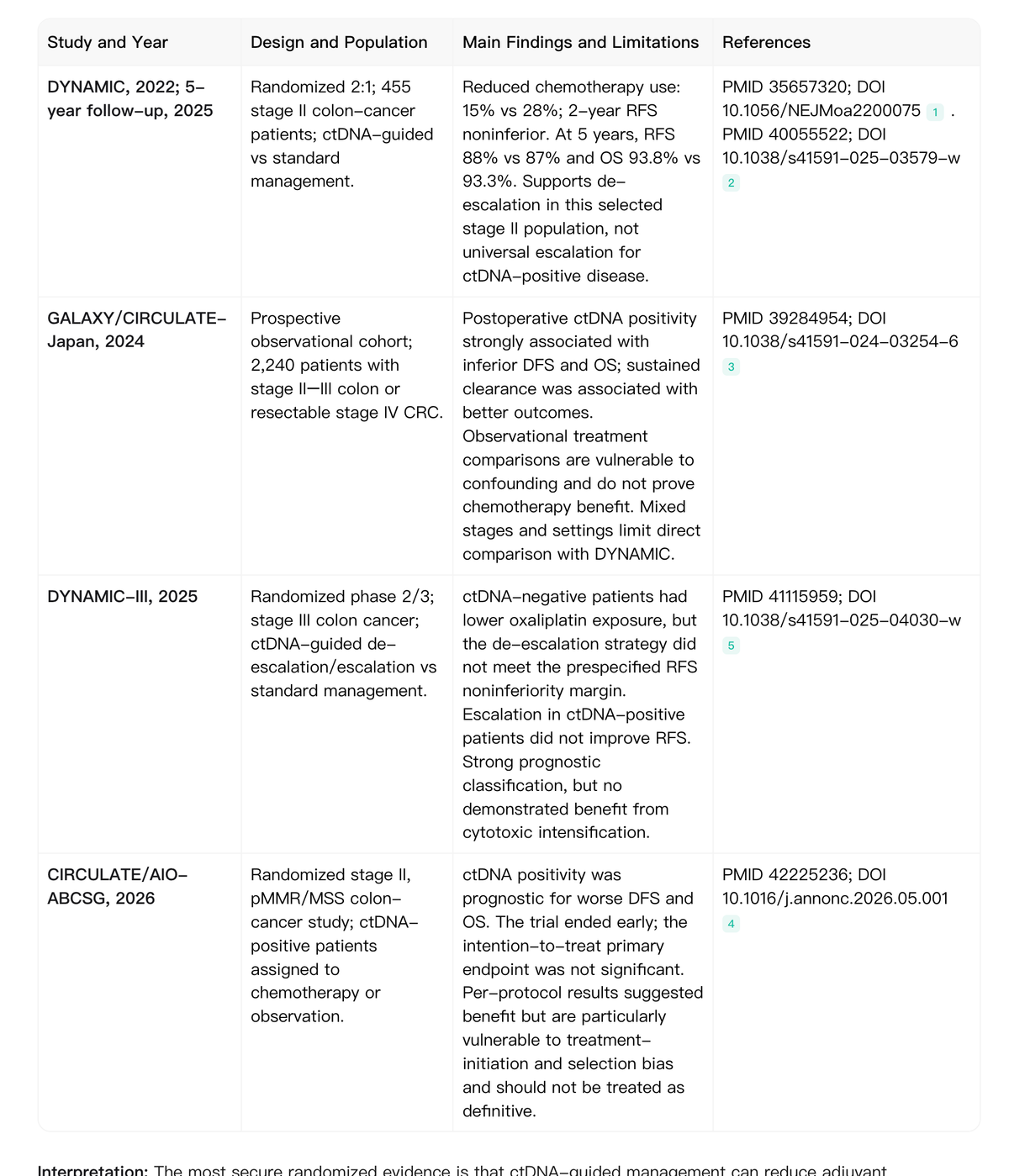
Figure 2. Real Noah AI evidence table; study types and DOI/PMID references are visible for each entry.
The most relevant evidence boundaries are:
- DYNAMIC, stage II colon cancer: 455 participants were randomized. Adjuvant chemotherapy use was 15% in the ctDNA-guided group versus 28% with standard management; the prespecified two-year RFS noninferiority criterion was met. The later report found five-year RFS of approximately 88% versus 87%, and OS of 93.8% versus 93.3%.
- GALAXY, observational cohort: postoperative ctDNA positivity was strongly associated with worse DFS and OS across an expanded colorectal-cancer cohort. Because treatment was not randomized, this association alone cannot prove that chemotherapy has greater benefit in ctDNA-positive patients.
- DYNAMIC-III, stage III colon cancer: ctDNA-guided de-escalation reduced oxaliplatin use but did not meet the prespecified RFS noninferiority margin. Escalation in ctDNA-positive patients did not improve RFS in the reported trial.
- CIRCULATE/AIO-ABCSG, 2026: early closure limited interpretation; the primary intention-to-treat endpoint was not met. More favorable per-protocol signals do not replace a definitive randomized primary analysis.
Because these studies differ by cancer stage, intervention strategy, assay, and endpoint, their reported outcomes should not be ranked as though they came from a common randomized comparison.
Step 3 — Turn the Evidence into an Oncology Literature Synthesis
The Noah output then synthesized the distinction between prognostic validity and clinical treatment utility. Postoperative ctDNA can identify patients at higher recurrence risk, but demonstrating that a test predicts greater benefit from a specific regimen requires stronger treatment-comparison evidence.
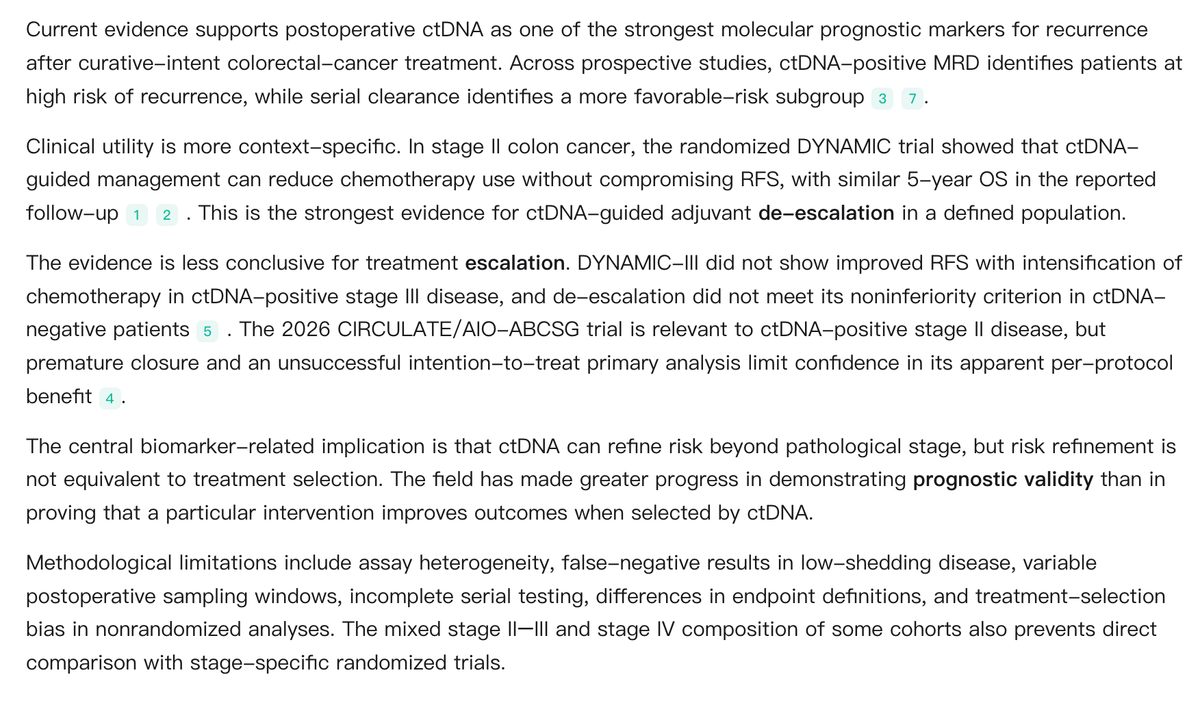
Figure 3. Noah AI narrative synthesis of the ctDNA literature, with linked research citations and explicit interpretation limits.
The synthesis also addressed the limitations of assay sensitivity, postoperative sampling schedules, false-negative results in low-shedding disease, mixed-stage observational populations, and differences in survival endpoint definitions.
What this test demonstrates: Noah can produce a readable initial evidence map and structured synthesis from a bounded oncology question. It does not establish that the tool has performed a fully reproducible systematic search, validated every source at full-text level, or resolved every treatment decision.
Why Prognostic and Predictive Biomarkers Must Be Kept Separate
An oncology literature review should distinguish two claims:
- Prognostic: ctDNA-positive patients tend to have a higher probability of recurrence or worse outcomes, regardless of a particular treatment comparison.
- Predictive: ctDNA status changes the relative benefit of one treatment compared with another, which requires an appropriate treatment contrast and supporting analysis.
The GALAXY cohort offers strong prognostic associations. DYNAMIC provides randomized evidence for a particular ctDNA-guided de-escalation strategy in stage II colon cancer. Neither fact alone establishes that all ctDNA-positive patients should receive escalated chemotherapy.
What About RFS, DFS, and OS?
These outcomes should be tracked separately. RFS and DFS may use different protocol-specific event definitions, while OS measures time to death from any cause. A reported improvement in a recurrence-related endpoint does not automatically establish improved overall survival. AI-generated extraction tables should preserve the exact endpoint, follow-up, denominator, and source.
How to Choose an AI Tool for Your Oncology Review
If you need to screen a large set of clinical papers, Elicit's screening and extraction workflow may be a fit. If you need to read an unfamiliar oncology PDF, SciSpace offers a paper-centered experience. Scite can support citation-context investigation, Consensus can support focused medical evidence searches, and NotebookLM can help work within a defined source collection.
For a research task that begins with a biomedical question and requires a structured table plus a thematic synthesis, Noah AI is another relevant choice, as shown by the ctDNA example. These tools can be complementary rather than mutually exclusive.
Limitations and Responsible Use in Oncology Research
AI research assistance can introduce missed studies, extraction errors, unsupported citations, incorrectly combined trial populations, and overconfident interpretations. More subtle errors include treating a long-term follow-up as an independent trial, assuming an observational treatment association is causal, or reporting a biomarker surrogate as a proven survival benefit.
Before using any output in a manuscript, research program, evidence dossier, or clinical context, confirm source identity, trial design, population, outcome definition, numerical values, study limitations, and the current version of relevant guidelines. This article is for research workflow evaluation, not patient-specific treatment advice.
Frequently Asked Questions
Which AI tool is best for an oncology literature review?
It depends on the task. Noah AI demonstrated evidence organization and thematic synthesis in this article; Elicit emphasizes screening and extraction; SciSpace supports paper reading; Scite supports citation-context analysis; Consensus supports evidence search; and NotebookLM helps synthesize a chosen source library. No standardized accuracy ranking was conducted.
Can AI tools compare clinical trial results in oncology?
They can help extract and organize results, but cross-trial comparisons must respect differences in stage, eligibility, intervention, comparator, endpoint, and follow-up. Separate trials do not automatically establish one treatment is superior to another.
Can AI detect oncology research gaps?
It can propose questions from the accessible literature, such as assay standardization, false negatives, treatment escalation strategies, and long-term outcomes. Researchers should check those gaps against more recent publications and ongoing trials.
Is a narrative literature review the same as a systematic review?
No. A systematic review requires a predefined, reproducible methodology and documented screening and appraisal. The focused Noah task in this article was an illustrative research review, not a systematic review or meta-analysis.
Can I try Noah AI for free?
Noah AI lists a free entry plan, with limited credits. The number of available signup credits and cost per task can change, so confirm the allowance shown in your account and the current pricing page before starting a Deep Research task.
Conclusion
The most useful AI tool for an oncology literature review is the one that fits the research stage and helps preserve the distinctions that matter clinically and scientifically. Our ctDNA case shows how an AI-assisted workflow can map randomized and observational evidence, connect findings to original citations, and highlight uncertainties without treating prognostic associations as proven treatment benefits.
Start Your Next Oncology Literature Review with Noah AI
Go beyond a list of cancer research papers. Use Noah AI to investigate biomedical questions, organize evidence from clinical trials, examine biomarker findings, identify unresolved research gaps, and prepare source-linked literature summaries for human review.
Whether you're exploring ctDNA in colorectal cancer, evaluating oncology trial endpoints, or preparing a background section for a research project, a structured evidence workflow can make it easier to move from questions to traceable findings.
Explore Noah AI for free. A free entry plan is available, with limited credits. Check your current account allowance and the estimated cost of each task before running an extended review.
Start Exploring Noah AI for Free!
Free use is limited. AI-generated research conclusions and references require verification against the original publications.
Research Sources and Product Documentation
Original oncology research
- DYNAMIC randomized trial, NEJM (2022), PMID: 35657320.
- DYNAMIC five-year follow-up, Nature Medicine (2025), PMID: 40055522.
- GALAXY/CIRCULATE-Japan observational cohort, Nature Medicine (2024), PMID: 39284954.
- DYNAMIC-III, Nature Medicine (2025), DOI: 10.1038/s41591-025-04030-w.
- CIRCULATE/AIO-ABCSG trial, Annals of Oncology (2026), DOI: 10.1016/j.annonc.2026.05.001.
Official tool information
- Noah AI literature review
- Elicit research workflows
- SciSpace literature review
- Scite features
- Consensus Medical Mode
- NotebookLM
Feature documentation and evidence checked in November 2026. The Noah case uses the actual outputs shown in screenshots; competitor products were not tested against the same benchmark. This page does not provide clinical treatment guidance.