Best AI Tools for Narrative Literature Reviews in Medicine (2026)
Linda
Compare 6 AI tools for medical narrative literature reviews in 2026. Explore thematic evidence synthesis, citations, academic writing, and a real Noah AI example.
Writing a narrative literature review in medicine means more than summarizing papers one by one. Researchers need to define a clinical question, locate relevant evidence, organize findings by theme, explain disagreements, and develop a readable argument with verifiable citations. AI tools can help at different stages—but no single output should replace critical appraisal of the original research.
This guide compares six AI tools for medical narrative reviews: Noah AI, Elicit, SciSpace, Consensus, NotebookLM, and ChatGPT. It also includes a real Noah AI workflow examining exercise, cognitive behavioral therapy (CBT), and mindfulness for cancer-related fatigue.
How this guide was prepared: The three Noah screenshots are from one hands-on Deep Research task. Other tools are discussed using their official product documentation. We did not run equivalent experiments across all six products, so this article does not assign accuracy scores or claim that any tool is universally superior.
Explore Noah AI for Medical Literature Reviews
What Makes a Good AI Tool for a Medical Narrative Review?
Unlike a systematic review, a narrative review usually takes a more interpretive, theme-based approach. It should still explain its scope and how literature was identified; a narrative format is not a reason to omit sources or ignore contradictory findings.
- Literature discovery: Finding guidelines, original studies, and relevant reviews.
- Thematic organization: Grouping research by intervention, mechanism, population, or outcome instead of writing one paragraph per paper.
- Evidence traceability: Preserving titles, PMIDs, DOIs, and links for fact-checking.
- Scientific reasoning: Distinguishing randomized trial findings, guideline recommendations, review-level findings, and interpretation.
- Writing support: Developing a coherent narrative, limitations section, and research agenda.
- Research boundaries: Disclosing incomplete full-text access, overlapping review populations, and unresolved questions.
6 Best AI Tools for Narrative Literature Reviews in Medicine
| Tool | Best-fit task | Important consideration |
|---|---|---|
| Noah AI | Biomedical thematic evidence synthesis | Check retrieved sources and all AI-generated conclusions |
| Elicit | Paper discovery, extraction, and structured research reports | Some review workflows depend on plan and task |
| SciSpace | Reading technical papers and literature exploration | Verify explanations against the original paper |
| Consensus | Finding evidence around focused scientific questions | Consensus Meter is not a complete evidence synthesis |
| NotebookLM | Source-grounded notes and multi-document discussion | Quality depends on the source collection |
| ChatGPT | Review outlines, synthesis drafts, and research planning | Research depth and available features vary by plan |
Noah AI — For Biomedical Thematic Synthesis
Noah AI offers a literature review workflow for life-science questions, with thematic synthesis, source references, study tables, and discussion of consensus, limitations, and research gaps. This is particularly relevant when a medical narrative review must connect clinical guidelines, randomized studies, and reviews without treating them as equivalent kinds of evidence.
In the case study below, Noah produced a topic-based evidence matrix and narrative prose with reference markers. This illustrates a useful workflow, not a validated measurement of citation accuracy or review completeness.
Elicit — For Finding and Structuring Research Papers
Elicit supports research discovery, data extraction, and research reports. Its research workflows can help a reviewer build an initial evidence map before deciding which papers deserve closer reading. For a narrative review, extracted fields might include clinical population, intervention, outcomes, major findings, and limitations.
Elicit also offers a dedicated systematic review workflow on eligible plans, but using Elicit does not automatically turn a narrative review into a systematic review. The reviewer must still define and disclose the actual method used.
SciSpace — For Understanding Complex Medical Papers
SciSpace combines paper discovery, document-focused questions, tabular insights, and writing assistance. It can be useful for interpreting unfamiliar terminology, navigating dense methods sections, and organizing reading notes.
Its explanations are a reading aid, not a replacement for checking whether a clinical endpoint, subgroup result, or statistical claim is actually supported by the publication.
Consensus — For Exploring Scientific Agreement and Disagreement
Consensus is suited to focused research questions such as whether a category of intervention tends to improve a particular health outcome. Its Consensus Meter can summarize classifications of relevant search results, while linking readers back to individual studies.
The meter reflects a subset of retrieved papers, not every available study. Medical narrative reviews should inspect differences in study populations, comparator groups, endpoint definitions, and evidence quality before describing a finding as a consensus.
NotebookLM — For Working Across a Curated Source Library
NotebookLM enables source-grounded questions and notes across uploaded or discovered materials. It can be useful when a researcher has already selected a set of medical papers, guidelines, and reference documents and needs to compare or summarize them within a project.
NotebookLM can also assist with source discovery, but the reviewer remains responsible for checking coverage, document versions, and the relevance of each included source.
ChatGPT — For Planning, Organizing, and Revising a Review
ChatGPT can help define a review question, propose thematic outlines, summarize user-provided material, and revise academic prose. Where available, Deep Research can collect and synthesize information into a structured report with citations.
It remains important to distinguish sourced findings from editorial suggestions. In medical writing, citations, quantitative data, and statements about clinical practice must be independently checked.
Real Noah AI Example: A Narrative Review of Cancer-Related Fatigue
To demonstrate an actual workflow, we asked Noah AI to review exercise, cognitive behavioral therapy (CBT), and mindfulness interventions for cancer-related fatigue (CRF) in adults. The task asked for a scoped literature search, a concise theme-based matrix, consideration of conflicting evidence, and a draft organized by topic rather than by individual study.
The report recorded a search cutoff of November 10, 2026 and described PubMed/MEDLINE searching together with guideline evidence and reference follow-up. It was a narrative review, not a systematic review or meta-analysis; full text was not available for every publication.
Step 1. Enter a Defined Medical Research Prompt
The prompt specified adult cancer populations, active treatment and survivorship settings, three intervention categories, supporting references, and a request for a theme-based evidence matrix. It explicitly prohibited invented citations, unsupported efficacy rankings, and double-counting studies that appeared in multiple reviews.
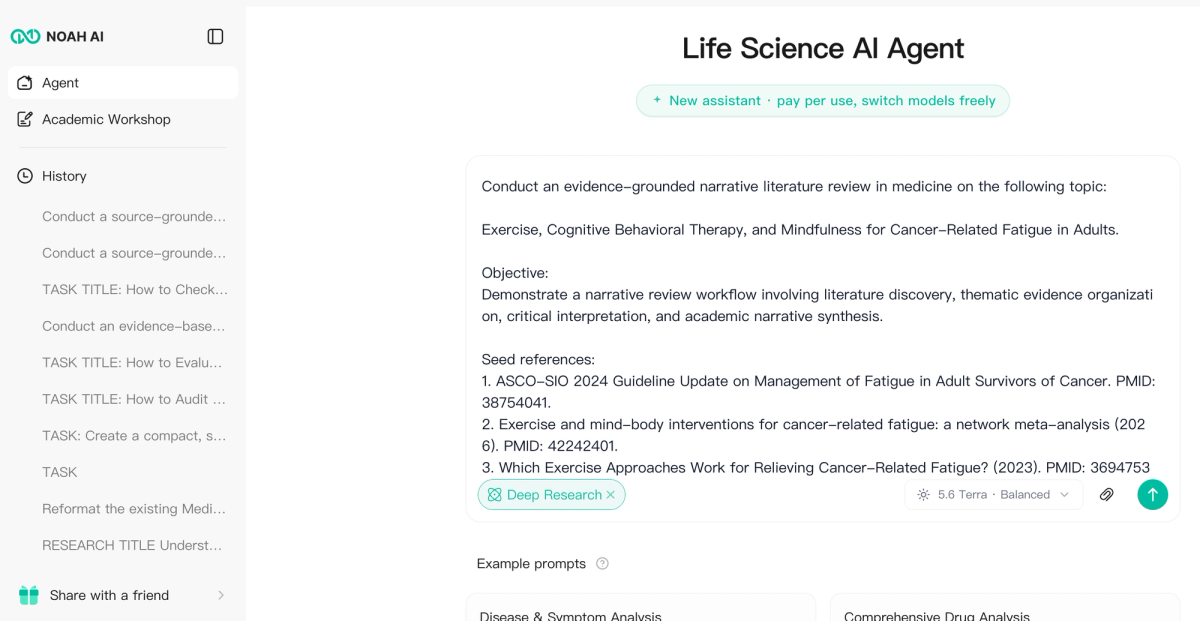
Figure 1. Actual Noah AI prompt used for the cancer-related fatigue narrative review.
Step 2. Organize Studies into a Thematic Evidence Matrix
Noah created a four-column matrix: Theme, Key Evidence and Findings, Limitations or Disagreements, and References. Themes included exercise, CBT, mindfulness, treatment timing, overlapping evidence, and research gaps.
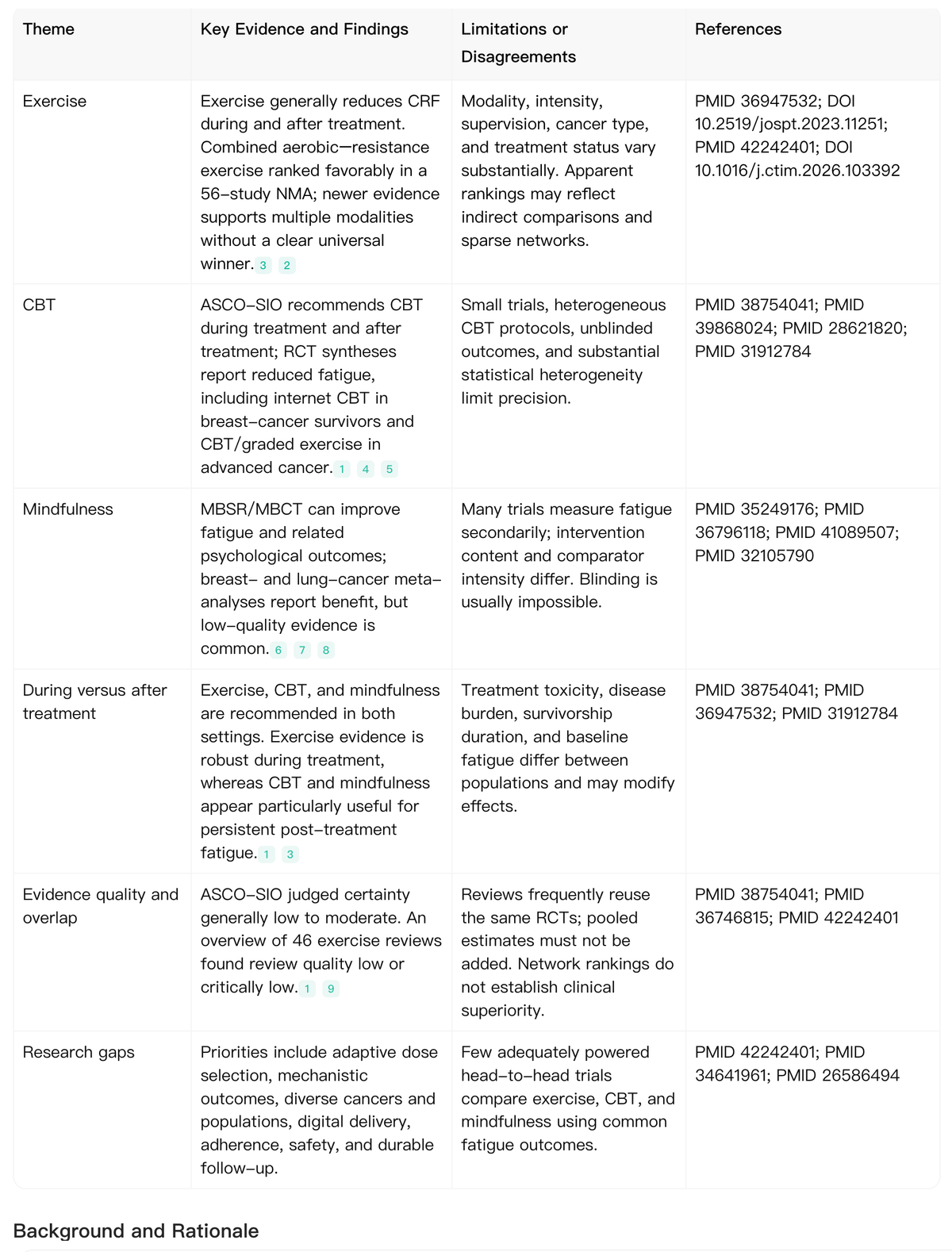
Figure 2. Actual thematic evidence matrix generated by Noah AI, including limitations and source identifiers.
For example, the matrix summarized favorable evidence for exercise, while cautioning that interventions vary in intensity, supervision, and cancer population. It described CBT and mindfulness findings separately rather than implying that all non-pharmacological interventions have identical effects.
The report included the 2024 ASCO–SIO guideline update and research syntheses on exercise and mind-body interventions. Because some meta-analyses can include overlapping randomized trials, their participant counts should not be added as if each synthesis represented an independent population.
Step 3. Turn the Matrix into a Medical Narrative
Instead of listing papers sequentially, Noah organized the review into background, exercise interventions, CBT and mindfulness interventions, methodological limitations, future research, and conclusion. The excerpt below shows a theme-based paragraph that links several sources while acknowledging uncertainty.
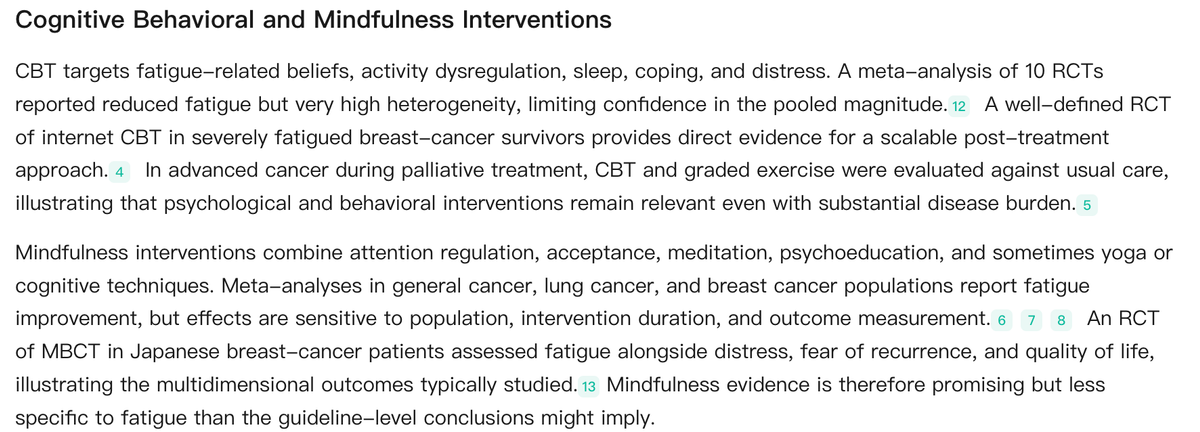
Figure 3. Actual Noah AI narrative synthesis discussing CBT, mindfulness, heterogeneity, and source references.
One important distinction in the generated text was between reported benefits and confidence in those benefits. It noted that CBT research has heterogeneous protocols and that mindfulness trials often measure fatigue alongside psychological outcomes. These qualifications help prevent an overly certain narrative.
What the Medical Evidence Example Actually Shows
The ASCO–SIO 2024 guideline update reviewed 113 randomized controlled trials and discussed exercise, CBT, and mindfulness-based programs as options for managing cancer-related fatigue during and after treatment. Its reported certainty was generally low to moderate.
A 2023 exercise network meta-analysis evaluated 56 randomized studies, while a 2026 exercise and mind-body network meta-analysis examined a broader collection of trials. The latter reported broadly overlapping estimates across several approaches and did not establish one universally superior exercise modality. Noah's run relied on abstract-level access for the 2026 analysis, so its detailed findings would need full-text confirmation before publication in a scholarly review.
This example is about research organization and writing, not recommending interventions to an individual patient. Decisions about exercise or psychological treatment during cancer care require clinical context and appropriate professional oversight.
How to Evaluate an AI-Assisted Narrative Review with SANRA
The SANRA framework describes six quality domains for narrative review articles. AI tools may assist with them, but should not be assumed to satisfy them automatically.
- Importance: Explain why the medical question matters to readers.
- Aims: State a concrete question and review scope.
- Literature search: Describe sources, search terms, and evidence cutoff.
- Referencing: Support important claims with verifiable sources.
- Scientific reasoning: Use appropriate evidence and acknowledge alternative interpretations.
- Outcome data: Present clinically relevant results and uncertainty correctly.
The Noah report discussed these domains, but no formal SANRA score was independently assigned. The case does not establish that its generated draft is ready for journal submission without expert editing and verification.
A Practical Workflow for Researchers
- Define the population, medical topic, review purpose, and evidence cutoff.
- Identify guideline statements, foundational studies, and newer evidence using appropriate search tools.
- Read the original sources and record which findings came from trials versus secondary syntheses.
- Build a matrix organized by clinical themes, disagreements, limitations, and references.
- Draft the narrative by theme, explaining how evidence fits together and where it remains uncertain.
- Audit every critical citation, number, and claim; disclose search and access limitations.
You can combine different tools across these steps. For example, one platform can help find papers, another can support close reading, and a writing assistant can help refine prose. Tool selection should follow the task—not an unverified product ranking.
Frequently Asked Questions
Can AI write a narrative literature review in medicine?
AI can help generate outlines, organize evidence, and draft thematic prose. The researcher remains responsible for the search method, primary-source checking, scientific interpretation, and final manuscript.
Is a narrative review the same as a systematic review?
No. Narrative reviews generally emphasize interpretive synthesis, while systematic reviews require predefined, reproducible methods for searching, selecting, and appraising studies. Calling a draft systematic does not make its process systematic.
Which AI tool has the most accurate references?
This article does not establish a citation-accuracy ranking. Comparing accuracy would require the same evidence set, equivalent tasks, and independent audits of citations and extracted findings.
Can I use Noah AI for free?
Noah AI currently lists a free Basic plan with 300 signup credits. Available credits are limited, and more demanding research tasks may require additional credits. Check the current pricing page before starting.
Final Takeaway
The best AI tool for a medical narrative literature review depends on where you need assistance. Elicit is relevant for research gathering and extraction; SciSpace for reading papers; Consensus for focused questions; NotebookLM for working with selected source collections; and ChatGPT for planning and drafting. Noah AI is worth examining when the goal is a life-science-focused workflow connecting evidence tables, themes, limitations, and narrative synthesis.
The cancer-related fatigue example demonstrates what one Noah AI task produced. It does not replace a rigorous review process or direct comparison across products.
Start Your Medical Literature Review with Noah AI
Move beyond a collection of disconnected paper summaries. Use Noah AI to investigate biomedical research questions, organize findings into thematic evidence tables, trace key references, identify disagreements, and develop a structured narrative draft that you can review and refine.
Whether you're preparing a medical narrative review, evaluating clinical guidelines, or exploring an emerging research topic, a source-aware workflow can make the writing process more organized without removing the need for scientific judgment.
Start Exploring Noah AI for Free!
Noah AI offers a free Basic plan with 200 signup credits, allowing researchers to explore biomedical literature, organize clinical evidence, and experience AI-assisted research workflows without an upfront payment.
Try Noah AI Free — Get 200 Signup Credits
Free credits are limited, and credit consumption varies by research task.
Sources and Methodology
Noah case study references: ASCO–SIO guideline (PMID 38754041); exercise network meta-analysis, 2023 (PMID 36947532); exercise and mind-body network meta-analysis, 2026 (PMID 42242401); internet CBT trial (PMID 28621820); mindfulness review (PMID 35249176); SANRA methodology (PMID 30962953).
Tool documentation: Noah AI; Elicit; SciSpace; Consensus; NotebookLM; ChatGPT.