
Best AI Tools for Creating Medical Mechanism Diagram Drafts (2026)
Linda
Compare the best AI tools for creating medical mechanism diagram drafts, with a real Noah AI workflow showing GLP-1 receptor agonist weight loss mechanisms.
Medical mechanism diagrams are one of the most common figure types in life science research. Teams use them to explain mechanisms of action, summarize signaling pathways, visualize therapeutic effects, and turn dense biology into a format that is easier to present.The problem is that building a clean mechanism figure from scratch is time-consuming. Researchers often know the biology they want to show, but turning that knowledge into a structured draft with the right flow, labels, and visual hierarchy can still take hours.AI tools are becoming useful at exactly this stage. The best ones help researchers move from a natural-language description of a mechanism to a usable draft figure. Some tools are strongest at biomedical figure generation, others at polished diagram assembly, and others at scientific visual communication for non-designers.In this guide, we compare four relevant tools and show a real Noah AI workflow that turns a prompt about GLP-1 receptor agonist–mediated weight loss into a biomedical mechanism diagram draft.
Quick Answer
Noah AI is a strong fit when you want to start with a biomedical mechanism description and generate a first-draft figure. BioRender remains one of the best tools when the goal is to refine or polish a scientific illustration. Mind the Graph is useful for researchers who want scientific visuals without a heavy design workflow. Canva can be helpful for presentation-friendly scientific visuals, although it is less specialized for biomedical mechanisms than dedicated life science tools.The best choice depends on whether you need a research-first draft, a polished final illustration, a library of scientific assets, or a fast design workflow for communication materials.
Best Tools at a Glance
| Tool | Best for | Mechanism diagram workflow | Strength |
|---|---|---|---|
| Noah AI | Biomedical draft generation | Prompt → retrieval → draft figure | Research-first workflow |
| BioRender | Polished scientific illustrations | Assemble, edit, refine | Scientific illustration standard |
| Mind the Graph | Scientific visuals for non-designers | Templates + scientific icons | Accessible scientific communication |
| Canva | Presentation-friendly concept visuals | Design workflow + AI assistance | Fast general-purpose design |
1. Noah AI — Best for Research-First Medical Mechanism Diagram Drafts
Noah AI Scientific Figure Generation is designed as a life-science figure workflow rather than a generic design tool. That matters for mechanism diagrams because biomedical researchers usually need more than a visually polished image—they need a figure structure that reflects the underlying biology.
Step 1: Describe the medical mechanism
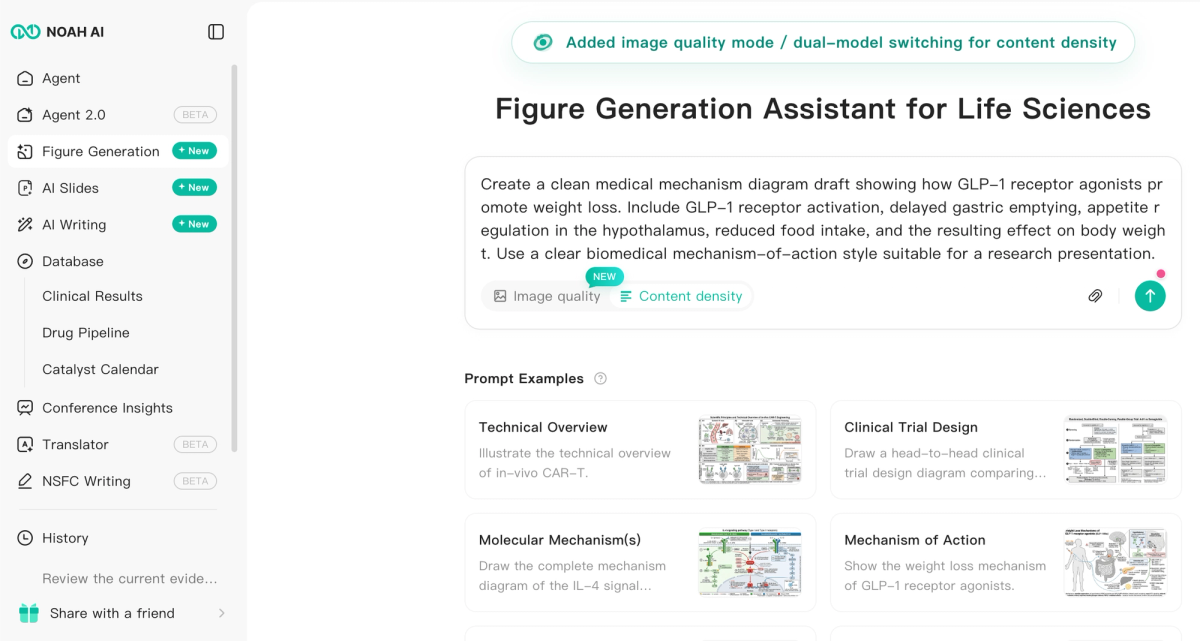
Figure 1. A natural-language prompt in Noah AI Figure Generation describing the GLP-1 receptor agonist weight loss mechanism.
This kind of prompt is already more useful than starting with a blank canvas. It defines the therapeutic class, the major biological nodes, and the intended figure style. For mechanism diagrams, prompt specificity is important because the quality of the draft often depends on whether the causal pathway is clearly described.
Step 2: Retrieve biomedical context
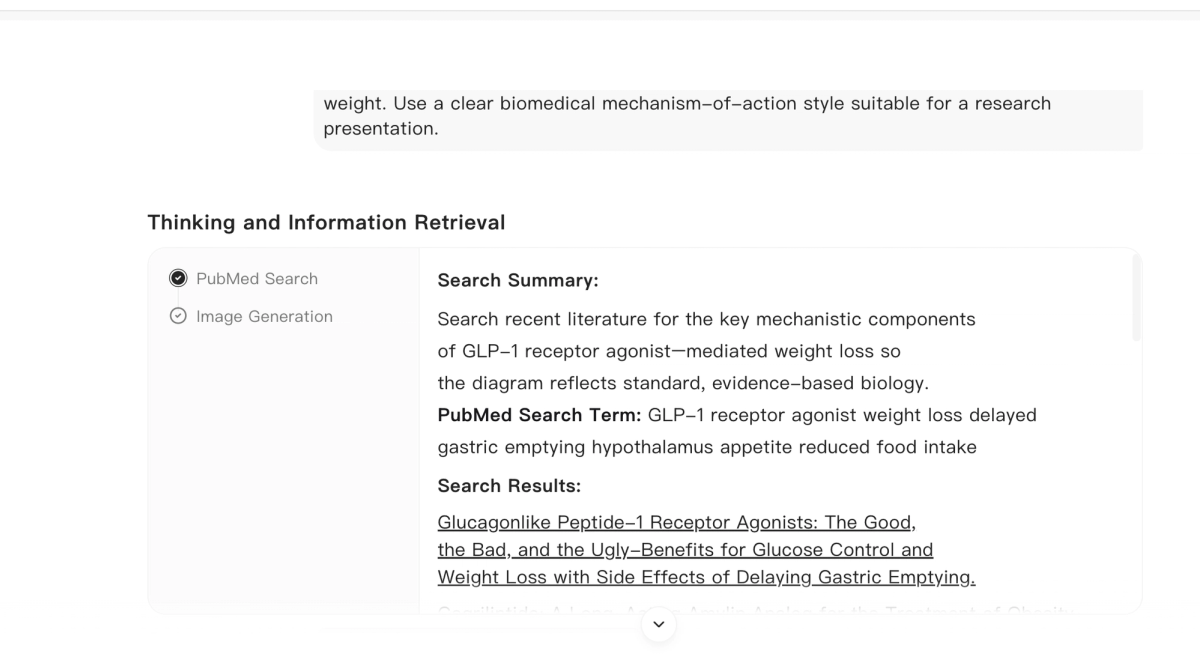
Figure 2. Noah AI retrieves biomedical context through PubMed search before image generation.
The retrieval step is a differentiator. Instead of behaving like a pure text-to-image tool, Noah shows a PubMed search and a search summary focused on the key mechanistic components of GLP-1 receptor agonist–mediated weight loss. That does not guarantee perfect scientific accuracy, but it does support a more research-aware drafting workflow.
Related reading: If your first bottleneck is broader scientific figure creation rather than mechanism-only drafting, see The 10 Best Scientific Figure Creation Tools in 2026.
Step 3: Generate a mechanism diagram draft
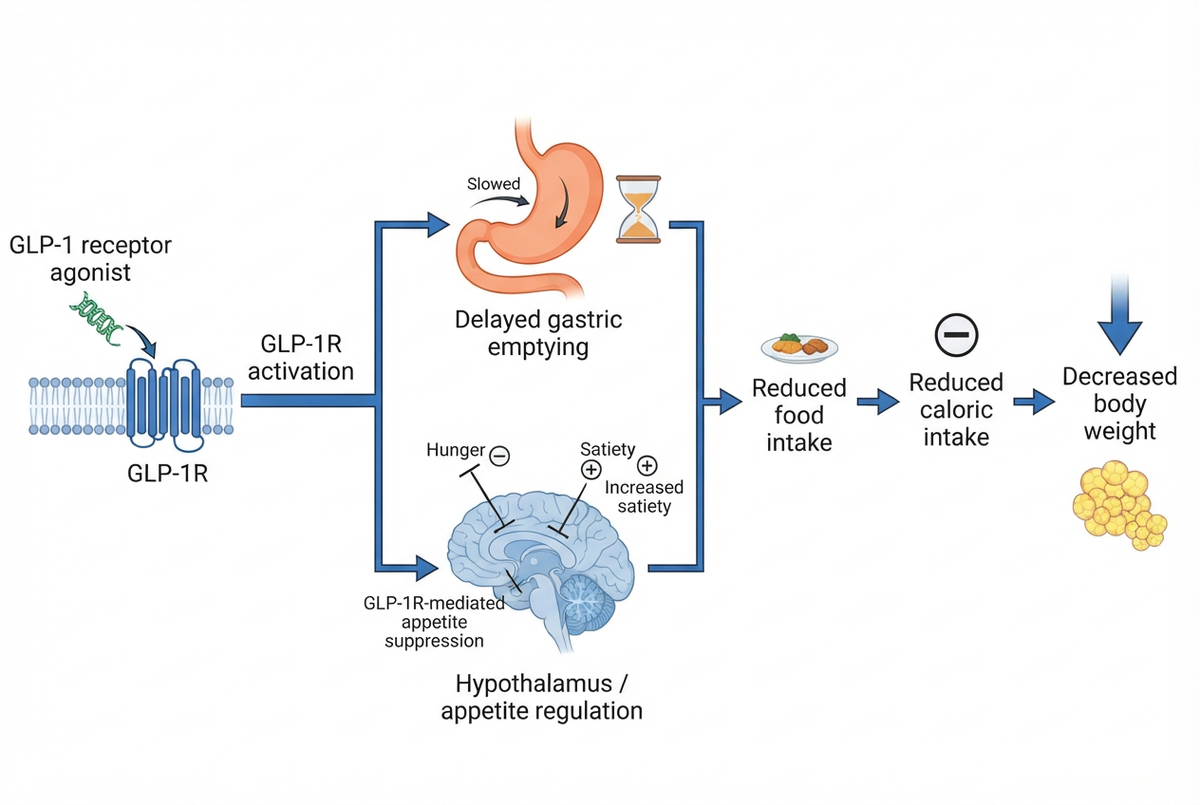
Figure 3. Noah AI generates a GLP-1 receptor agonist mechanism diagram draft showing receptor activation, gastric emptying, appetite regulation, reduced food intake, and decreased body weight.
The resulting figure is usable as a first draft. It clearly shows GLP-1 receptor agonist input, GLP-1 receptor activation, delayed gastric emptying, hypothalamus/appetite regulation, reduced food intake, and downstream body-weight reduction. It is not yet a journal-ready final figure, but it is already much closer to a presentation-ready mechanism draft than a blank slide or a generic diagram tool would provide.For a blog post demonstrating workflow, this output is strong enough to use. The only minor issue is that the figure introduces an extra phrasing layer—“reduced caloric intake”—between reduced food intake and decreased body weight. That is not a serious problem, but it is the sort of detail a researcher may still want to edit when preparing a final publication figure.
Create a Medical Mechanism Diagram with Noah AI
Turn a biomedical mechanism description, research context, uploaded file, or reference image into a structured scientific figure draft with Noah AI.
Free to use · Free credits included · No credit card required
Create a Medical Mechanism Diagram with Noah AI →
BioRender — Best for Polishing and Refining Biomedical Mechanism Figures
BioRender is still one of the most widely used tools in scientific illustration. For mechanism diagrams, its main strength is not necessarily that it starts from a free-form biomedical prompt better than every other tool, but that it gives researchers a large scientific visual language to assemble, edit, and refine their ideas.That makes BioRender especially useful after the draft stage. If an AI-generated first draft already gives you the mechanism structure, BioRender is well suited for improving layout consistency, standardizing icons, and turning a rough concept into a polished scientific illustration.
Best fit: researchers who already know what mechanism they want to show and need a polished scientific figure.
Trade-off: the workflow can still be more manual than a research-first figure generator.
Mind the Graph — Best for Scientific Visual Communication
Mind the Graph is often a good option for researchers who want scientific visuals without becoming full-time diagram designers. It offers scientific templates and illustration assets that can help non-designers create clearer figures and explainers.For mechanism diagram drafts, Mind the Graph is most useful when the goal is clarity and communication. It may be less specialized than a research-first biomedical drafting workflow, but it is still helpful for quickly building comprehensible scientific visuals.
Best fit: communication-focused scientific figures and accessible visual explainers.
Trade-off: the workflow may rely more on manual arrangement than direct mechanism-first draft generation.
Canva — Best for Presentation-Friendly Scientific Concept Graphics
Canva is not a dedicated biomedical illustration platform, but it is frequently used for fast visual communication. With AI-assisted layout help and a lightweight design workflow, it can be useful for simple educational or presentation-oriented mechanism visuals.For highly specific medical mechanism diagrams, Canva is usually less specialized than Noah AI or BioRender. But for early communication materials, summaries, or conference-support visuals, it can still be a practical option.Best fit: fast design workflows and communication-oriented scientific graphics.Trade-off: it is not primarily built for detailed biomedical mechanism illustration.
When Should You Use AI for Mechanism Diagram Drafts?
When you understand the biology but do not want to start from a blank canvas. A good AI draft can save time by giving you a workable figure structure.
When the figure is still in the drafting stage. AI is most useful for first drafts, internal reviews, and presentation diagrams before the final polishing phase.
When you need to communicate mechanisms clearly. Therapeutic action, signaling pathways, and multi-step effects are often easier to review once they are visualized.
When you still plan to verify and edit the biology. Even a good draft should be reviewed for wording, omitted nodes, extra labels, and visual accuracy.
FAQ
What is a medical mechanism diagram draft?
It is an early-stage figure that shows a disease or therapy mechanism, such as receptor activation, signaling pathways, or downstream biological effects, before final publication-level polishing.
Can AI create mechanism-of-action diagrams?
Yes. Some tools can turn a natural-language mechanism description into a draft figure. Researchers should still review and refine the output before using it in publications or formal scientific communication.
How is a mechanism diagram different from a graphical abstract?
A mechanism diagram usually focuses on a biological or therapeutic pathway, while a graphical abstract typically summarizes the whole paper or study in a broader visual layout.
Related reading: If you need to summarize an entire research paper rather than a single biological mechanism, see Best AI Graphical Abstract Makers for Research Papers (2026).
Which AI tool is best for medical mechanism diagram drafts?
No single tool is best for every workflow. Noah AI is strong for research-first drafting, BioRender is strong for polish and scientific illustration refinement, Mind the Graph is strong for accessible scientific visuals, and Canva is strong for fast communication-oriented design.
Turn a Biomedical Mechanism Into a Figure with Noah AI
Use Noah AI to turn biomedical mechanisms, pathway descriptions, research context, uploaded files, and reference images into structured scientific figure drafts.
Free to use · Free credits included · No credit card required