Best AI Tools for Clinical Trial Eligibility Criteria Comparison (2026)
Linda
Compare AI tools for clinical trial eligibility criteria analysis, with a real Noah AI case across RASolute 305, 3082-CL-0301, and DAWN-303 in KRAS G12D metastatic pancreatic cancer.
Clinical trial eligibility comparison and clinical trial patient population comparison answer two different questions.
This guide focuses on protocol-defined eligibility criteria: the inclusion and exclusion rules that determine who is allowed to enter a trial before enrollment begins. These criteria include biomarker requirements, ECOG performance status, prior treatment, organ function, comorbidities, CNS restrictions, tissue requirements, and other screening rules.
By contrast, clinical trial patient population comparison examines the baseline characteristics of the patients who were actually enrolled, such as age, sex, disease stage, prior therapy, ECOG distribution, biomarker status, and other reported demographic or clinical features.
In simple terms:
- Eligibility criteria comparison asks: Who could enroll according to the protocol?
- Patient population comparison asks: Who actually enrolled in the study?
This distinction matters because two trials can use similar eligibility rules but still enroll meaningfully different populations—and two trials with similar reported baseline characteristics may have used different screening rules to get there.
Two clinical trials can study the same disease, biomarker, line of therapy, and treatment class without using the same eligibility criteria. Those protocol rules determine who can enter a trial, which patients are systematically excluded, how difficult recruitment may be, and how broadly the eventual results can be generalized.
That makes clinical trial eligibility criteria comparison a separate research task from patient population comparison, clinical trial landscape analysis, or efficacy comparison. The goal is not simply to copy inclusion and exclusion criteria from several registries. Researchers need to normalize the criteria, distinguish true protocol differences from missing public information, and identify which rules are most likely to affect screening, enrollment, and generalizability.
For this guide, we tested Noah AI on three 2026 Phase 3 studies in previously untreated KRAS G12D-mutated metastatic pancreatic ductal adenocarcinoma (PDAC):
- RASolute 305 — NCT07621718 — zoldonrasib
- 3082-CL-0301 — NCT07409272 — setidegrasib
- DAWN-303 — NCT07522073 — INCB161734
Quick answer: Noah AI is a strong fit when the task requires a source-aware comparison of eligibility criteria across multiple trials and an interpretation of what those differences mean for patient selection and generalizability. Citeline Trialtrove+ is better suited to repeated structured trial benchmarking at scale. Patsnap Synapse is useful when trial criteria need to be connected with drug, target, company, patent, and broader biopharma intelligence. ClinicalTrials.gov and sponsor registries remain essential primary verification sources.
Same Disease Does Not Mean the Same Trial Population
At first glance, the three Phase 3 programs appear reasonably aligned. Each studies an adult, first-line metastatic PDAC population with a documented KRAS G12D mutation, good performance status, and adequate organ function.
But such alignment can hide operationally important differences. A trial may require baseline tissue, permit local or central biomarker testing, allow limited chemotherapy during screening, specify a narrow timing window from metastatic diagnosis, or exclude patients with particular gastrointestinal, neurologic, pulmonary, or cardiac conditions.
Those rules can affect:
- how many patients pass screening;
- which patients can enroll quickly enough to start therapy;
- whether recurrent and de novo metastatic disease are represented similarly;
- how many medically complex patients are excluded;
- the proportion of patients with tissue available for molecular confirmation;
- how well the final trial population reflects real-world metastatic PDAC.
A Real 2026 Eligibility Comparison Case
| Trial | Core population | Publicly visible eligibility signal |
|---|---|---|
| RASolute 305 (NCT07621718) | Previously untreated metastatic RAS/KRAS G12D PDAC | Public sponsor materials list confirm metastatic pancreatic adenocarcinoma, no prior systemic therapy for metastatic disease, documented KRAS G12D mutation, and ECOG 0–1. |
| 3082-CL-0301 (NCT07409272) | Metastatic KRAS G12D PDAC with no curative surgery or radiotherapy option | The Astellas registry exposes detailed biomarker, tissue, organ-function, GI, neuropathy, pulmonary, cardiac, and prior-treatment criteria. |
| DAWN-303 (NCT07522073) | Previously untreated KRAS G12D-mutated metastatic PDAC | The Incyte record lists core criteria and explicitly notes that additional protocol-defined inclusion and exclusion criteria may apply. |
Running the Comparison in Noah's New Agent Interface
For this task, Noah was used through the updated Agent interface with Medical & Academia, Deep Research, and the currently available 5.6 Terra · Balanced model setting.
The prompt named the three trials and instructed Noah not to compare efficacy. Instead, the task asked for a normalized eligibility table covering biomarker confirmation, ECOG status, prior treatment, tissue requirements, CNS restrictions, organ function, GI restrictions, neuropathy, pulmonary disease, screening chemotherapy, and other criteria that could affect real-world enrollment.
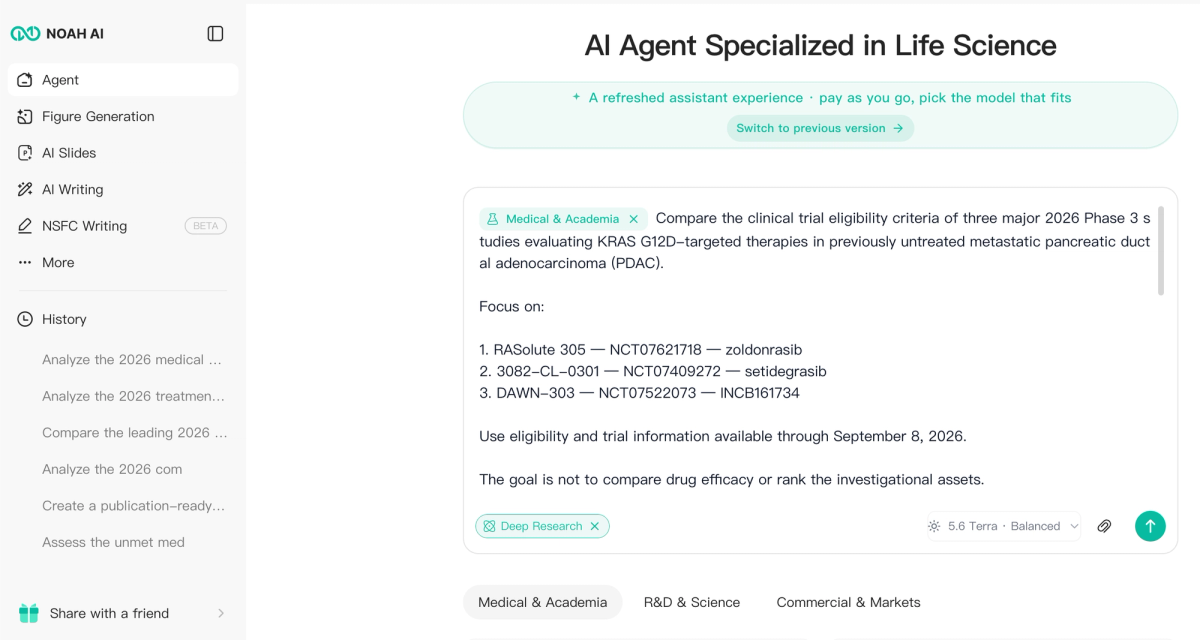
Figure 1. Noah AI Agent configured for a focused Phase 3 clinical trial eligibility criteria comparison.
Eligibility Criteria Side by Side
The most useful part of the Noah output was a criterion-by-criterion comparison rather than a trial-by-trial summary. This format makes it easier to see which requirements are shared, which appear more restrictive, and which simply are not exposed at the same level of detail in public records.
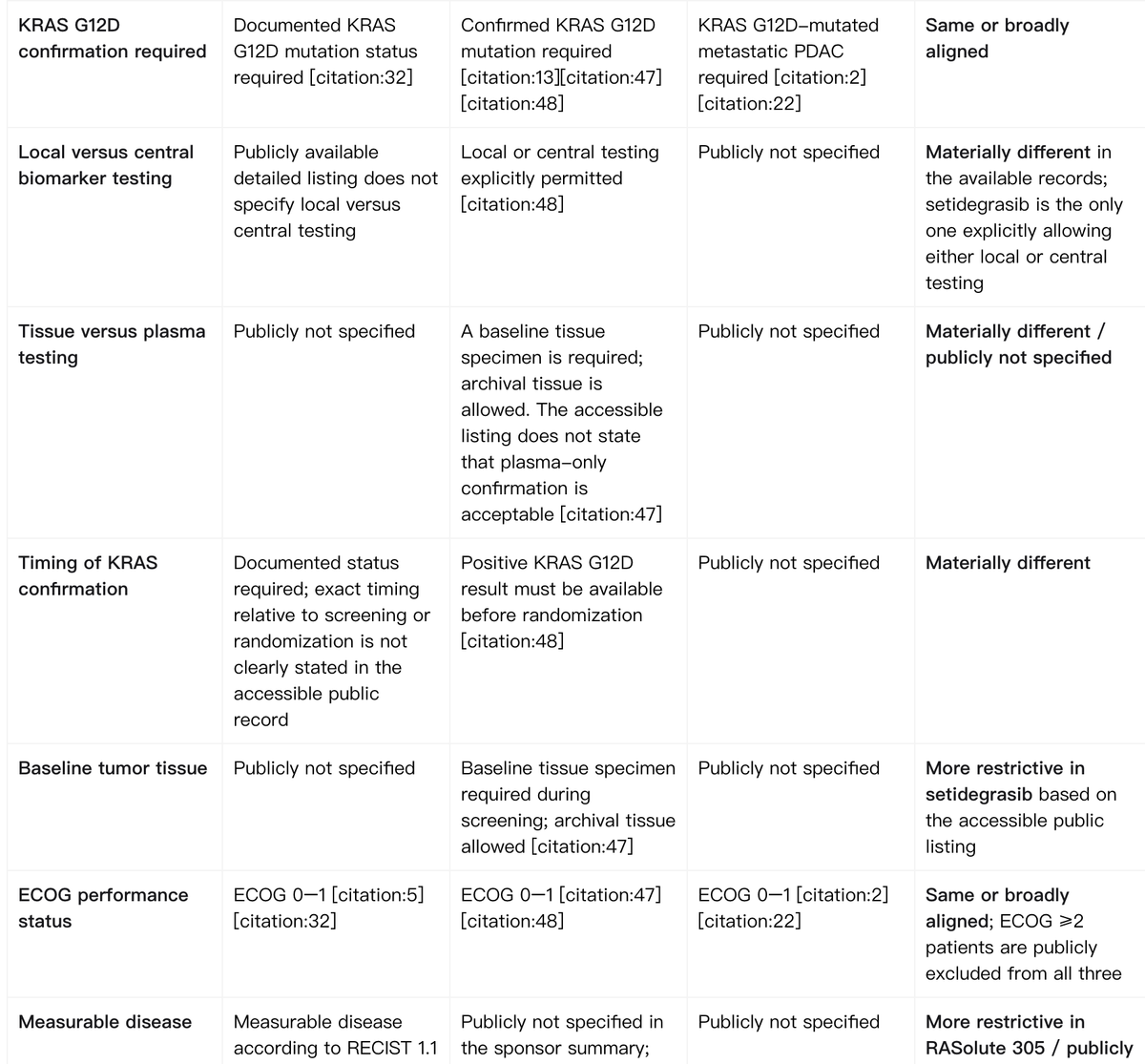
Figure 2. Noah AI aligns biomarker-testing and performance-status criteria across RASolute 305, 3082-CL-0301, and DAWN-303.
Compare Clinical Trial Eligibility Criteria with Noah AI for Free
Use Noah AI to compare inclusion and exclusion criteria, biomarker requirements, prior-treatment rules, performance status, organ-function requirements, and other screening criteria across clinical trials.
Free to use · Free credits included · No credit card required
[Compare Clinical Trial Eligibility Criteria with Noah AI →](https://www.noah.bio/signup?utm_source=blog)
KRAS G12D is shared, but the public testing detail is not
All three studies require KRAS G12D-positive metastatic PDAC. The important difference is how much public detail is available about confirming that biomarker.
The Astellas study page explicitly states that setidegrasib eligibility can be based on local or central testing, that a positive KRAS G12D result must be available before randomization, and that a baseline tumor tissue specimen is required during screening.
For RASolute 305 and DAWN-303, the public sources reviewed establish the KRAS G12D requirement but do not expose the same level of operational detail about local versus central testing, tissue versus plasma confirmation, or timing.
That does not mean those requirements do not exist. It means the available public records are not equally detailed.
ECOG 0–1 is broadly aligned across the three trials
All three studies publicly identify an ECOG performance status of 0–1 as part of the eligible population. This creates a broadly comparable performance-status framework, but it also creates a shared generalizability limitation.
Patients with ECOG ≥2 are excluded at the public eligibility level. In metastatic PDAC, that matters because patients in routine practice may have substantial fatigue, cachexia, biliary complications, organ dysfunction, or rapid clinical deterioration that prevents them from matching a Phase 3 trial population.
Setidegrasib publicly exposes more screening detail
The Astellas registry provides unusually detailed public criteria. In addition to biomarker and tissue requirements, it specifies exclusions for chronic inflammatory bowel disease, bowel obstruction, severe uncontrolled diarrhea, peripheral sensory neuropathy with functional impairment, interstitial lung disease or pulmonary fibrosis, certain cardiovascular conditions, and other clinically important factors.
It also states that patients may receive up to two doses—one cycle—of mFOLFIRINOX or NALIRIFOX during screening, and that patients with prior neoadjuvant or adjuvant chemotherapy must have recurrence or progression at least six months after the final dose of that therapy.
This is a meaningful eligibility detail because "previously untreated metastatic disease" does not always mean that every patient reaches randomization without any chemotherapy exposure.
Missing Public Criteria Are Not "No Restrictions"
This is the most important methodological point in this comparison.
The DAWN-303 sponsor record explicitly states that other protocol-defined inclusion and exclusion criteria may apply. ClinicalTrials.gov also describes study records as sponsor- or investigator-submitted public records; some studies include more detailed protocol material than others.
| Statement | Interpretation |
|---|---|
| "No GI restriction" | Claims that the protocol does not contain a GI restriction. |
| "GI restriction not publicly specified in the record reviewed" | States only what can be verified from the public source set. |
For AI-assisted trial comparison, the second formulation is usually the defensible one when the full protocol is unavailable.
Practical rule: "Publicly not specified" should be treated as a data-availability label, not a clinical interpretation.
Which Eligibility Differences Matter Most?
| Eligibility dimension | Why it can change the enrolled population |
|---|---|
| Prior metastatic treatment | Separates truly untreated metastatic disease from patients who have already begun systemic treatment. |
| Prior neoadjuvant/adjuvant therapy | Can change the proportion of de novo metastatic disease versus recurrence after prior chemotherapy. |
| Biomarker testing logistics | Central testing, local testing, baseline tissue, or timing requirements can change screening burden and failure rates. |
| ECOG performance status | Restricts enrollment to relatively fit patients and limits generalizability to ECOG ≥2 populations. |
| GI and absorption criteria | Can exclude patients with bowel obstruction, uncontrolled diarrhea, malabsorption, or difficulty taking oral therapy. |
| Neuropathy and organ-function rules | May affect patients with prior chemotherapy exposure, biliary complications, or medically complex disease. |
| CNS and pulmonary exclusions | Can remove clinically important subgroups from the trial population and later limit external validity. |
Who Gets Left Out?
Eligibility criteria are designed to protect participants and ensure that a study can answer its research question. They also create a selected trial population.
Across these three studies, the shared ECOG 0–1 requirement means that a substantial group of real-world patients with worse performance status will not be represented. Additional organ-function, infection, GI, cardiovascular, pulmonary, or neurologic criteria can further narrow the population.
This does not make the trials poorly designed. It means the eventual Phase 3 results should be interpreted as evidence in the enrolled population rather than automatically generalized to every patient with KRAS G12D metastatic PDAC.
Why Eligibility Criteria Matter Before Cross-Trial Comparison
Suppose two Phase 3 trials later report different response rates, PFS, toxicity, or treatment discontinuation. Those differences can reflect more than the drugs themselves:
- the proportion of de novo versus recurrent metastatic disease;
- prior chemotherapy exposure;
- baseline disease burden;
- organ function and treatment fitness;
- tissue availability and biomarker-screening success;
- the frequency of GI, neurologic, pulmonary, or cardiovascular comorbidity;
- the number of patients able to begin full-intensity chemotherapy immediately.
For that reason, eligibility comparison should happen before outcome comparison, not after a numerical difference has already been interpreted.
Best AI Tools for Clinical Trial Eligibility Comparison
| Tool | Best fit | Strength for eligibility comparison | Main limitation |
|---|---|---|---|
| Noah AI | Focused biomedical question → cited structured comparison | Aligns eligibility criteria across trials, labels missing public information, and explains implications for enrollment and generalizability. | Primary registry and protocol verification is still required for material eligibility claims. |
| Citeline Trialtrove+ | Large-scale trial intelligence and benchmarking | Curated trial design, enrollment, patient populations, I/E criteria, timelines, and competitive trial landscapes with an AI-assisted search layer. | Best suited to users with access to the proprietary platform rather than open-web research. |
| Patsnap Synapse | Connected biopharma intelligence | Connects trial information with drugs, targets, companies, patents, deals, and broader development context. | Clinical eligibility interpretation still requires source-level review of the study record or protocol. |
| Elicit | Literature-led evidence extraction | Extracts eligibility criteria from publications, supplementary files, or a structured evidence-review corpus. | Not primarily a dedicated clinical-trial registry benchmarking platform. |
What Researchers Still Need to Verify
- the latest registry version and study-status update;
- whether the sponsor registry and ClinicalTrials.gov show the same recruitment status;
- the complete inclusion and exclusion criteria from the full protocol, if public;
- KRAS G12D testing method, specimen type, and timing;
- exact laboratory thresholds for organ function;
- rules for prior adjuvant and neoadjuvant therapy;
- permitted chemotherapy before randomization;
- stable versus active CNS metastasis definitions;
- GI, neuropathy, pulmonary, cardiovascular, and infection exclusions;
- major surgery and anticancer-therapy washout periods;
- whether an apparently missing criterion is truly absent or simply not publicly displayed.
FAQ
What are clinical trial eligibility criteria?
Eligibility criteria define who can and cannot participate in a clinical study. They include inclusion criteria that participants must meet and exclusion criteria that prevent enrollment. They can cover age, disease characteristics, prior treatment, performance status, organ function, biomarkers, comorbidities, and many other factors.
Why compare eligibility criteria across clinical trials?
Because trials studying the same disease can still enroll meaningfully different patient populations. Those differences can affect recruitment, generalizability, safety, prognosis, and later interpretation of efficacy results.
Can AI compare clinical trial inclusion and exclusion criteria?
Yes. AI can normalize wording, align similar criteria, highlight differences, and identify missing public fields. Researchers still need to verify material criteria against the current registry, sponsor record, or full protocol.
Does "not publicly specified" mean a trial has no such exclusion?
No. It means the criterion was not found in the public source reviewed. Sponsor registries and ClinicalTrials.gov summaries may expose different levels of detail, and additional protocol-defined criteria can still apply.
Why does ECOG performance status matter for generalizability?
A trial restricted to ECOG 0–1 enrolls relatively fit participants. Patients with poorer performance status may have different prognosis, tolerability, organ function, and ability to receive combination therapy, so results may not transfer directly to those populations.
Which AI tool is best for eligibility criteria comparison?
It depends on the workflow. Noah AI is well suited to a focused question-to-comparison workflow. Citeline Trialtrove+ is strong for repeated structured trial benchmarking at scale. Patsnap Synapse is useful for connected biopharma intelligence, while Elicit is useful when eligibility information must be extracted from a literature-review corpus.
Final Takeaway
Clinical trial eligibility comparison is not administrative cleanup. It is part of understanding what a trial result actually represents.
RASolute 305, 3082-CL-0301, and DAWN-303 all study first-line KRAS G12D metastatic PDAC, but their public eligibility records differ in biomarker-testing detail, tissue requirements, prior-treatment rules, comorbidity exclusions, and the amount of protocol information exposed publicly.
Noah AI helps make those differences visible in a consistent table. The final interpretation still needs to distinguish a true protocol difference from a public-data difference—and that distinction is critical before the trials are compared on outcomes.
Try Noah AI for Free Use Noah AI to search, compare, and analyze biomedical evidence with AI-powered research workflows.
Free credits are available, and no credit card is required to get started.
Related Research Guides
- Best AI Tools for Clinical Trial Results Analysis (2026)
- Best AI Tools for Turning Research Questions into Evidence Tables (2026)
- PubMed Search with AI: How Life Science Professionals Find and Analyze Biomedical Evidence Faster
- How Noah AI Helps Life Science Teams Track Drug Pipelines, Clinical Trials, and Market Signals