Best AI PubMed Search Tools in 2026
Linda
We compare 8 AI-powered PubMed search tools in 2026 — including Noah AI, Consensus, Elicit, and Semantic Scholar — to help you find and synthesize biomedical literature faster.
Searching PubMed with Boolean operators and MeSH terms has been the standard for decades, but it comes with a steep learning curve. Building an effective query, scanning hundreds of titles, and manually synthesizing findings across papers takes significant effort — especially for researchers who are not trained in information science.
A growing category of AI-powered tools now sits on top of PubMed (or alongside it), offering natural-language search, automatic query expansion, and structured evidence summaries. In this article, we compare eight of these tools so you can decide which fits your workflow.
How We Evaluated
We tested Noah AI directly by running research queries and examining results. Other tools were evaluated based on their official documentation, published feature descriptions, and publicly available workflows. All pricing information reflects what was listed on each tool's website at the time of writing.
Quick Comparison
| Tool | Searches PubMed Directly | AI Synthesis | Inline Citations | Free Tier |
|---|---|---|---|---|
| Noah AI | Yes | Structured evidence brief | Yes — linked to PubMed sources | Yes |
| Consensus | PubMed included in broader research database | Research-question synthesis | Yes — paper-level | Free basic; Pro paid |
| Elicit | Can restrict search to PubMed | Extracts structured data / review outputs | Yes — source-linked | Free basic; Plus paid |
| Semantic Scholar | Partial (broad academic index) | TLDR summaries per paper | Not applicable | Yes, fully free |
| SciSpace | Literature search + paper workflows | Chat-with-paper / literature summaries | Yes — source-linked | Free basic; Pro paid |
| Perplexity | Partial (general search) | General Q&A with sources | Yes — link-level | Free; Pro paid |
| ChatGPT (Scholar tools) | Depends on connected tool / workflow | Conversational | Varies by tool | Plan/tool dependent |
| PubMed Advanced Search | Yes (native) | None | Not applicable | Yes, fully free |
1. Noah AI
Best for: Researchers who want a structured evidence summary — with citations — from a single natural-language query.
Noah AI is designed specifically for biomedical literature search. You type a clinical or research question in plain English, and the platform supports a PubMed-focused search workflow that can build and expand the search plan before generating a structured evidence brief.
The output includes inline citations linked to the original PubMed papers, so you can verify claims against their sources. In the MDR-TB run used for this article, Noah organized regimen effectiveness, treatment duration, safety considerations, and supporting PubMed references into one evidence brief.
According to the Noah AI website, a structured summary can take approximately 10–20 minutes to generate. Processing time can vary by research task.
Workflow path: Agent → Search → PubMed Search
Demo: Drug-Resistant Tuberculosis Treatment
Query to enter in Noah AI
What are the most effective treatment regimens for multidrug-resistant tuberculosis (MDR-TB), and how do newer agents like bedaquiline and pretomanid compare to traditional second-line therapies in terms of treatment success rates and safety profiles?
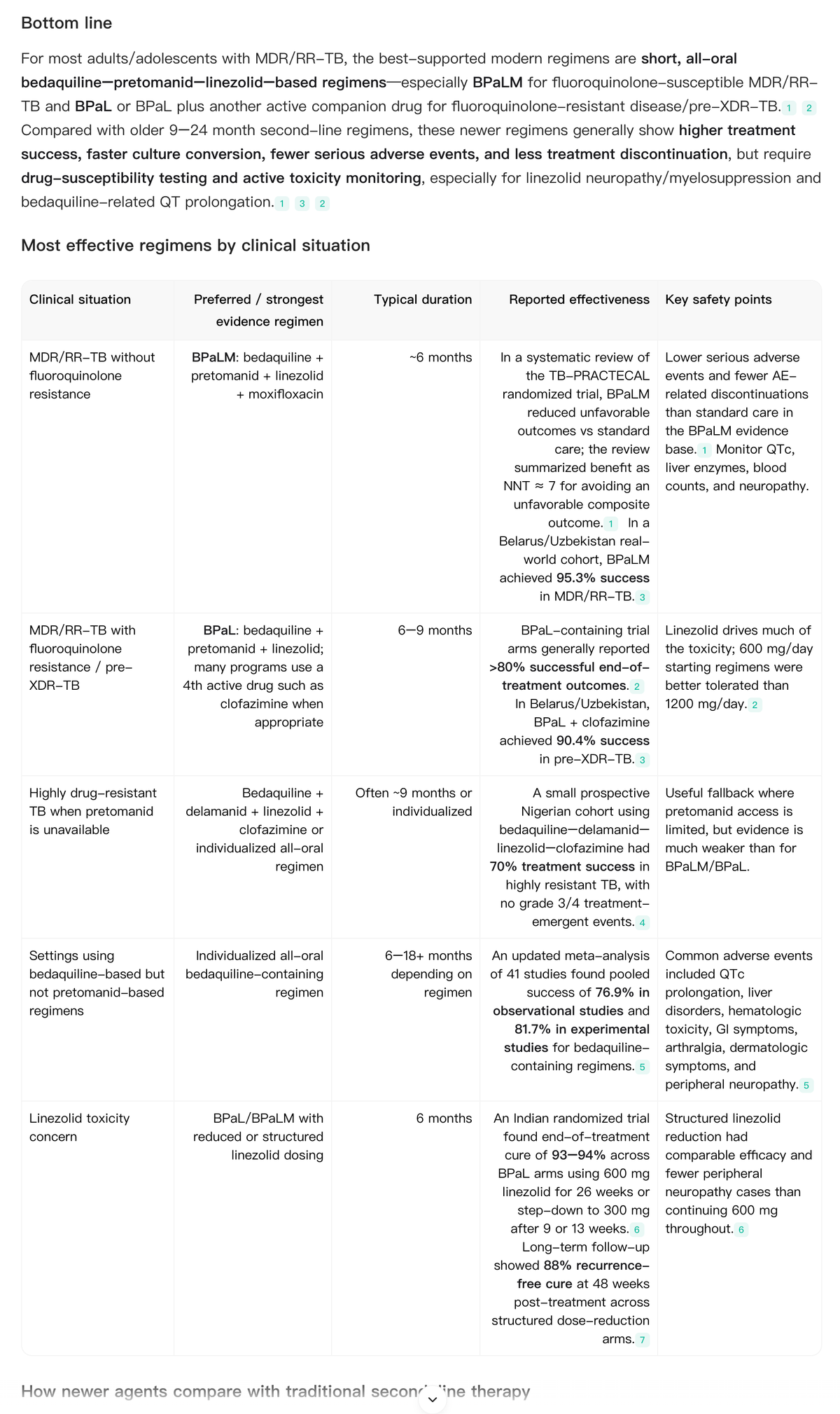
Figure 1. Noah AI structured evidence brief comparing MDR-TB treatment regimens, with inline citations, reported effectiveness, and key safety considerations.
What to look for in the results: In this run, Noah surfaced evidence on BPaLM and BPaL regimens, reported treatment-success and safety findings, and linked the major claims to PubMed sources. The brief also highlighted linezolid-related toxicity and monitoring considerations.
Important: Always verify key findings by reading the original papers linked in the citations. AI-generated summaries help you find and screen relevant literature faster, but they are not a substitute for reading primary sources.
2. Consensus
Best for: Getting a quick yes/no or directional answer to a specific research question, backed by paper-level citations.
Consensus is designed for asking research questions in natural language and synthesizing findings from scientific literature. Its research database includes PubMed content within a broader scholarly corpus, and it provides paper-level citations alongside its synthesized answers.
Consensus works well for focused questions where you want a fast overview of what published research says. It is less oriented toward building a PubMed-specific search plan than a dedicated PubMed workflow.
3. Elicit
Best for: Extracting structured data points (sample size, outcomes, methods) across multiple papers for systematic comparisons.
Elicit takes a structured review approach. You can search academic literature, restrict searches to PubMed in supported workflows, define custom data columns, and extract specific fields from papers into evidence tables.
This is particularly useful for systematic comparisons where the goal is to organize variables across many studies rather than only generate a narrative answer.
4. Semantic Scholar
Best for: Discovering papers through citation graphs and influence signals, with TLDR summaries for rapid scanning.
Semantic Scholar is a free academic search engine from the Allen Institute for AI. It covers a broad multidisciplinary corpus and provides paper-level AI features such as TLDR summaries and citation relationships.
It is useful for discovery and citation exploration, but it is not a PubMed-specific workflow and does not primarily focus on multi-paper evidence synthesis.
5. SciSpace (formerly Typeset)
Best for: Chatting with individual PDFs and getting explanations of specific sections, equations, or tables within a paper.
SciSpace lets you upload or open papers and ask questions about them conversationally. It also offers literature-search and review-oriented features that surface relevant papers and AI-generated explanations.
It is particularly useful as a reading and exploration companion when you want to understand individual papers in more detail.
6. Perplexity
Best for: Quick exploratory questions where you want a general overview with cited sources, not necessarily PubMed-specific results.
Perplexity is a general-purpose AI search engine that can surface academic and biomedical sources alongside broader web results. It provides inline source links and conversational follow-up.
For biomedical research, its strength is fast exploration rather than a reproducible PubMed-specific search workflow.
7. ChatGPT with Scholar Tools
Best for: Conversational exploration of research topics when you want a flexible interface and can connect or use research-focused tools.
ChatGPT can support academic-literature workflows through available research tools, apps, GPTs, or user-provided papers. The exact search coverage and citation behavior depend on the specific tool or workflow being used.
It is strong for conversational follow-up and synthesis, but users should verify citations and confirm what corpus the connected research tool actually searches.
8. PubMed Advanced Search (Native)
Best for: Maximum control over search logic, reproducible queries, and direct access to PubMed — important for systematic and documented searches.
PubMed's own Advanced Search remains important for reproducibility. You can build Boolean queries, restrict by publication date, study type, and MeSH terms, and document search strings for review protocols.
The tradeoff is that PubMed primarily returns records and abstracts rather than synthesizing the evidence for you.
For a practical guide to improving PubMed search workflows, see our article on PubMed Search with AI.
How to Choose the Right Tool
No single tool is best for every task. Here's a practical decision framework:
If you need a structured evidence summary with inline PubMed citations, start with Noah AI. If you need to extract specific data points across papers for a systematic comparison, Elicit's column-based workflow is worth trying. If you want a quick directional answer to a focused research question, Consensus is easy to use. If you need full Boolean control for a reproducible systematic-review search, PubMed Advanced Search remains essential.
Many researchers use a combination: an AI tool for initial exploration and synthesis, then PubMed Advanced Search to validate and document the final search strategy.
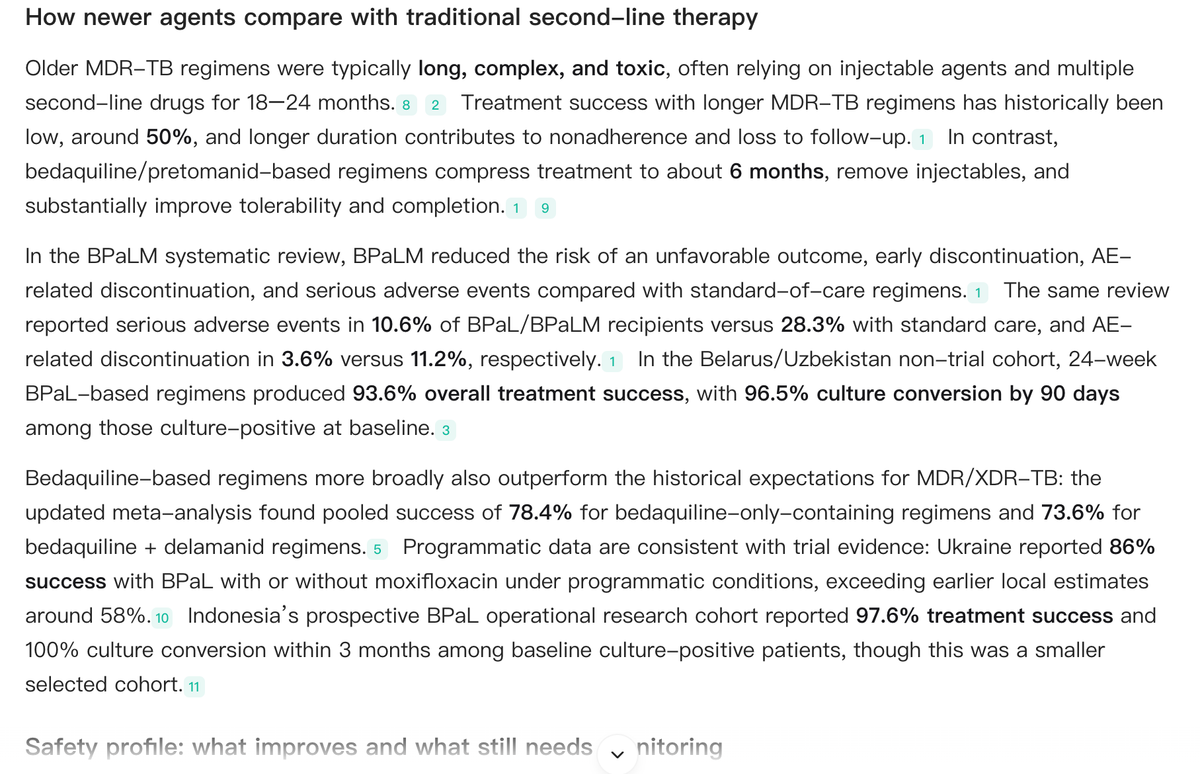
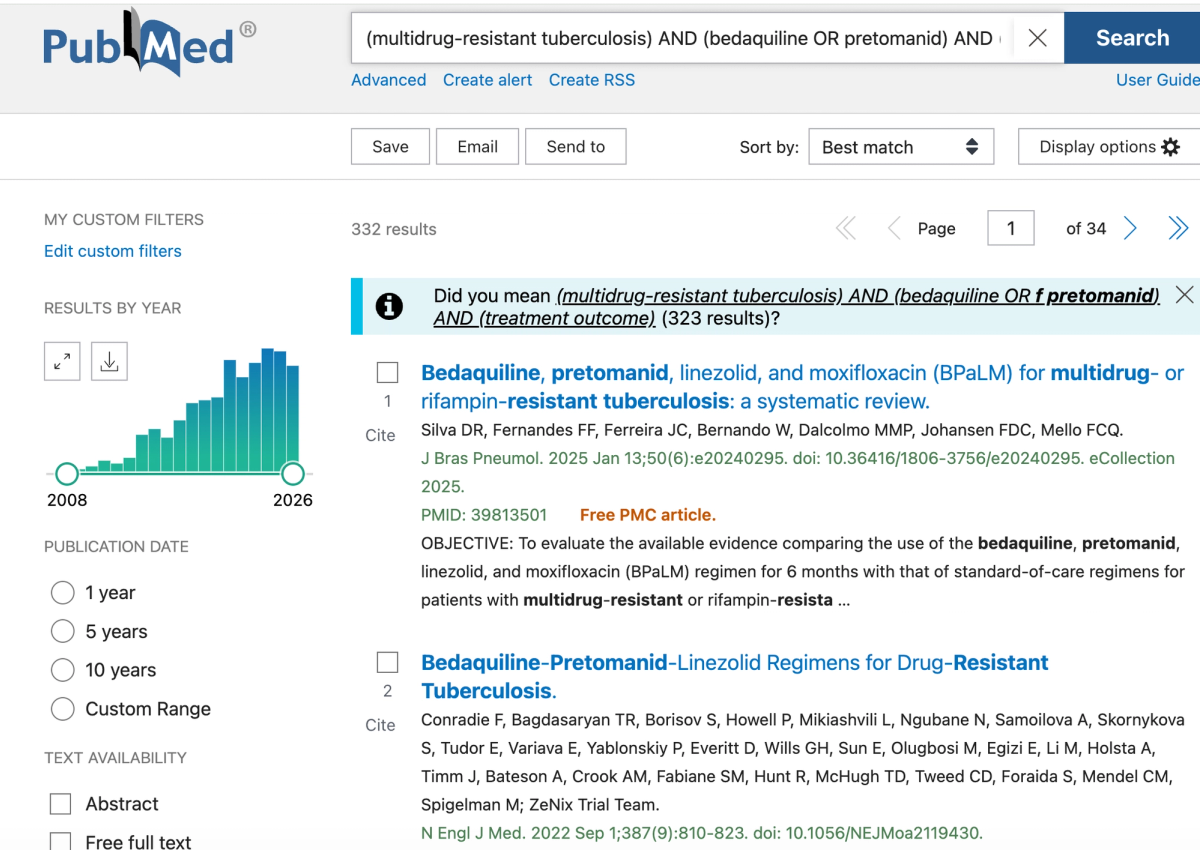
Figure 2. Side-by-side comparison: Noah AI synthesized evidence (left) versus PubMed search results (right) for the MDR-TB query.
Try Noah AI for Free
Use Noah AI to search, compare, and analyze biomedical evidence with AI-powered research workflows.
Free credits are available, and no credit card is required to get started.
FAQ
Can AI PubMed search tools replace traditional PubMed search entirely?
Not for all use cases. AI tools are useful for exploratory research and generating initial summaries, while systematic reviews and other highly documented searches may still require reproducible search strategies in PubMed or another database. AI tools can complement traditional search by helping identify relevant terms and organize findings.
Are AI-generated summaries from these tools reliable?
Reliability varies by tool and query. Tools that provide citations to specific papers make it easier to verify claims against the source literature. Regardless of the tool, important findings should be checked against the original papers.
Do these tools cover preprints and non-PubMed sources?
It depends on the platform. Some tools use broad academic corpora or web sources, while Noah AI's PubMed Search workflow is focused on PubMed. Check each tool's documentation when source coverage matters for your research question.
Is Noah AI free to use?
Noah AI offers a free tier. Visit noah.bio to check the current plan details and try the PubMed Search workflow.