Alzheimer’s Disease Indication Strategy Report 2026: Mechanisms, Competition and Entry Strategy
Linda
A 2026 Alzheimer’s disease indication strategy report covering disease burden, unmet need, target biology, clinical competition, market attractiveness and differentiated entry strategy.
Alzheimer’s disease remains one of the largest and most consequential drug-development opportunities in medicine, but it is no longer a blank-slate market. Disease-modifying therapy has regulatory precedent, biomarker-based diagnosis is becoming more practical, and pharmaceutical interest remains strong. At the same time, effect size, ARIA risk, MRI burden, specialist dependence and a crowded early amyloid landscape mean that a new entrant needs real differentiation rather than a familiar mechanism alone.
How this report was built: We used Noah AI to recreate an indication-strategy workflow for Alzheimer’s disease. The goal was not to produce a generic disease overview, but to connect disease burden, remaining unmet need, target biology, development logic, market structure and entry strategy in a format useful for portfolio and business-development decision making.
Executive Strategy View
Strategic verdict: PRIORITIZE WITH DIFFERENTIATION GATES.
- Disease burden remains enormous. Alzheimer’s disease continues to impose a major clinical, economic and caregiving burden, creating strong long-term demand for more effective and scalable therapies.
- Biology is partly validated, not fully solved. Amyloid-directed disease modification now has regulatory and clinical validation, but meaningful gaps remain in magnitude of benefit, safety, treatment burden and downstream neurodegeneration.
- The current market is executionally difficult. Biomarker confirmation, MRI monitoring, infusion capacity, specialist access and reimbursement logistics all constrain adoption.
- Commercial opportunity favors differentiated programs. The best entry points are likely safer disease modification, tau or APOE-linked precision strategies, lower-burden care pathways, and therapies for patients poorly served by current anti-amyloid options.
The key strategic conclusion is straightforward: Alzheimer’s disease should be taken seriously as a development and partnering area, but new entry should be selective. A program now needs a better clinical proposition, a better care-pathway proposition, or both.
Disease Background and Epidemiology
Alzheimer’s disease is a progressive neurodegenerative disorder characterized by amyloid pathology, abnormal tau biology, synaptic dysfunction, neuroinflammation and gradual loss of cognition and function. The relevant development opportunity is not one single patient pool. It spans a continuum from preclinical biomarker-positive disease to mild cognitive impairment (MCI), mild dementia, moderate disease and later-stage disease.
| Disease segment | Clinical definition | Strategic relevance |
|---|---|---|
| Preclinical biomarker-positive disease | Biological Alzheimer’s pathology without clear cognitive impairment. | Large theoretical future market, but prevention trials are long, expensive and operationally demanding. |
| MCI due to Alzheimer’s disease | Objective cognitive impairment with largely preserved daily function and biomarker evidence of Alzheimer’s pathology. | One of the most attractive near-term disease-modifying segments because progression risk is high enough for trial readout while disease is still early. |
| Mild Alzheimer’s dementia | Early symptomatic dementia with meaningful retained independence. | Current core treatment segment for approved anti-amyloid therapies. |
| Moderate disease | Greater impairment and growing dependence on caregivers. | High unmet need, but current disease-modifying validation is limited and trial design is harder. |
| Later-stage disease | Severe cognitive and functional impairment. | Large societal burden, but biology is more heterogeneous and reversibility is lower. |
Prevalence headlines alone are not enough. The biologic burden of Alzheimer’s disease is much larger than the recruitable or commercially addressable population. Treatment access depends on several filters: symptom stage, biomarker confirmation, MRI eligibility, safety profile, caregiver support, site capacity and payer access.
| Population layer | What it includes | Main attrition factors |
|---|---|---|
| Total disease burden | All clinically diagnosed and undiagnosed Alzheimer’s disease, plus biological disease across a wider spectrum. | Mixed pathology, slow progression, underdiagnosis and age-related heterogeneity. |
| Biomarker-confirmed early disease | Patients with MCI or mild dementia plus amyloid-confirmation through PET, CSF or validated biomarker pathways. | Diagnostic infrastructure, test access and exclusionary imaging findings. |
| Treatment-eligible population | Patients who fit label-relevant disease stage and can receive and monitor therapy safely. | ARIA risk, anticoagulation, cerebrovascular findings, frailty and comorbidity burden. |
| Commercially addressable population | Patients within health systems able to diagnose, administer, monitor and reimburse treatment. | Specialist availability, MRI access, infusion logistics, reimbursement and caregiver support. |
That is why an indication strategy cannot be built from top-line prevalence alone. It must be built from the treatable and operationally reachable segment.
Unmet Need
Alzheimer’s disease now has disease-modifying therapy, but the unmet need remains substantial. Current treatment does not stop disease progression, does not remove the need for specialized care and does not fully address downstream tau biology, neuroinflammation, later-stage disease or patients at higher treatment risk.
| Unmet-need area | Current situation | Strategic opportunity |
|---|---|---|
| Magnitude of benefit | Approved disease-modifying therapies slow decline, but do not restore cognition or halt disease. | Deliver larger clinically meaningful slowing or better preservation of independence. |
| Safety and monitoring | ARIA, hemorrhagic risk and MRI surveillance remain central operational burdens. | Compete on lower ARIA risk, simplified monitoring or a non-amyloid mechanism. |
| Treatment convenience | Infusion-based therapy creates site, travel and caregiver friction. | Move toward less burdensome administration, including home-capable or lower-touch delivery. |
| Non-amyloid biology | Most validated disease-modifying evidence still resides in amyloid. | Create differentiated value in tau, APOE, microglial biology or other mechanistic spaces. |
| Later-stage disease | No clearly established disease-modifying standard exists for more advanced disease. | Address a large but operationally and biologically challenging patient segment. |
| Caregiver and system burden | Clinical benefit has not eliminated heavy caregiving and coordination needs. | Show preserved daily function, delayed dependence or lower total burden of care. |
Target and Mechanism Rationale
The most important strategic mechanisms do not sit at the same stage of validation. Some are biologically compelling but clinically unproven; others are clinically validated but operationally constrained. That difference matters more than novelty alone.
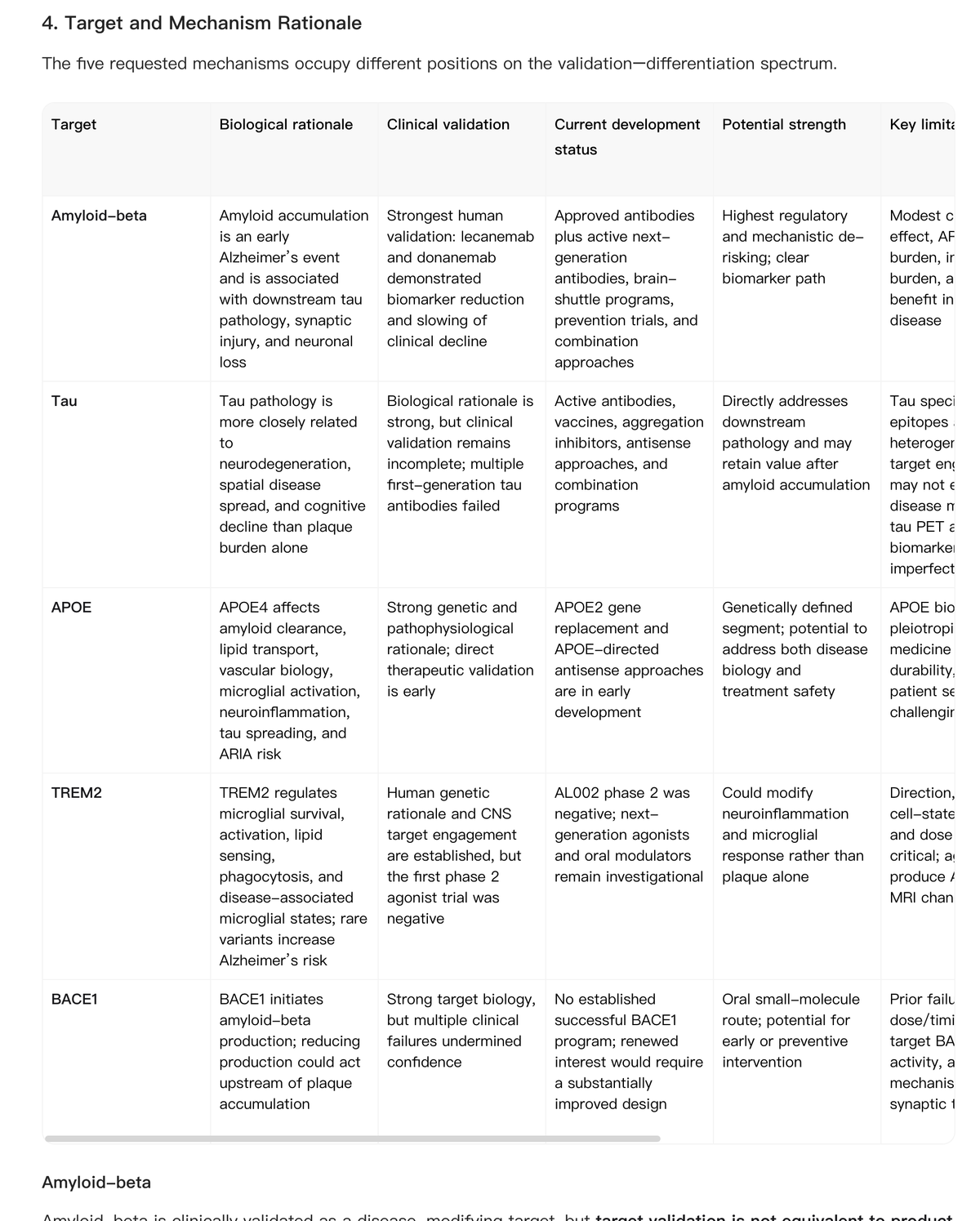
Figure 1. Noah AI compares five major Alzheimer’s drug-development mechanisms across biological rationale, validation status, strengths, limitations and strategic implications.
Amyloid-beta is the most clinically validated target. The challenge is no longer proving the target matters; it is demonstrating a product advantage in effect size, delivery, safety, MRI burden or patient segment.
Tau remains one of the most attractive differentiation opportunities because it is closely connected to downstream neurodegeneration and cognitive decline. But tau development has to solve target-species selection, biomarker strategy and proof that target engagement actually translates into meaningful disease modification.
APOE offers a compelling precision angle, especially in APOE4-defined populations. It is attractive because it may affect both disease biology and treatment safety, but technical, delivery and validation hurdles remain high.
TREM2 keeps scientific interest high because of microglial biology and genetic rationale, yet first-generation clinical results raise the bar for what future microglial programs must prove.
BACE1 illustrates a different lesson: a mechanistically appealing target can remain strategically weak if earlier failures create major translational and safety skepticism.
For a new entrant, the strategic takeaway is not “pick the newest mechanism.” It is “pick the mechanism whose biology, biomarker plan, safety profile and delivery model form the clearest path to differentiated clinical value.”
Development Thesis
A credible Alzheimer’s program should be structured as an explicit evidence chain:
Priority patient segment → biological driver → intervention → biomarker / pharmacodynamic readout → early clinical signal → registrational endpoint → care-pathway fit → commercial claim.
| Chain element | What good strategy looks like |
|---|---|
| Priority patient segment | Use an enriched population such as biomarker-confirmed early disease, APOE4-defined patients, tau-relevant disease or patients not well served by current anti-amyloid therapy. |
| Biological driver | Choose a mechanism with a plausible and testable role in disease progression, not only associative biology. |
| Biomarker / PD readout | Include direct target engagement and at least one downstream readout relevant to neurodegeneration or treatment effect. |
| Early clinical signal | Show directional clinical benefit that is consistent with biomarker movement and meaningful to the selected segment. |
| Commercial claim | Compete on preserved independence, safer treatment, lower monitoring burden, simpler delivery or access to currently underserved patients. |
Before proof of concept, a serious program should also define kill criteria for inadequate CNS exposure, no biomarker response, no directional clinical benefit, unacceptable safety, recruitment infeasibility or an unscalable care pathway.
Clinical Competition
The relevant Alzheimer’s competitive landscape is not the raw count of studies in registries. The useful competitive set is the group of drug-interventional programs capable of changing standards of care, influencing patient selection or attracting strategic capital.
| Competitive area | What matters strategically |
|---|---|
| Approved early disease-modifying therapy | Lecanemab and donanemab establish the current benchmark for biomarker-confirmed early disease. |
| Next-generation amyloid programs | Programs emphasizing improved delivery, brain exposure or administration convenience raise the bar for follow-on amyloid entrants. |
| Tau-directed development | This remains one of the most important competitive whitespace areas, but still lacks late-stage validation. |
| Precision and genetic strategies | APOE-linked strategies could create narrower but more differentiated entry positions. |
| Microglial and non-amyloid programs | These may create meaningful future optionality, but clinical risk remains elevated. |
In practical terms, the most credible whitespace includes lower-ARIA disease modification, home-friendly or lower-burden therapy, APOE4-specific positioning, anti-amyloid-ineligible populations and combination approaches that connect amyloid reduction with downstream neurodegeneration or inflammation.
Deal Activity and Market Attractiveness
Recent transaction activity shows that Alzheimer’s disease remains strategically important to large pharmaceutical companies. The strongest signals are concentrated in differentiated amyloid biology, CNS delivery technology, tau biology and precision-oriented programs rather than in undifferentiated “another plaque drug” positioning.
- Delivery matters. Brain-shuttle and CNS-delivery technology continue to attract interest because they may improve exposure and possibly convenience or safety.
- Tau remains commercially relevant. Continued partnering interest suggests that large companies still view tau as one of the most important downstream differentiation bets.
- Headline deal values need careful interpretation. Upfront cash, milestones, royalties and equity should be separated before using any deal as a valuation benchmark.
- Early-stage risk appetite still exists. Transactions are not limited to late-stage programs, but earlier-stage assets need a stronger translational rationale to justify risk.
Overall, Alzheimer’s disease remains commercially attractive, but it is operationally unforgiving. That combination favors programs that improve total product value, not just scientific novelty.
Indication Strategy Scorecard
A scorecard is useful here because it compresses the broader strategic picture into a decision framework. It forces the article to move beyond mechanism discussion and into entry logic.
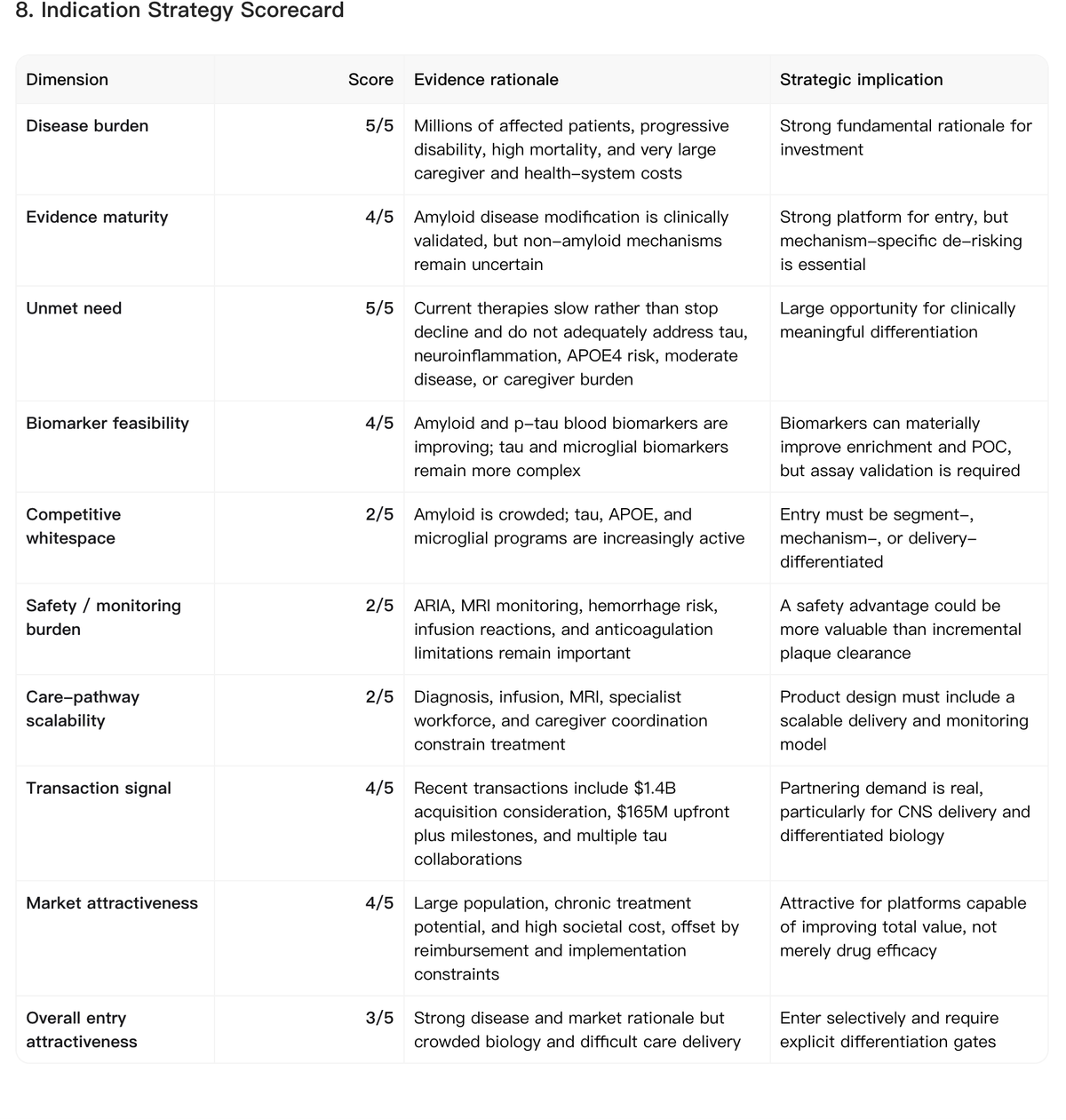
Figure 2. Noah AI summarizes the main strategic dimensions that shape Alzheimer’s entry attractiveness in 2026.
Try Noah AI for Free
Use Noah AI to search, compare, and analyze biomedical evidence with AI-powered research workflows.
Free credits are available, and no credit card is required to get started.
The scorecard reinforces five practical ideas:
Disease burden is not the issue. The need is unquestionably large.
Evidence maturity is mixed. Amyloid is validated, but several other mechanisms remain earlier and riskier.
Unmet need remains high. Current therapies leave major room for better efficacy, lower burden and better scalability.
Competitive whitespace is narrower than it first appears. A crowded mechanism without a clear product advantage is hard to justify.
Care-pathway design is strategically central. Delivery, monitoring and access should be treated as part of the product proposition.
Recommended Positioning
A new Alzheimer’s program should justify entry only if it can occupy one of a small number of strategically coherent positions.
Safer disease modification
A program that delivers comparable or better disease-modifying benefit with lower ARIA risk, less MRI burden, simpler logistics or broader suitability for higher-risk patients would have clear competitive logic.
Tau-directed therapy with credible target engagement
This remains one of the strongest differentiation opportunities, but only if the asset can connect tau biology, biomarker evidence and clinically meaningful downstream benefit.
APOE4 precision medicine
A therapy built for a genetically defined subgroup may create one of the clearest new-entry positions, especially if it addresses both biology and treatment-related safety trade-offs.
Anti-amyloid-ineligible or poorly served patients
Patients excluded or disadvantaged by current anti-amyloid approaches are a clinically and commercially intelligible target segment.
Scalable care-pathway innovation
A product that reduces dependence on repeated MRI, complex infusion infrastructure, extensive specialist coordination or invasive diagnostics may create real value even without a novel target class.
| Entry scenario | Strategic decision |
|---|---|
| Undifferentiated follow-on amyloid program with no safety or delivery advantage | No-go / low priority |
| Tau, APOE or another differentiated mechanism with validated CNS pharmacology and a clear enriched segment | Go |
| Program aimed at lower monitoring burden, easier administration or anti-amyloid-ineligible patients | Strategically attractive |
| Novel mechanism with unclear biomarker strategy or no defined care-pathway advantage | Watch / conditional only |
Final Takeaway
Alzheimer’s disease remains one of the most important drug-development and partnering opportunities in 2026 because disease burden is immense, biomarker-enabled treatment is becoming more practical and major companies continue to invest. But market attractiveness should not be confused with easy entry.
The field has already moved beyond simple target novelty. What matters now is whether a new program can offer more meaningful benefit, lower treatment burden, better scalability or a more defensible patient segment than current standards.
That is why the most credible conclusion is PRIORITIZE WITH DIFFERENTIATION GATES.
Explore Alzheimer’s Research with Noah AI